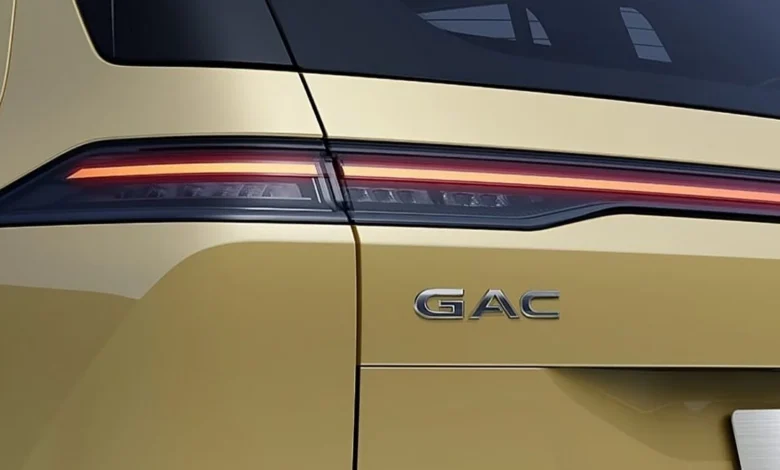
The landscape of China’s automotive industry is undergoing a profound structural evolution as state-backed manufacturing giants Guangzhou Automobile Group (GAC) and FAW Group initiate a landmark strategic reorganization. According to a regulatory filing released on September 14 via the Shanghai Stock Exchange, GAC has officially signed a letter of intent to acquire an equity share in a yet-unnamed automotive joint venture currently owned by FAW Group. As part of this complex transaction, FAW is slated to become GAC’s second-largest shareholder, forging a high-level alliance that directly addresses Beijing’s long-standing ambitions to streamline the country’s overcrowded original equipment manufacturer (OEM) ecosystem.
While specific financial figures, asset valuations, and exact equity percentages remain closely guarded secrets pending further regulatory and corporate disclosures, the business scope of the partnership has been broadly outlined. According to preliminary documentation, the joint venture’s operations will span a comprehensive spectrum of the automotive value chain, ranging from advanced technical research and development to precision component manufacturing and comprehensive vehicle sales networks. This unprecedented cross-group collaboration signals a potential turning point for an industry that has long grappled with intense regional protectionism, redundant production capacities, and cutthroat price wars.
The Long Quest for OEM Consolidation in China
For well over a decade, China’s central government—spearheaded by the Ministry of Industry and Information Technology (MIIT) and the State-owned Assets Supervision and Administration Commission (SASAC)—has recognized the urgent necessity of consolidating its fragmented automotive sector. Historically, China’s industrial policy fostered a multitude of provincial and municipal state-owned enterprises (SOEs), leading to the creation of dozens of independent automotive brands. While this decentralized model successfully accelerated local economic growth and job creation in the nascent stages of the country’s motorization, it ultimately resulted in severe structural overcapacity.
The root of the issue lies in the proliferation of underutilized factories and duplicated research efforts. In the era of internal combustion engines, local governments heavily incentivized the establishment of regional car companies to secure tax revenues and prestige. However, the rapid, aggressive transition toward New Energy Vehicles (NEVs)—comprising battery-electric vehicles (BEVs) and plug-in hybrids (PHEVs)—has amplified the inefficiencies of this fragmented layout. Legacy automakers have found themselves locked in a brutal domestic pricing war, squeezed simultaneously by aggressive private sector disruptors like BYD and Tesla, and nimble technology giants entering the smart-EV space.
Beijing’s attempts to orchestrate top-down mergers and acquisitions among major SOEs have frequently stalled due to bureaucratic friction, competing local political interests, and corporate cultural mismatches. Major state-owned automotive groups—often referred to in the industry as the "Big Six" or "Big Seven"—frequently operated in silos, prioritizing regional employment and local supply chains over national economies of scale. The GAC-FAW partnership, therefore, represents a novel bottom-up or lateral approach to consolidation. By intertwining equity ownership and operational joint ventures voluntarily, these giants may be pioneering a new blueprint for state-led rationalization that bypasses the traditional roadblocks of forced administrative mergers.
Chronology of Strategic Shifts and Market Pressures
To understand the weight of the GAC-FAW announcement, it is necessary to examine the escalating pressures that have converged on China’s traditional automotive sector over the past several years.
In 2021 and 2022, as global supply chain disruptions and semiconductor shortages battered international automotive manufacturing, Chinese state-owned automakers faced simultaneous mandates to electrify their fleets and maintain profitability. Despite massive capital injections into EV sub-brands (such as GAC’s Aion and FAW’s Hongqi), traditional joint ventures with foreign multinationals—historically the primary profit engines for both GAC and FAW—began to experience sharp declines in market share. Joint ventures with brands like Volkswagen, Toyota, and Honda, which once guaranteed steady cash flows, faced plummeting demand as domestic consumers rapidly pivoted toward homegrown smart-EV alternatives.
By 2023, the domestic passenger vehicle market entered a state of hyper-competition, triggered largely by aggressive price-cutting initiatives led by Tesla and rapidly mirrored by domestic champion BYD. Profit margins across the entire automotive manufacturing sector compressed significantly. According to data from the China Association of Automobile Manufacturers (CAAM), the profit margin for the automotive industry dropped to historical lows, putting immense financial strain on smaller OEMs and secondary joint ventures.
Throughout 2024, government regulators stepped up warnings against "involution"—a Chinese term describing vicious, zero-sum competition that destroys industry-wide profitability and stifles genuine innovation. Regulators convened closed-door meetings with major executives, urging rationalization, resource sharing, and joint technological development. The September 14 disclosure by GAC and FAW directly reflects this regulatory pressure. By pooling resources through a specialized joint venture and cementing a profound cross-shareholding structure, both groups are taking proactive steps to insulate themselves against structural obsolescence while aligning with national industrial directives.
Supporting Data and Market Dynamics
The scale of GAC and FAW places them among the titans of China’s industrial economy, making their strategic realignment a matter of national economic significance.
FAW Group, headquartered in Changchun, Jilin Province, is historically recognized as the cradle of China’s automotive industry, having been founded in 1953. Alongside its immensely profitable foreign partnerships with Volkswagen and Audi, FAW has poured billions into developing its luxury marque, Hongqi, and its electric platform architectures. However, like many traditional northern industrial giants, FAW has faced challenges in pivoting its massive legacy manufacturing footprint toward the fast-paced, software-defined vehicle paradigms dominated by southern tech hubs.
Guangzhou Automobile Group, based in Guangdong Province, represents the dynamic southern manufacturing corridor. GAC has enjoyed relative success in navigating the EV transition, largely through the strong market penetration of GAC Aion and its high-end intelligent EV brand, Hyper. Furthermore, GAC’s joint ventures with Japanese heavyweights Toyota and Honda have historically provided robust financial backing. Yet, even GAC has not been immune to the sweeping margin compression plaguing the wider market, necessitating new avenues for cost optimization, shared research and development, and supply chain synergy.
Combined, the operational reach of GAC and FAW encompasses millions of units of annual production capacity, extensive dealership networks spanning the entire country, and vast intellectual property portfolios in battery technology, autonomous driving systems, and vehicle connectivity. The integration of an FAW-owned joint venture into GAC’s operational framework—coupled with FAW securing the status of GAC’s second-largest shareholder—creates a powerful inter-regional axis connecting the industrial base of Northeast China with the innovation and manufacturing powerhouse of the Pearl River Delta.
Official Responses and Stakeholder Perspectives
While formal statements from both corporate headquarters have remained measured and focused on regulatory compliance, industry analysts and market observers have been quick to dissect the broader implications of the filing.
Financial markets reacted with cautious optimism following the Shanghai Stock Exchange announcement. Institutional investors have long criticized Chinese automotive SOEs for capital inefficiency, redundant investments in parallel EV platforms, and a failure to achieve true economies of scale. Analysts from leading global financial institutions noted that a closer structural tie between GAC and FAW could pave the way for shared procurement processes, joint battery sourcing agreements, and collaborative research into next-generation solid-state battery technologies and artificial intelligence cockpits.
From a governance perspective, FAW becoming GAC’s second-largest shareholder introduces an unprecedented level of alignment between two separate municipal and provincial state asset authorities. Typically, provincial government backing can create insular corporate behaviors. By bridging the interests of Guangdong and Jilin through reciprocal equity stakes, the arrangement aligns executive incentives across regional boundaries, potentially serving as a template for future inter-provincial automotive consolidations.
Industry associations, including CAAM, have historically advocated for industry concentration, arguing that a healthier market should be consolidated around three to five globally competitive automotive groups. The GAC-FAW realignment directly serves this long-term policy goal, acting as a functional testing ground for how legacy giants can pool resources without undergoing the agonizingly slow and disruptive processes of total corporate absorption.
Broader Impact and Implications for the Global Stage
The ripple effects of the GAC-FAW reorganization extend far beyond China’s domestic borders, carrying significant weight for the global automotive industry. As Chinese automakers face mounting trade barriers, tariff investigations, and regulatory scrutiny in traditional export markets such as the European Union and North America, the need for hyper-efficient domestic operations has never been more critical.
By streamlining operations, eliminating redundant R&D expenditure, and pooling capital for advanced technological breakthroughs, consolidated Chinese automotive groups are positioning themselves to wage a more formidable, cost-effective global export campaign. The efficiency gains realized through the GAC-FAW partnership could provide both companies with the financial stamina required to absorb foreign trade tariffs while continuing to undercut legacy Western and Japanese automakers in emerging markets across Southeast Asia, Latin America, and the Middle East.
Furthermore, the operational scope of the new joint venture—spanning technical R&D, component manufacturing, and vehicle sales—underscores the shifting nature of automotive competition. Modern car manufacturing is no longer merely about mechanical assembly; it is an intensive contest of software integration, supply chain resilience, and vertical integration of critical components like semiconductors and battery cells. By tackling these capital-intensive pillars cooperatively, GAC and FAW are demonstrating that even state-backed giants must embrace collaboration to survive the relentless disruption of the smart-EV era.
As the transaction moves past the initial letter of intent phase toward final regulatory approvals and operational integration, the wider automotive world will be watching closely. If successful, this strategic pivot could trigger a cascading wave of similar mergers, acquisitions, and cross-shareholdings throughout China’s industrial sector, fundamentally reshaping the global automotive hierarchy for decades to come.
Related posts: