Unlocking a 50-Year Wildlife Cold Case: Museum Specimens Reveal How a Deadly Fungus Decimated Brazil’s Atlantic Forest Frogs

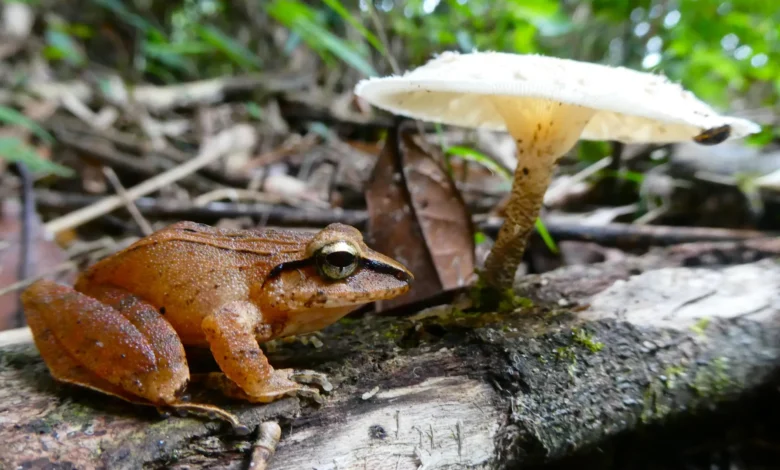
For nearly half a century, conservation biologists and wildlife epidemiologists have wrestled with one of the most perplexing ecological mysteries of the modern era: the sudden, catastrophic disappearance of frog populations across Brazil’s Atlantic Forest. Beginning quietly in the 1970s and intensifying through the early 1980s, these population crashes occurred in one of the planet’s most biodiverse regions for amphibians. While environmental degradation, shifting microclimates, and extreme weather events were frequently hypothesized as driving factors, the precise cause remained elusive. These baffling disappearances transformed into some of the most enduring cold cases in wildlife epidemiology.
Now, a breakthrough study published in Molecular Ecology has provided definitive, compelling evidence pointing to a microscopic aquatic pathogen as the primary culprit. Researchers from the Center for Conservation Genomics at the Smithsonian’s National Zoo and Conservation Biology Institute (NZCBI) and Pennsylvania State University (PSU) have successfully unraveled the timeline of this ecological disaster. By leveraging technological advancements that allow for the extraction of ancient DNA and pathogen testing on historical archives, scientists have cast a bright light on a decades-old tragedy, offering critical lessons for contemporary conservation and the prevention of future wildlife pandemics.
The Pathogen and the Scale of Global Devastation
The suspected driver of these historical die-offs is chytridiomycosis, a lethal infectious disease commonly referred to simply as "chytrid." The disease is caused by Batrachochytrium dendrobatidis (Bd), a microscopic, zoosporic fungus that attacks the keratin-rich layers of an amphibian’s skin. Because amphibians breathe, hydrate, and maintain their electrolyte balance largely through their skin, the colonization of this vital organ by the fungus disrupts vital physiological functions, frequently leading to cardiac arrest and death.
Scientific consensus suggests that Batrachochytrium dendrobatidis originated in Asia before expanding its global footprint via international wildlife trade and human transit during the 1970s and 1980s. However, the tragedy of Bd is compounded by a devastating temporal mismatch: the fungus was entirely unknown to science until its formal identification and description in 1999. By the time researchers recognized the pathogen and its lethal potential, the fungus had already swept across multiple continents, driving hundreds of amphibian species toward the brink of extinction and wiping out numerous populations entirely.
Because these massive ecological collapses occurred decades before the scientific community was even aware of the fungus’s existence, proving causation retrospectively has proven extraordinarily difficult. Researchers lacked baseline infection data from the exact periods when the declines took place, leaving a frustrating gap in the historical record of global amphibian biodiversity.
Chronology of a Crisis: The Boracéia Biological Station
One of the most intensely studied epicenters of this mystery is the Boracéia Biological Station, nestled within the lush, humid expanse of Brazil’s Atlantic Forest. Between 1979 and 1982, researchers working at the station documented a shocking, precipitous drop in local frog populations. Dozens of species that had previously thrived in the dense understory seemed to vanish almost overnight.
For decades, explanations remained speculative. Some scientists suggested that localized climate shifts or anomalous extreme weather patterns might have triggered the die-offs. However, the new molecular investigation demonstrates that an emerging epizootic event—a disease outbreak in animal populations—was surging through the area at precisely the same temporal coordinates as the disappearances.
To investigate this hypothesis, the research team turned to an invaluable, albeit unorthodox, archive: natural history museum collections. The Smithsonian’s National Museum of Natural History houses an extensive repository of preserved amphibian specimens gathered by William Ronald Heyer, a former curator of amphibians and reptiles. Heyer conducted five rigorous field expeditions to the Boracéia Biological Station, strategically spanning the pre-crisis era with two trips in the 1970s, followed by three expeditions in the 1980s after the population collapses had already materialized.
This museum repository provided an irreplaceable scientific time machine. By analyzing tissue samples from specimens collected across different decades, the research team could track the exact arrival window of the pathogen and measure its spread through the local ecosystem in real time.
Unveiling the Molecular Evidence
The research team, led by Jack Boyette—an NZCBI graduate fellow and doctoral candidate at PSU—analyzed biological samples from more than 370 preserved amphibians representing 17 distinct species. The laboratory analyses searched meticulously for genetic signatures of Bd infection to map the prevalence of the fungus over time.
The results revealed a stark, unmistakable epidemiological shift. Zero specimens collected prior to 1979 tested positive for the chytrid fungus, confirming that the pathogen was absent or exceedingly rare in the region before the population crash. By stark contrast, more than half of the amphibians collected during the 1980s tested positive for the pathogen.
This sharp statistical escalation demonstrates that Batrachochytrium dendrobatidis arrived and disseminated through the local amphibian community right as the regional frog populations were collapsing.
The Paradox of Susceptibility and Museum Collections
Despite the clear correlation between the arrival of the fungus and the timing of the die-offs, the researchers uncovered a complex, counterintuitive pattern within the data. When they examined infection rates across specific species, they discovered that the animals suffering the most catastrophic population declines showed little to no detectable trace of the fungus in the historical museum specimens. Conversely, species whose populations remained relatively stable frequently carried the pathogen.
At first glance, this finding appeared to undermine the chytrid hypothesis. However, the researchers propose a logical biological explanation rooted in the speed and severity of the disease’s pathology: differential species susceptibility.
Species that survived the onslaught likely possessed natural physiological or immunological tolerances, allowing them to host the fungus without succumbing to fatal disease. Meanwhile, highly susceptible species may have reacted so violently to the infection that they died rapidly, leaving few infected individuals alive in the environment long enough to be collected by field researchers during Heyer’s expeditions.
"It’s important to keep in mind that not all species suffered catastrophic losses at Boracéia," noted lead researcher Jack Boyette. "The species that didn’t decline may have naturally tolerated the fungus, allowing them to become infected without suffering mass mortality. By contrast, the species that declined most dramatically may have been so susceptible that infected frogs died before Heyer could collect them."
The Broader Implications and Value of Natural History Archives
The success of this study underscores the profound, often underappreciated scientific value of natural history museums. Modern molecular techniques, such as quantitative PCR assays and ancient DNA extraction, allow contemporary scientists to extract biological data from specimens preserved decades ago—data that the original collectors could never have anticipated retrieving.
Michael Campana, a genomicist at NZCBI who contributed to the study, emphasized the irreplaceable nature of these archives. "Museum collectors could not have anticipated how important their collections would be to our modern conservation challenges, but without them, we would never be able to detect pathogens that went unnoticed for decades and reconstruct disease outbreaks that would otherwise remain a mystery," Campana stated.
Reconstructing these historical epizootics is not merely an academic exercise in solving wildlife cold cases. Understanding how fungal pathogens emerge, jump species barriers, and devastate naive populations provides a vital predictive framework for addressing contemporary and future conservation threats.
Conservationists are currently racing to understand and contain Batrachochytrium salamandrivorans (Bsal), a closely related fungal pathogen originating from Asia that currently threatens salamander populations across Europe and poses an imminent, alarming danger to North American amphibian biodiversity. By decoding the historical trajectory of Bd in Brazil, researchers hope to refine their epidemiological models and develop proactive surveillance strategies before new pathogens trigger similar global catastrophes.
Signs of Ecological Resilience and Modern Recovery
Amidst the sobering historical data, the research team’s recent fieldwork offers a remarkably encouraging narrative of persistence and recovery. Collaborating with scientists from the University of São Paulo, the research team conducted six intensive field surveys at the Boracéia Biological Station between 2022 and 2024 to evaluate the current status of the local amphibian community.
Of the 17 species documented in Heyer’s historical museum collections from decades past, the modern surveys successfully located 12. While five species were not detected—leaving their current local status uncertain and prompting concerns that they may have vanished from the site entirely—the rediscovery of the majority of species indicates a significant ecological rebound.
Intriguingly, the chytrid fungus has not vanished from Boracéia. Modern testing confirms that Bd is still actively circulating among the local frog populations. However, the persistence of these frogs in the presence of the pathogen suggests that surviving lineages may have developed heightened evolutionary tolerance over successive generations, shifting the dynamic from acute, mass mortality to stable coexistence.
This resilience highlights a critical distinction in wildlife epidemiology: the presence of infection does not automatically equate to population collapse. When host populations evolve tolerance, they can maintain a pathogen within the ecosystem without suffering catastrophic species-level losses.
Future Directions in Amphibian Conservation
While the study provides robust, localized clarity regarding the historical declines at Boracéia, the researchers emphasize caution against over-generalization. These findings directly explain the timeline of a specific regional die-off and cannot be automatically extrapolated to every unexplained amphibian disappearance across the vast expanse of the Atlantic Forest, where multiple localized factors may have interacted.
To build upon these insights, the research team is expanding its investigative toolkit. Ongoing projects are analyzing DNA recovered from historical museum specimens to pinpoint the specific genetic mechanisms that governed amphibian immune responses during the initial wave of the fungal epidemic. Additionally, researchers are beginning to deploy ancient environmental DNA (eDNA) techniques to search for genetic traces left behind in sediment and water repositories, potentially uncovering evidence of species and pathogens that eluded historical physical collections.
As these advanced genetic and ecological investigations proceed, they promise to paint an increasingly clear picture of how lethal wildlife pathogens sweep through vulnerable ecosystems. By unlocking the secrets of how certain amphibian populations endured historical epidemics, conservationists gain invaluable insights that could ultimately safeguard the planet’s remaining biodiversity against the next wave of ecological threats.