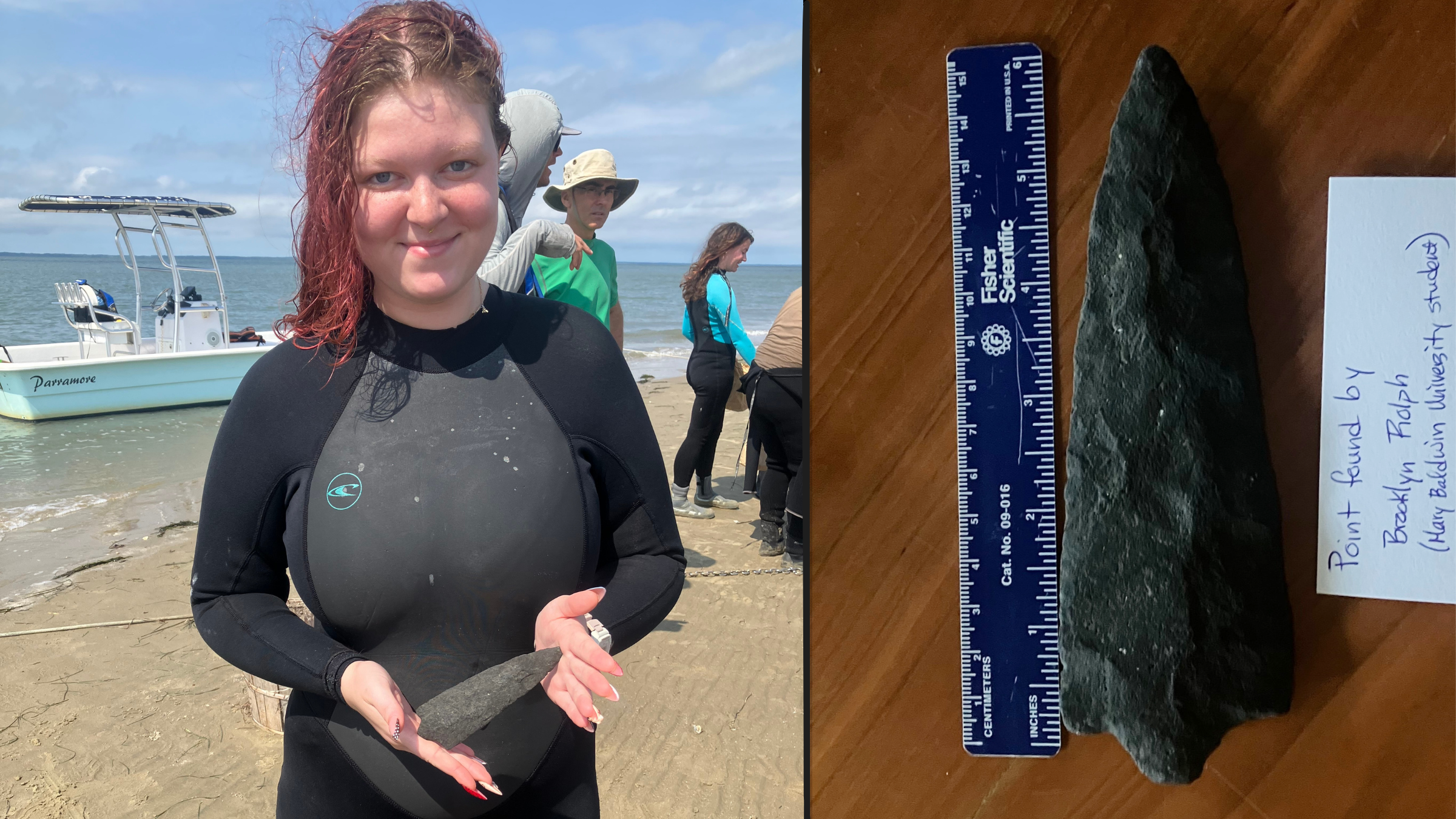
University student Brooklyn Rolph discovered a Native American spearpoint off the coast of Virginia while looking for shark teeth.

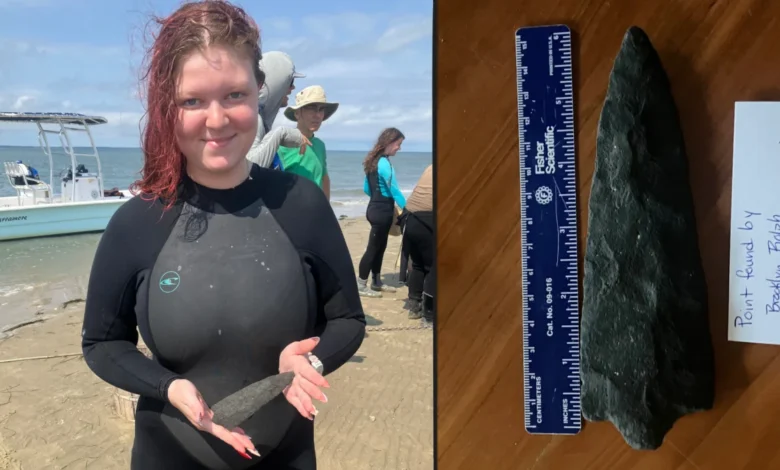
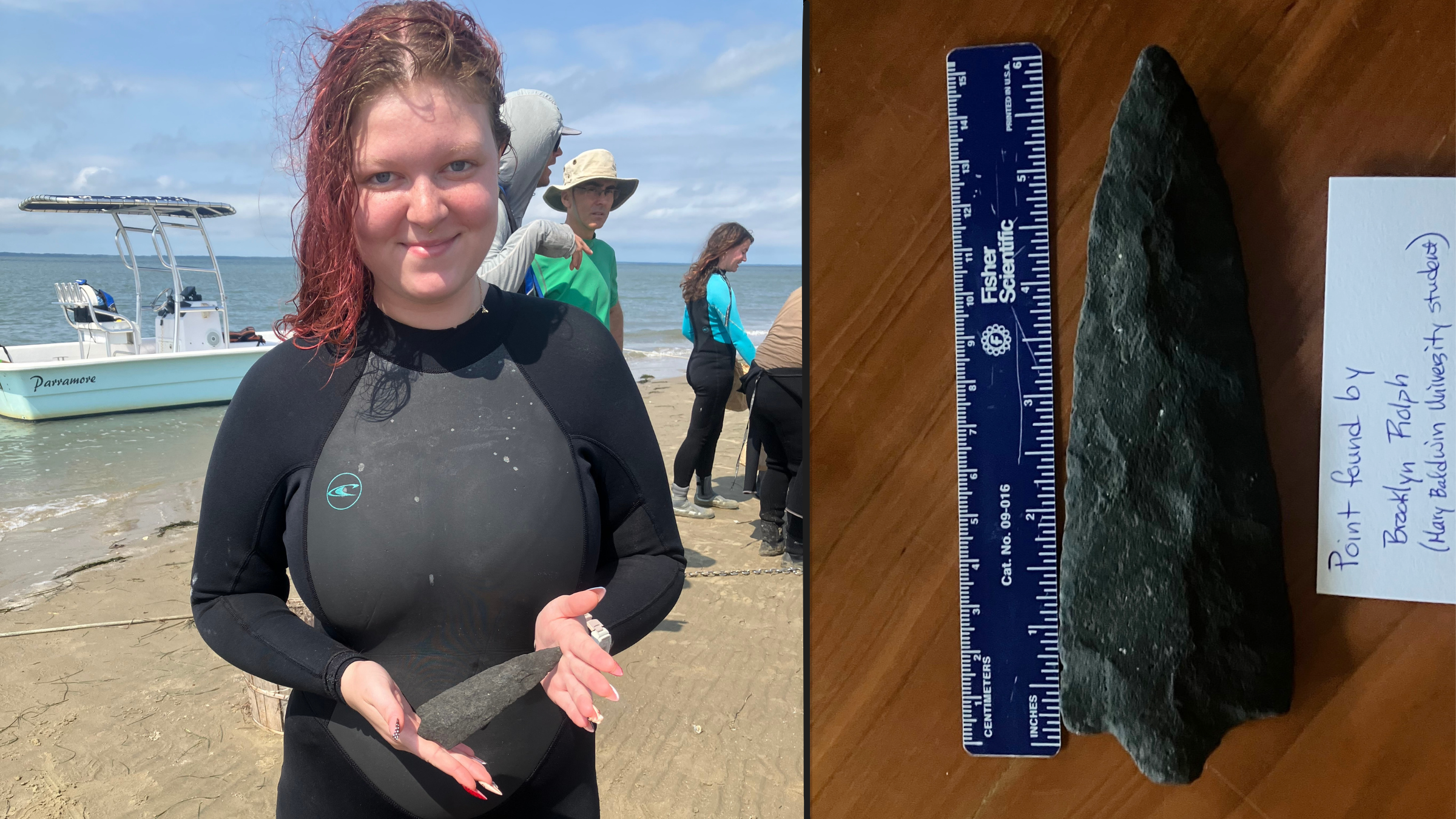
What began as a routine excursion for fossilized shark teeth along the Virginia coastline transformed into a significant archaeological discovery when Brooklyn Rolph, an undergraduate student at Mary Baldwin University, stumbled upon a rare artifact submerged in the Atlantic shallows. While combing the surf for the remnants of prehistoric marine life, Rolph recovered a stone spearpoint, an object that experts believe offers a tangible link to the indigenous populations who inhabited the Chesapeake Bay region thousands of years ago.
The discovery, made in the intertidal zone, highlights the ongoing intersection between amateur beachcombing and professional archaeology. While many coastal visitors focus their attention on the biological history of the ocean, the shifting sands of the Virginia coast frequently reveal the cultural history of the Mid-Atlantic.
The Anatomy of a Discovery
The artifact recovered by Rolph is a lithic projectile point, a term archaeologists use to describe stone tools fashioned by knapping—the process of striking a core stone with a hammerstone or antler billet to create sharp edges. Preliminary assessments suggest that the item is a well-preserved example of pre-colonial craftsmanship, characterized by the distinct flaking patterns indicative of specialized tool production.
For Rolph, the discovery was an unexpected deviation from her primary goal of collecting shark teeth. Upon noticing the object, she recognized that its symmetry and intentional shaping set it apart from the natural geological debris common to the area. Following her discovery, she sought verification from experts, which led to an identification that places the artifact within the context of Indigenous American history.
Chronology of Human Presence in the Chesapeake
The Chesapeake Bay region has a deep and complex history of human settlement. Archaeological evidence suggests that Paleo-Indians first entered the region as early as 12,000 to 15,000 years ago, following the retreat of the glaciers from the last Ice Age. Over millennia, the environmental landscape shifted significantly; as sea levels rose, much of the habitable land used by early hunter-gatherer groups was submerged, creating the unique geography of the modern bay.
The spearpoint found by Rolph likely dates back several thousand years, though specific diagnostic features would be required to assign it to a precise cultural period—such as the Early, Middle, or Late Archaic or the subsequent Woodland periods. During these eras, indigenous groups transitioned from highly mobile bands of big-game hunters to more sedentary societies that relied on a diverse mix of hunting, fishing, and early horticulture.
The Science of Coastal Archaeology
Coastal archaeology, or maritime archaeology, presents a unique set of challenges and opportunities. The constant movement of tides and currents can expose artifacts that have been buried under sediment for centuries, but this same force also accelerates the degradation of these items.
When an artifact is recovered from a beach, the primary scientific concern is the loss of "context." In professional excavations, the stratigraphic position—the exact layer of soil or sediment where an object is found—provides the necessary data to date the artifact and understand its usage. When an object is moved by the tide, its original archaeological context is destroyed, making it difficult for researchers to determine exactly how or when the item ended up in that specific location.
Despite this, "stray finds" like the one made by Rolph provide invaluable data for regional mapping. By documenting where these artifacts appear, archaeologists can identify areas that were once dry land, potentially leading to the discovery of submerged sites that have remained undisturbed by modern development.
Supporting Data and Regional Significance
The Virginia coastline is known for its high density of archaeological sites, many of which remain under-researched. The region was a hub for various tribal nations, including the Powhatan Confederacy, a powerful alliance of Algonquian-speaking tribes that dominated the Tidewater region at the time of English contact in the early 17th century.
Research conducted by the Virginia Department of Historic Resources (DHR) has long emphasized the importance of monitoring coastal erosion. As climate change accelerates sea-level rise and increases the intensity of storm surges, more cultural heritage sites are being exposed to the elements. This "archaeological emergency" has prompted a call for better collaboration between the public, who are often the first to see these artifacts, and state agencies.
According to data from the Archaeological Society of Virginia, hundreds of such stone tools are recovered annually by private citizens. While these individual discoveries may seem isolated, they contribute to a larger dataset that maps the distribution of indigenous populations across the state’s waterways.
Official Responses and Ethical Stewardship
The discovery by a student has also sparked a conversation regarding the ethical handling of archaeological finds. Experts generally advise that anyone who finds a potential artifact should follow a set of best practices to ensure the object’s historical value is preserved:
- Documentation: Take photographs of the object in situ (in the location it was found) before picking it up.
- Geographic Tagging: Record the exact GPS coordinates or a clear description of the location.
- Professional Consultation: Contact a local museum, university archaeology department, or the State Historic Preservation Office (SHPO).
- Legal Compliance: Be aware of state and federal laws regarding the collection of artifacts on public versus private land. In many jurisdictions, removing artifacts from state-owned or federal land without a permit is prohibited.
In this instance, the collaboration between the student and her academic institution underscores the role of universities in fostering an appreciation for heritage. By bringing the spearpoint to academic experts, the finder ensures that the object contributes to the collective knowledge of the region rather than remaining a private curiosity.
Broader Impact and Implications
The implications of this find extend beyond the simple classification of a stone tool. It serves as a reminder of the long-standing human history of the Chesapeake region. For many, the modern coast is a place of recreation, but for archaeologists, it is a landscape of lost histories.
The discovery also highlights the importance of public engagement in science. Citizen scientists, such as students or amateur fossil hunters, provide a "boots on the ground" presence that professional archaeologists cannot replicate. Their observations act as an early-warning system for the preservation of cultural resources.
Furthermore, the recovery of such an artifact provides a pedagogical opportunity for students at institutions like Mary Baldwin University. It transforms abstract history into a tactile experience, encouraging a deeper understanding of the labor, skill, and environmental knowledge possessed by the indigenous people who shaped the landscape of North America long before the arrival of European settlers.
As climate change continues to reshape the Virginia coastline, the frequency of such discoveries is expected to increase. The future of regional archaeology will rely heavily on the ability of institutions to catalog these findings effectively. Every spearpoint, pottery shard, or worked stone that emerges from the surf is a piece of a larger puzzle, helping to reconstruct the narrative of the human experience in the Chesapeake.
By prioritizing the documentation and preservation of these artifacts, the community ensures that the legacy of Virginia’s first inhabitants remains a visible and respected part of the state’s historical record. The spearpoint recovered by Brooklyn Rolph is more than just a stone; it is a testament to the resilience and ingenuity of the people who thrived on these shores thousands of years before the modern world took shape.