Rare and Unusual Burial of Premature Twins Uncovered Near Ancient Temple of Artemis at Ephesus

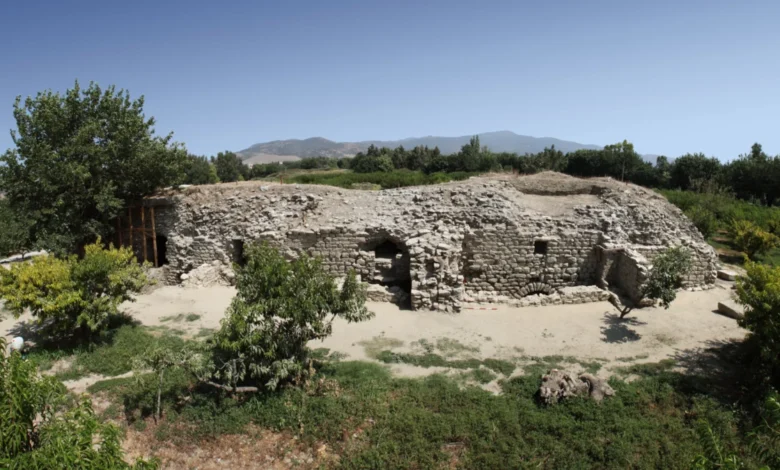
Archaeologists have unearthed a profoundly significant and exceptionally rare burial site near the venerable Temple of Artemis at Ephesus, Turkey, revealing the interred remains of premature twins dating back approximately 1,200 years. The discovery, made within what appears to have been an abandoned latrine, presents a compelling puzzle for researchers, who theorize that this unconventional location was chosen with the deliberate intention of safeguarding the vulnerable infants in the afterlife. This finding challenges established norms of funerary practices at Ephesus and offers a unique glimpse into the beliefs and rituals surrounding infant mortality in the early medieval period.
A Sanctuary in the Unconventional
The unusual setting of this interment has drawn particular attention from the archaeological community. Lilli Zabrana, an archaeologist at the Austrian Academy of Sciences and a co-author of a new study detailing the discovery, emphasized the exceptional nature of the burial. "This interment was made in an unexpected and exceptional setting," Zabrana stated in an email to Live Science. This statement underscores the departure from traditional burial practices observed at Ephesus, where previous discoveries indicate that interments were typically conducted in a dedicated cemetery situated outside the immediate boundaries of the ancient temple complex. The Temple of Artemis, one of the Seven Wonders of the Ancient World, was a site of immense religious and cultural importance, and its environs were generally reserved for sacred activities and significant individuals. The decision to bury these infants in such close proximity, albeit in an unconventional space, suggests a profound sense of protection and perhaps a desire to associate the children with the potent spiritual energies of the sanctuary.
Unraveling the Chronology of a Sacred Site
Ephesus, a thriving port city in antiquity, boasts a rich and layered history, with its origins stretching back to the 10th century BCE. The Temple of Artemis, in particular, was rebuilt multiple times throughout history, with its most famous iteration dating to the 6th century BCE. However, the burial in question originates from a later period, specifically around the 9th century CE, a time when Ephesus was under Byzantine rule. This era followed the city’s decline as a major port due to silting of the harbor and the waning influence of the Roman Empire. Despite its diminished economic standing, Ephesus remained an important religious center, with the Temple of Artemis continuing to hold significance.
The specific location of the latrine, while seemingly mundane, is crucial to understanding the context. Abandoned latrines, particularly those associated with significant structures like temples or large public buildings, could retain a certain sanctity or association with the activities that took place within them. It is plausible that this particular latrine, having fallen out of use, was seen as a secluded and perhaps even a ritually cleansed space, offering a degree of privacy and protection for such a sensitive burial. The abandonment of the structure would have removed it from daily use, allowing it to be repurposed as a final resting place without disturbing the living.
The Significance of Infant Mortality in Ancient Societies
The discovery of infant burials, especially those of premature twins, offers a poignant window into the challenges and beliefs surrounding infant mortality in ancient and medieval societies. High infant mortality rates were a grim reality across the ancient world, with various factors contributing to the loss of young lives, including disease, malnutrition, and complications during childbirth. The vulnerability of newborns, particularly those born prematurely, would have been acutely felt by families.
In such contexts, elaborate or unusual burial practices often arose from a complex interplay of grief, religious belief, and a desire to ensure the well-being of the departed in the afterlife. The care taken in preparing and interring these twins, even in an unconventional setting, suggests that they were not simply discarded but were treated with respect and affection. The concept of "protection in the afterlife" implies a belief system where the journey after death was as important as life itself, and where certain rituals or locations could aid the deceased in navigating this transition.
Supporting Data and Archaeological Context
The archaeological excavation at Ephesus has been ongoing for decades, yielding a wealth of information about the city’s history, architecture, and daily life. The site has revealed extensive remains of public buildings, residential areas, and religious structures, providing a comprehensive picture of this once-magnificent metropolis. However, discoveries pertaining to funerary practices, especially those related to vulnerable populations like infants, are less common and therefore highly valuable.
The identification of the remains as premature twins would have been based on detailed skeletal analysis, including the size and developmental stage of the bones. The presence of two individuals in close proximity, likely within a single burial container or closely associated grave goods, would further support this conclusion. The nature of the container, if any, and the presence of any grave goods – such as amulets, small toys, or personal adornments – could provide further clues about the social status of the family and their beliefs about the afterlife. While the initial report does not detail these specifics, future publications from the research team are likely to elaborate on these aspects.
The Temple of Artemis: A Beacon of Antiquity
The Temple of Artemis at Ephesus was not merely a place of worship; it was a monumental structure that dominated the landscape and served as a focal point for religious pilgrimage, economic activity, and social gatherings for centuries. Its grandeur and scale were renowned throughout the ancient world, making it a symbol of wealth and divine favor. The proximity of the burial to such a significant religious site could be interpreted in several ways. It might suggest that the family sought to place their children under the divine protection of Artemis, or that the location itself held a special, perhaps even a protective, significance for them. Alternatively, it could indicate a period where the temple complex and its immediate environs were still considered sacred ground, even if parts of it were no longer in active use for religious ceremonies.
Inferred Reactions and Broader Implications
While no direct statements from the family of the twins can be obtained, the act of burial itself is an eloquent expression of their intentions. The discovery is likely to elicit a range of reactions from scholars and the public alike. For archaeologists, it represents an exciting opportunity to deepen our understanding of ancient funerary customs and religious beliefs. It prompts further questions about the social hierarchies and family structures of the time, as well as the specific rituals associated with infant loss.
The broader implications of this discovery extend to our understanding of human history and the universal nature of parental grief and the desire to provide for loved ones, even after death. It highlights the adaptability of human practices in the face of challenging circumstances and the enduring power of belief systems to shape how societies confront mortality. The careful placement of these vulnerable lives in what was perceived as a protected space speaks volumes about the enduring human impulse to nurture and safeguard, transcending even the boundaries of life and death.
This unique burial at Ephesus serves as a poignant reminder that history is not solely defined by grand monuments and powerful rulers, but also by the intimate stories of individuals, their struggles, and their enduring hopes for their children, even in the face of profound loss. The ongoing research promises to shed further light on this remarkable find, adding another layer to the rich tapestry of human history preserved within the ancient ruins of Ephesus.