United Launch Alliance sets November 13 target for Vulcan rocket return to flight following extended technical investigation

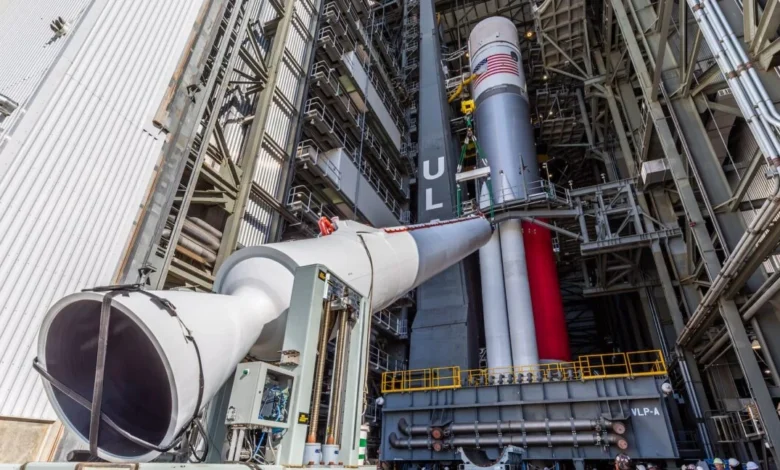
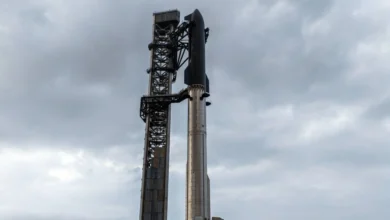
United Launch Alliance (ULA) has officially scheduled the return-to-flight mission for its Vulcan Centaur rocket for November 13, marking a pivotal moment for the aerospace firm after a nine-month grounding. This upcoming launch, which is currently pending final range approval at Cape Canaveral Space Force Station in Florida, represents a critical stress test for the company’s new heavy-lift vehicle. The mission will carry 40 satellites for Amazon’s Project Kuiper, a massive low-Earth orbit (LEO) broadband constellation that represents the largest commercial launch contract in ULA’s history.
The November mission is the first of 38 contracted flights for Amazon, which intends to utilize the Vulcan rocket to deploy the majority of its global internet network. For ULA, the successful execution of this mission is not merely a logistical milestone but a fundamental requirement to restore trust with its most significant stakeholder, the United States Space Force.
Chronology of the Vulcan Centaur Program
The Vulcan Centaur was developed to replace ULA’s workhorse vehicles, the Atlas V and Delta IV Heavy, providing a more cost-effective and powerful alternative for both commercial and national security missions. The program’s journey has been marked by high-stakes testing and significant technical hurdles:
- January 8, 2024: The Vulcan Centaur achieves a successful inaugural launch (Cert-1), carrying the Peregrine lunar lander.
- February 2024: During the second certification flight (Cert-2), the rocket experiences an in-flight anomaly involving the nozzle of one of its solid rocket boosters (SRBs). Despite the malfunction, the vehicle successfully completes its mission objectives, delivering its payload to the designated orbit.
- February–November 2024: ULA enters an extended grounding period to investigate the root cause of the booster nozzle failures. This suspension causes significant delays to the company’s 2026 launch manifest, pushing back high-priority national security payloads.
- November 13, 2024 (Targeted): ULA plans to launch the Project Kuiper mission, marking the return to flight with a redesigned booster nozzle.
Technical Analysis of the Booster Anomaly
The core of the issue lies in the solid rocket boosters (SRBs) provided by Northrop Grumman, which assist the Vulcan Centaur during the initial ascent phase. Following the February flight, post-mission telemetry revealed evidence of nozzle erosion and thermal degradation that exceeded expected parameters.
Engineers at ULA and Northrop Grumman conducted a comprehensive forensic analysis of the hardware. The investigation determined that the erosion was caused by unexpected thermal interactions within the nozzle assembly during high-stress flight conditions. ULA has since implemented design modifications and revised manufacturing processes to reinforce the nozzle structures against these thermal loads.
"We have made great strides in understanding the anomaly," a ULA spokesperson noted in a recent briefing. The company emphasized that the upcoming November mission will serve as a verification flight for these modifications. By integrating the improved nozzle design into the Kuiper mission, ULA aims to collect real-time flight data that validates the hardware changes in a live environment, rather than relying solely on ground-based testing simulations.
The Role of National Security and Space Force Oversight
The Pentagon remains the primary driver of Vulcan’s development. Under the National Security Space Launch (NSSL) program, ULA has been contracted for roughly half of all major U.S. government launches through the early 2030s. The Space Force certified the Vulcan for national security missions in 2025, a process that requires a rigorous assessment of vehicle reliability and mission assurance.
The February incident triggered a deep-dive review by Space Force officials, who maintain a "zero-failure" tolerance for critical national security payloads, such as classified intelligence satellites. While the Vulcan successfully delivered its payloads despite the nozzle issues, the Space Force required full transparency and documented mitigation strategies before allowing the rocket to return to the pad.
Industry analysts suggest that the pressure on ULA is exacerbated by the competitive landscape. With SpaceX’s Falcon 9 and Falcon Heavy maintaining a high cadence of successful flights, ULA cannot afford prolonged delays if it hopes to maintain its market share in the NSSL program. The Space Force’s scrutiny is intended to ensure that the Vulcan is sufficiently robust to handle the high-value assets of the U.S. government, which include reconnaissance and communications hardware essential to global defense operations.
Amazon’s Strategic Interest
Amazon’s Project Kuiper is a massive undertaking, with a goal of deploying over 3,000 satellites to provide high-speed, low-latency internet access worldwide. Amazon has invested billions into its launch partnerships, with ULA being a key provider alongside Arianespace and Blue Origin.
For Amazon, the Vulcan delay has been a significant logistical challenge. However, the company has expressed continued confidence in ULA’s technical team. The 40-satellite payload for the November launch represents a critical step in the "constellation-building" phase, where the volume of satellites in orbit determines the quality and reach of the broadband service. If the November launch succeeds, it will provide Amazon with the necessary momentum to accelerate its deployment schedule into 2025.
Implications for the Aerospace Industry
The return of the Vulcan Centaur has broader implications for the U.S. aerospace sector. First, it signals the importance of redundant launch capabilities. Having multiple providers capable of lifting heavy payloads is a core tenet of the Space Force’s strategy to ensure "assured access to space." If ULA remains sidelined, the burden of national security launches falls disproportionately on other providers, increasing the risk of mission bottlenecks.
Second, the Vulcan’s reliance on the BE-4 engines—developed by Blue Origin—and the Northrop Grumman SRBs highlights the complexities of modern aerospace supply chains. Integrating components from multiple high-profile contractors requires immense coordination. The recent anomaly serves as a reminder of the inherent risks involved in flight-testing new, complex architectures.
Looking ahead, ULA must demonstrate not only that it has fixed the nozzle issue but also that its manufacturing and quality assurance processes can support a high-cadence launch schedule. Success in November will likely lead to an accelerated manifest in 2025, as ULA attempts to recover the time lost during the grounding. Failure, conversely, would invite further scrutiny from federal auditors and could potentially lead to a re-evaluation of the current NSSL contract structure.
Conclusion and Looking Forward
As the November 13 launch window approaches, all eyes will be on the Cape Canaveral pad. ULA has been cautious in its messaging, balancing optimism regarding the technical fixes with a commitment to rigorous testing. "To support our customers, this upcoming launch will utilize the improved nozzle design, and additional testing and analysis will continue in parallel with the mission," the company stated.
This approach reflects a mature understanding of the risks associated with aerospace engineering. By flying the improved hardware, ULA is effectively treating the Kuiper mission as both a commercial delivery and a developmental validation flight. The success of this mission will be measured by more than just the deployment of the satellites; it will be measured by the telemetry data confirming that the thermal degradation issues have been effectively resolved.
For ULA, the path forward is clear: return to the pad, prove the reliability of the Vulcan Centaur, and resume the delivery of the high-value payloads that define the company’s role in the future of American space operations. With the support of the Space Force and the continued backing of partners like Amazon, the November 13 mission stands as the most critical date on the industry’s calendar for the final quarter of 2024. As the countdown proceeds, the industry remains focused on whether the design improvements will hold up under the immense pressure of launch, thereby securing the Vulcan’s place as a dependable heavy-lift vehicle for the next decade.