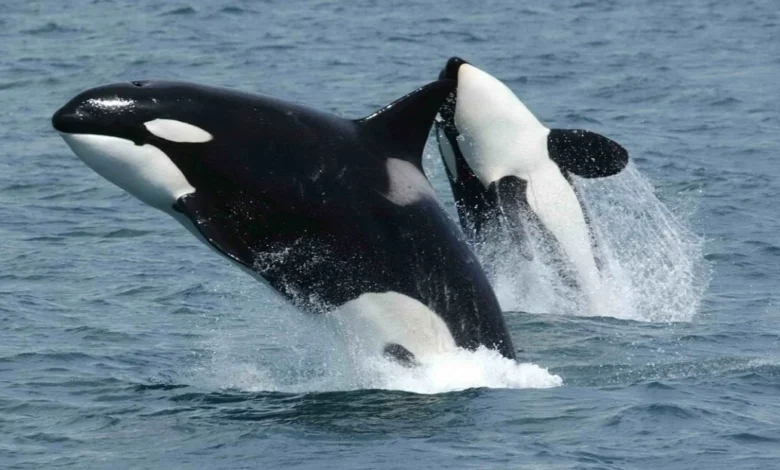
A groundbreaking observation in the Gulf of California has revealed a sophisticated and previously undocumented hunting technique employed by orcas (Orcinus orca), where they cooperatively ram sunfish (Mola mola) with such force that the carcasses explode into numerous fragments. This remarkable behavior, dubbed "ram-to-fragment" by scientists, suggests an evolved cooperative hunting strategy, potentially aimed at facilitating easier feeding for younger pod members or even serving as a form of playful interaction, according to a new paper published in the journal Frontiers in Ethology. The incident, captured on video by a tourism operator, provides fresh insights into the intricate social dynamics and adaptive intelligence of these apex predators, building upon recent accounts of culturally learned behaviors within orca populations, including the highly publicized boat-ramming incidents.
The Unprecedented Observation: A Coordinated Disintegration
The pivotal event unfolded in July 2024 off the coast of San Jose del Cabo, Mexico, within the biodiverse waters of the Gulf of California. A local tourism operator, whose proximity to these marine interactions often places them at the forefront of discovery, documented a pod of orcas comprising three adult females, one adult male, and a single juvenile. Initially, the pod was observed engaging in the capture and consumption of a spine-tail devil ray, a common prey item for transient orcas in the region. However, what followed captivated observers and scientists alike.
Shortly after the devil ray encounter, one of the adult female orcas was filmed holding the substantial carcass of a sunfish firmly in her mouth. The sunfish already bore a significant lateral wound, indicating that its viscera had likely been removed in a prior stage of predation—a typical step in orca sunfish hunting. What distinguished this observation was the subsequent action: the adult male orca positioned itself for a direct charge. With precision and apparent coordination, the female released the sunfish carcass just moments before the male delivered a powerful, head-on impact. The force of the collision was audible, reverberating through the water, and resulted in the sunfish carcass disintegrating into a multitude of smaller fragments. These dispersed pieces of flesh were then readily consumed by the juvenile orca, while the adults focused on feeding from the larger, split-open sections of the body.
This meticulous sequence of events strongly suggests a deliberate, cooperative strategy designed to break down a large, tough prey item into manageable portions. The "ram-to-fragment" technique, as proposed by the researchers, represents a significant departure from previously documented methods of prey handling, underscoring the dynamic adaptability of orca hunting tactics.
Scientific Scrutiny: Beyond Conventional Predation
The findings, detailed in the Frontiers in Ethology paper, highlight that while orcas are renowned for their strength and their ability to use force to remove flesh from prey, this specific "ram-to-fragment" behavior introduces a new dimension to their predatory repertoire. Co-author Kathryn Ayres of Beneath The Waves, a non-profit organization dedicated to ocean health and research, remarked on the potential motivations behind this extraordinary act. "We think this may help younger orcas feed more easily, or it could also just be for fun," Ayres stated, acknowledging the multifaceted nature of orca behavior. "Orcas are known for playing with their food."
The dual hypothesis—expediency for juveniles versus playful interaction—underscores the complexity of interpreting cetacean actions. From an ecological perspective, providing easily accessible, smaller fragments of food could significantly benefit younger, less experienced pod members. This ensures they receive adequate nutrition and potentially reduces the energy expenditure required for them to process larger prey items independently. Such cooperative feeding strategies are a hallmark of highly social species, where the well-being of the group, particularly its younger generation, is paramount for long-term survival and propagation.
However, the "play" hypothesis also holds considerable weight within the scientific community. Orcas are celebrated for their sophisticated cognitive abilities and demonstrate a wide range of non-utilitarian behaviors. Play, in many intelligent species, serves multiple functions: it can be a means of social bonding, a practice ground for developing hunting skills, a way to explore the environment, or simply an expression of enjoyment. The sheer force and dramatic outcome of the sunfish fragmentation might indeed provide a stimulating and reinforcing experience for the orcas involved, blurring the lines between pure predatory efficiency and recreational activity.
A Rich Tapestry of Cooperative Hunting and Social Learning
The newly observed "ram-to-fragment" behavior is not an isolated anomaly but rather fits within a broader context of orca cooperative hunting strategies and their capacity for social learning. Orcas exhibit a remarkable diversity of hunting techniques, often tailored to specific prey species and local environmental conditions. These strategies are frequently learned and passed down through generations, forming distinct cultural traditions within different orca pods.
Examples of such sophisticated cooperative tactics abound:
- Wave-Washing: In the Antarctic, specific orca ecotypes famously create powerful waves to knock seals off ice floes, a strategy requiring precise timing and coordinated effort.
- Herding and Blocking: Orcas have been observed herding mobile prey like rays into confined spaces or blocking the escape paths of fast-moving species such as white sharks, demonstrating advanced spatial awareness and strategic planning.
- Ramming Larger Prey: Similar to the sunfish incident, orcas have been documented ramming large marine animals like whale sharks, sometimes with one orca holding the prey steady while another delivers the impact, though not typically with the same fragmentation outcome.
These examples underscore the concept of orcas engaging in behaviors that can be described as social interaction, play, or practice, all serving as modes of social learning. The transmission of these complex behaviors across generations highlights the cultural depth of orca societies. The recent, well-publicized instances of orcas ramming and occasionally sinking boats off the Iberian Peninsula are another compelling illustration of culturally learned behavior, where a specific interaction with human vessels appears to have spread rapidly within certain populations. While the motivations behind the boat incidents remain a subject of intense research, they parallel the sunfish fragmentation in demonstrating the orcas’ capacity to develop and share novel behaviors.
The Mola Mola: A Unique and Vulnerable Prey
To fully appreciate the significance of the "ram-to-fragment" technique, it is essential to understand the nature of the prey: the ocean sunfish, or Mola mola. The Mola mola is an extraordinary creature, holding the title of the world’s heaviest known bony fish, with adults capable of reaching lengths of over 10 feet and weights exceeding 5,000 pounds. Their distinctive, disc-shaped bodies, large fins, and lack of a caudal fin give them an almost alien appearance.
Despite their immense size, Mola mola are relatively placid, slow-moving fish that primarily feed on jellyfish, small fish, and larvae. They possess no effective natural defenses against apex predators other than their sheer bulk. Their skin is rough and leathery, but not impenetrable, making them vulnerable to predators such as sharks, sea lions, and, notably, orcas.
When hunting sunfish, orcas typically employ a specific three-pronged strategy:
- Targeting Pectoral Fins: An orca will first focus on immobilizing the sunfish by targeting its pectoral fins.
- Viscera Removal: Next, the orca slashes the sunfish across its body to access and remove the internal organs (viscera), which are often a highly nutritious part of the prey.
- Tissue Extraction: Finally, the orca uses its powerful beak-like jaws to get at the remaining muscle tissue.
The "ram-to-fragment" behavior observed in the Gulf of California appears to represent a potentially more sophisticated or, at the very least, an alternative version of this basic strategy. By fragmenting the carcass, the orcas bypass some of the more intricate steps of tearing and stripping, making the soft tissue immediately available in smaller, more digestible pieces, particularly beneficial for the developing jaws and digestive systems of juvenile orcas. This adaptation suggests a highly refined understanding of their prey’s anatomy and the most efficient methods for its consumption.
The Gulf of California: A Hotspot for Discovery
The Gulf of California, also known as the Sea of Cortez, where this groundbreaking observation took place, is a marginal sea of the Pacific Ocean that separates the Baja California Peninsula from the Mexican mainland. Renowned for its extraordinary biodiversity, it is often referred to as "the world’s aquarium." Its nutrient-rich waters support a vast array of marine life, from microscopic plankton to megafauna such as whales, dolphins, sharks, and sea lions. This abundance of prey makes it a critical feeding ground for transient orcas, which specialize in hunting marine mammals and large fish.
The consistent presence of diverse marine species in the Gulf creates a dynamic environment ripe for such novel interspecies interactions. The region’s thriving ecotourism industry, with numerous operators conducting wildlife tours, inadvertently serves as a crucial platform for citizen science. These operators, with their extensive time spent on the water and deep understanding of local wildlife, frequently capture rare and significant behavioral events that might otherwise go unrecorded by traditional scientific expeditions. The video footage provided by the tourism operator in this instance is a testament to the invaluable role of such collaborations in advancing marine science.
Implications for Understanding Orca Intelligence and Conservation
The discovery of the "ram-to-fragment" strategy has several significant implications for our understanding of orcas:
1. Unparalleled Cognitive Flexibility: This new behavior further solidifies the reputation of orcas as one of the most cognitively flexible species on the planet. Their ability to innovate, adapt, and transmit complex hunting techniques demonstrates a high level of intelligence, problem-solving capabilities, and cultural sophistication. Such adaptability is crucial for survival in ever-changing marine environments.
2. The Role of Play in Learning: The hypothesis that this behavior might be "for fun" opens avenues for deeper research into the role of play in the development of predatory skills and social bonding among orcas. Play is not merely recreational; it is often a vital component of learning and development in intelligent mammals, allowing individuals to practice complex motor skills and social interactions in a low-stakes environment.
3. Refining Ecological Models: Understanding these nuanced hunting strategies allows scientists to refine ecological models that predict predator-prey dynamics and energy transfer within marine ecosystems. The efficiency of a hunting technique directly impacts the energy budget of a pod and its overall fitness.
4. Conservation Challenges: While this discovery celebrates orca intelligence, it also underscores the ongoing need for robust conservation efforts. As apex predators at the top of the food chain, orcas are particularly vulnerable to environmental degradation, including pollution, overfishing of their prey, and habitat disturbance. Understanding their intricate behaviors helps in developing more effective conservation strategies that consider their specific ecological and cultural needs. For instance, if certain hunting techniques are culturally transmitted, disruptions to pod structure could have long-term impacts on their ability to forage effectively.
5. Human-Wildlife Interaction: The parallels drawn between the sunfish fragmentation and the boat-ramming incidents, both as examples of culturally transmitted behaviors, highlight the complex and often unpredictable nature of human interaction with highly intelligent wildlife. Continued research into the motivations and mechanisms of such behaviors is crucial for fostering coexistence and mitigating potential conflicts.
Future Research Directions
The "ram-to-fragment" discovery opens numerous avenues for future research. Scientists will undoubtedly seek to:
- Document More Instances: Further observations are needed to determine the prevalence of this behavior across different orca pods and geographical locations.
- Behavioral Ecology Studies: Long-term studies focusing on the energetic costs and benefits of this technique compared to other sunfish hunting methods.
- Social Learning Mechanisms: Investigate how this behavior is taught and learned within pods, potentially through observational learning, direct teaching, or trial and error.
- Acoustic Analysis: Analyze any vocalizations associated with the "ram-to-fragment" event to understand communication during cooperative hunting.
- Genetic and Population Studies: Determine if this behavior is specific to certain ecotypes or genetically related pods.
The relentless curiosity and innovative spirit of orcas continue to astound the scientific community. The "ram-to-fragment" sunfish strategy is a vivid reminder of the ocean’s enduring mysteries and the profound intelligence of its most formidable predators. As we continue to document and analyze these complex behaviors, we gain not only a deeper appreciation for the natural world but also critical insights into the very nature of intelligence, culture, and survival in the wild.