Executive Exodus in Autonomous Unit Amid High-Stakes Robotaxi Push
Uber Technologies is confronting a critical leadership vacuum within its autonomous vehicle division just as the company prepares to accelerate its global robotaxi deployment. Despite management’s public assertions that autonomous vehicle momentum has never been stronger, the ride-hailing giant has suffered a rapid succession of high-profile departures across its commercial, legal, and engineering leadership. This simultaneous loss of foundational architects and operational heads threatens to complicate Uber’s multi-billion-dollar bet on autonomous mobility at a pivotal junction in the industry’s evolution.
The Double Departure and the Engineering Void
The most recent blow to Uber’s autonomy division centers on the coordinated exits of two senior executives: Danny Guo, Vice President of Engineering and Science, and Sarfraz Maredia, Global Head of Autonomous Mobility and Delivery. Both executives are scheduled to depart the company, stripping Uber’s autonomous business of its top-tier commercial and technical leadership simultaneously.
Guo, a veteran of nearly 12 years at Uber, has played a foundational role in shaping the company’s technological infrastructure. Reporting directly to Chief Technology Officer Praveen Neppalli Naga, Guo oversaw engineering across critical verticals including autonomy, digital mapping, marketplace algorithms, experimentation, and the Uber One membership ecosystem. Crucially, Guo fronted AV Labs, a specialized data unit launched in January designed to capture real-world driving data from rare edge scenarios. Maredia, meanwhile, served as the primary commercial dealmaker, orchestrating the complex global partnerships necessary to bring autonomous fleets onto Uber’s platform.
According to statements provided by an Uber spokesperson to financial media, Guo is leaving the transportation sector entirely to pursue opportunities elsewhere. Following his departure, the engineering teams that previously answered to him will be folded directly under CTO Praveen Neppalli Naga. This restructuring aligns with a broader corporate flattening strategy initiated by Uber, which included a workforce reduction of approximately 3,300 employees—amounting to roughly 10% of its total headcount—aimed at streamlining operations as the company pivots toward leaner, more execution-focused phases.
The broader talent exodus, however, extends far beyond the autonomy unit. The departures mirror a wider executive churn at Uber that includes the exit of President Jill Hazelbaker to artificial intelligence pioneer OpenAI, as well as earlier high-profile departures of the company’s Chief Financial Officer and Chief People Officer. In the broader technology labor market, the gravitational pull of generative artificial intelligence and frontier AI research has begun competing directly with the capital-intensive, hardware-heavy robotaxi sector—a field where Uber has staked more than $10 billion in cumulative investments and partnerships.
Chronology of the Autonomous Shift
To understand the gravity of the current leadership transition, it is necessary to examine the chronology of Uber’s modern autonomous strategy. Following the controversial sale of its in-house Advanced Technologies Group (ATG) to Aurora Innovation in late 2020, Uber pivoted from a developer of autonomous software to a platform orchestrator. Rather than building the underlying artificial intelligence stack, Uber sought to become the indispensable marketplace connecting third-party robotaxi developers with hundreds of millions of global consumers.
January: Uber formally launches AV Labs, positioning the specialized unit as a direct solution to the threat of disintermediation by robotaxi developers. The initiative is built to supply autonomous developers with complex real-world driving data from rare edge scenarios that standard developer fleets struggle to capture organically.
June: Uber announces an ambitious expansion of its data-gathering initiative, stating plans to deploy 500 sensor-laden Hyundai Ioniq 5 data-collection vehicles globally. The goal is to aggregate up to two million miles of real-world driving data per month, creating an indispensable data moat for its platform partners.
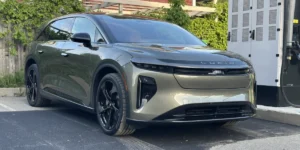
Early 2026: Uber significantly expands its landmark partnership with Lucid Group and Nuro, scaling the projected deployment order to 35,000 dual-purpose autonomous vehicles.
September: Uber announces a comprehensive corporate restructuring, cutting roughly 10% of its workforce to trim structural overhead and flatten management reporting lines.
November 16: Danny Guo and Sarfraz Maredia officially exit the company, marking the completion of a total turnover among the commercial and technical architects who designed Uber’s post-ATG autonomous framework.
First Quarter 2027: The anticipated commercial launch of fully driverless testing and public availability for the Lucid-Nuro robotaxi fleet in the San Francisco Bay Area, following a slight schedule slip from late 2026.
Supporting Data and Strategic Metrics
The economics and operational metrics underlying Uber’s autonomous push reveal both the immense scale of the ambition and the steep competitive mountain the company must climb. During recent earnings and investor updates, Chief Executive Officer Dara Khosrowshahi outlined the company’s near-term autonomous deployment targets, noting that approximately 700 fully driverless vehicles are expected to be operating on the Uber network by the end of the year, with that number scaling to over 2,000 units by 2027.
The crown jewel of this expansion is the expanded 35,000-vehicle agreement involving Lucid and Nuro. The partnership is slated to begin fully driverless testing in the San Francisco Bay Area during the third quarter, with Khosrowshahi emphasizing that the service will operate completely driverless from day one. However, the commercial timeline for this flagship project has experienced slight delays, slipping into the first quarter of 2027.
To contextualize these figures, incumbent market leaders operate at a significantly advanced scale. Alphabet’s Waymo, for instance, routinely runs upwards of 4,000 autonomous vehicles across multiple major metropolitan markets in the United States. While Uber’s network reach remains unmatched globally, its proprietary fleet initiatives are playing catch-up to dedicated autonomy providers who have spent over a decade perfecting their hardware and safety drivers.
Friction with Key Partners
The loss of leadership comes at a time when Uber’s relationships with its anchor autonomous partners are showing signs of structural strain. The platform model relies on convincing developers that the massive customer acquisition funnel provided by Uber outweighs the benefits of operating proprietary booking apps. However, the dynamics vary dramatically depending on the maturity of the partner.
Waymo, widely considered the clear commercial leader in the United States, represents the partner with the least reliance on Uber’s external data or customer base. The relationship between the two companies has experienced visible friction. Waymo has begun loosening its ties with the ride-hailing titan, systematically planning independent standalone applications in key markets such as Austin and Atlanta while winding down its presence on the Uber application in those regions. In Phoenix, Waymo services have already been completely decoupled from the Uber interface.
Publicly, executive commentary from partner firms underscores the consumer experience hurdles of hybrid dispatching. Waymo Co-Chief Executive Tekedra Mawakana has previously characterized booking autonomous rides through the Uber platform as a "crapshoot" for consumers, pointing out that riders lack upfront visibility into whether a dispatch will fulfill their trip with a human-driven vehicle or an autonomous robotaxi.
Conversely, it is the smaller, emerging robotaxi developers running modest, capital-constrained fleets that depend most heavily on the infrastructure that Guo and his AV Labs team were built to provide. For these smaller entities, outsourcing data collection, edge-case management, and customer acquisition to Uber is an existential necessity rather than an optional marketing channel.
Implications and Fact-Based Analysis
The departure of Guo, Maredia, and their legal and business development counterparts leaves Uber with a distinct operational dichotomy: the strategy phase of its modern autonomy pivot is definitively closed, and the execution phase has begun under a completely new slate of leaders.
Folding the engineering divisions directly under CTO Praveen Neppalli Naga reduces bureaucratic friction and aligns with the leaner corporate structure demanded by executive leadership. Yet, the timing introduces undeniable execution risk. The upcoming launch of the Lucid-Nuro fleet in early 2027 will serve as the ultimate stress test for whether Uber’s remaining engineering talent can successfully deliver on complex safety, regulatory, and software integration milestones without the original architects of the model at the helm.
Furthermore, the simultaneous departure of top commercial dealmakers complicates ongoing negotiations with traditional automakers and emerging technology firms looking to partner on large-scale fleet deployments. As the autonomous vehicle industry transitions from localized testing to nationwide commercialization, Uber must prove that its marketplace platform can retain major players like Waymo while successfully scaling smaller fleets—all while navigating an increasingly competitive market for elite engineering talent.
Related posts: