Toyota Trio: How the bZ, C-HR, and bZ Woodland Stack Up in the Expanding EV Landscape

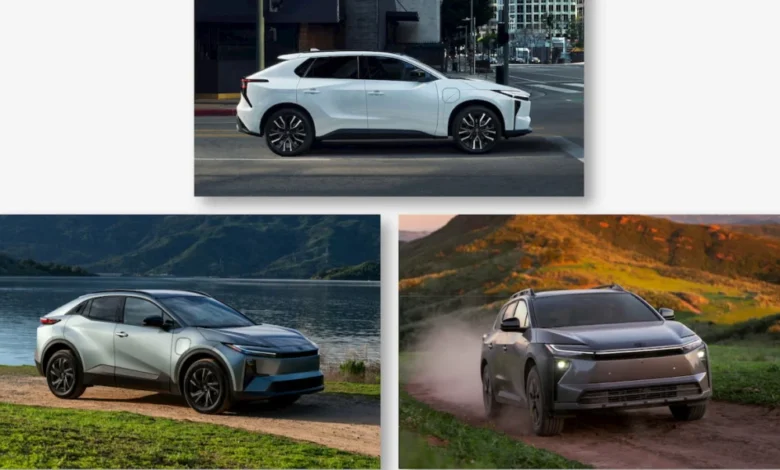
Toyota Motor Corporation has cemented its position as a dominant force in the North American electric vehicle market, shifting its strategy from a cautious hybrid-first approach to aggressive, high-volume electrification. Following the successful mid-decade refresh of its core electric vehicle lineup, the Japanese automaker now offers three distinct fully electric SUVs designed to capture varying consumer segments: the versatile bZ, the sporty C-HR, and the rugged, off-road-capable bZ Woodland.
This rapid expansion has fundamentally altered Toyota’s market standing. According to comprehensive industry data from Cox Automotive, Toyota surged to become the third most popular electric vehicle brand in the United States during the third quarter of 2026, trailing only industry heavyweights Tesla and Rivian. Buoyed by the strong market reception of the redesigned bZ series—which ranked as the fourth-best-selling electric vehicle overall in the first nine months of 2026 behind the Hyundai IONIQ 5 and Tesla’s Model 3 and Model Y—Toyota’s overall EV sales have nearly tripled year-over-year.

With the 2027 model-year rollout now hitting dealership lots, prospective buyers face a broader array of choices than ever before within the brand’s ecosystem. Understanding how these three battery-electric offerings compare in pricing, range, performance, and capability is essential for navigating Toyota’s new electric chapter.
Evolution of Toyota’s Electric Strategy: From Hesitation to Market Momentum
For years, critics and environmental advocates faulted Toyota for moving too slowly on pure battery-electric vehicles (BEVs), with executives frequently emphasizing a multi-pathway strategy that prioritized hybrids, plug-in hybrids, and hydrogen fuel cells alongside traditional electric powertrains. However, the introduction of the bZ platform laid the groundwork for a broader paradigm shift.
The turning point arrived in late 2025 when Toyota rolled out significant engineering and design upgrades to its flagship electric SUV, dropping the cumbersome alphanumeric suffix to rebrand it simply as the "bZ." Addressing early consumer feedback regarding charging infrastructure, range anxiety, and interior ergonomics, the updated model struck a chord with mainstream buyers looking for reliability paired with modern zero-emission performance.
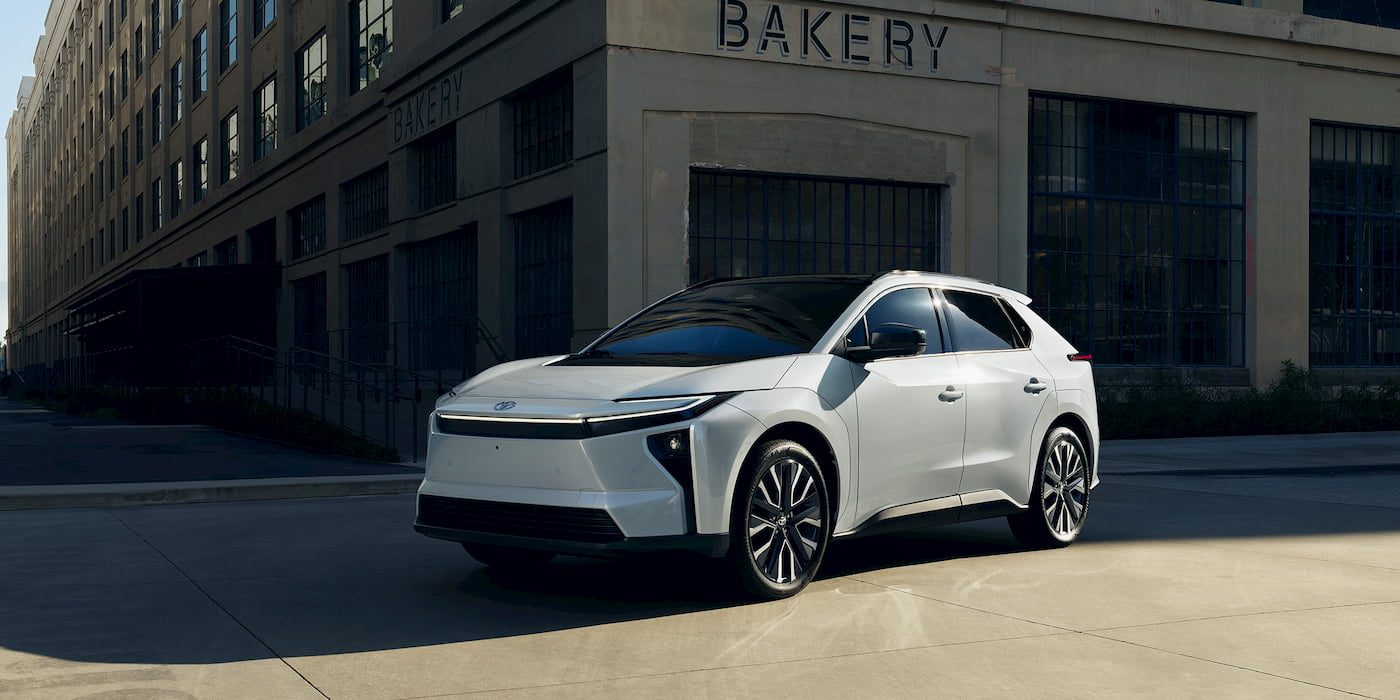
Building on this momentum, Toyota expanded its portfolio with the introduction of the C-HR EV and the adventure-focused bZ Woodland. Industry analysts point out that this trio allows Toyota to target distinct consumer psychographics: the practical daily commuter, the design-conscious urban driver, and the weekend outdoor enthusiast. Furthermore, the inclusion of a native North American Charging Standard (NACS) port across the entire 2027 lineup has effectively eliminated one of the primary historical friction points for prospective EV adopters, granting seamless access to Tesla’s expansive Supercharger network without the need for cumbersome adapters.
The Core Daily Driver: 2027 Toyota bZ
At the heart of the lineup sits the 2027 Toyota bZ, engineered to serve as an accessible, high-value everyday driver. Starting at an MSRP of $34,980 for the entry-level configuration (excluding a $1,595 delivery, processing, and handling fee), the bZ offers an appealing entry point into the midsize electric SUV segment.
The bZ is available in two primary grades—XLE and Limited—with options for front-wheel drive (FWD) or dual-motor all-wheel drive (AWD). Buyers can choose between two distinct battery packs depending on their mileage requirements. The base XLE FWD utilizes a 57.7 kWh battery pack that delivers an EPA-estimated driving range of up to 236 miles, powered by a 165-horsepower electric motor.
For motorists requiring extended travel capability, the XLE FWD Plus upgrades to a larger 74.7 kWh battery, stretching the driving range to an impressive 314 miles while boosting output to 221 horsepower. The pricing for the FWD Plus begins at $37,980. Meanwhile, all-wheel-drive configurations employ the 74.7 kWh battery, yielding 288 miles of range for the XLE AWD (starting at $39,980) and 278 miles for the top-tier Limited AWD (starting at $45,380). The Limited FWD variant strikes a middle ground, offering 299 miles of range and 221 horsepower for $43,380.
Interior Technology and Charging Efficiency
Inside the cabin, the 2027 bZ showcases a modernized digital layout designed to minimize clutter while enhancing connectivity. Drivers are greeted by a 7-inch customizable LCD Multi-Information Display (MID), complemented by a large 14-inch Toyota Audio Multimedia central touchscreen. Wireless integration for both Apple CarPlay and Android Auto comes standard across all trims.
When it comes to replenishment, the bZ utilizes its native NACS port to support rapid DC fast charging. Toyota reports that connecting the vehicle to a high-powered DC fast charger allows the battery to refill from 10% to 80% in approximately 30 minutes, minimizing downtime on long-distance road trips.

The Rugged Pathfinder: 2027 Toyota bZ Woodland
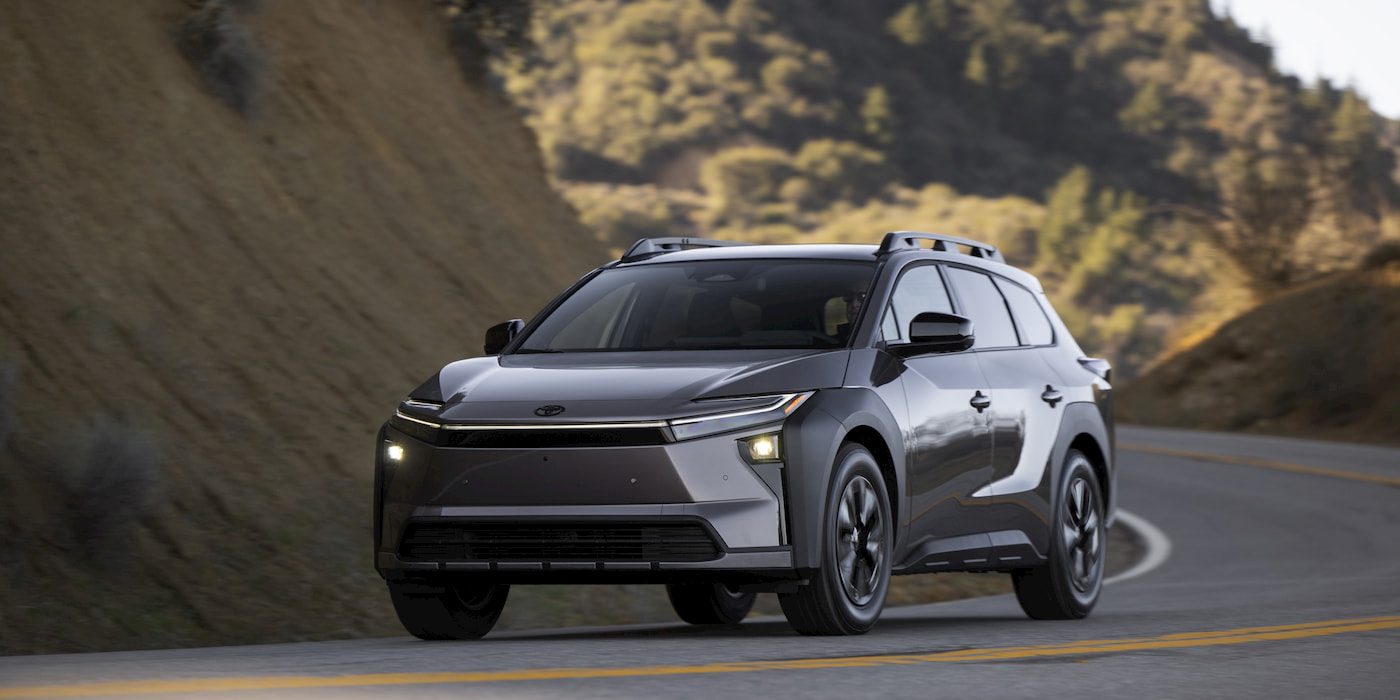
For consumers whose lifestyles demand greater utility, rough-road capability, and cargo capacity, Toyota developed the 2027 bZ Woodland. Standing roughly six inches longer than the standard bZ, the Woodland features a commanding, upright physical stance designed to handle unpaved trails and adverse weather conditions with confidence.
Priced starting at $45,380 for the base model and $47,480 for the Premium trim (excluding the $1,595 delivery fee), the Woodland is built with standard dual-motor all-wheel drive. It incorporates Toyota’s specialized X-Mode control system to optimize traction over slippery or uneven terrain. This powertrain generates a combined 375 horsepower—making it the most powerful production electric vehicle currently offered by the brand—alongside a robust 3,500-pound towing capacity.
Capability Trade-Offs and Interior Utility
The added performance and structural heft come with specific trade-offs regarding efficiency. Utilizing the same 74.7 kWh battery pack found in the standard bZ’s larger configurations, the Woodland yields an EPA-estimated range of 281 miles in standard form. Equipping the vehicle with optional all-terrain tires for enhanced off-road grip further reduces the driving range to approximately 260 miles.

Despite the slight reduction in range, the Woodland compensates with superior utility. It provides 8.3 inches of ground clearance and significantly expands interior storage, offering up to 74.3 cubic feet of cargo volume with the rear seats stowed, compared to the standard bZ’s 67.1 cubic feet. Standard equipment across all Woodland variants includes roof rails, dual Qi-capable wireless device chargers, heated front seats and steering wheel, and advanced Digital Key functionality.
The Urban Athlete: 2027 Toyota C-HR EV
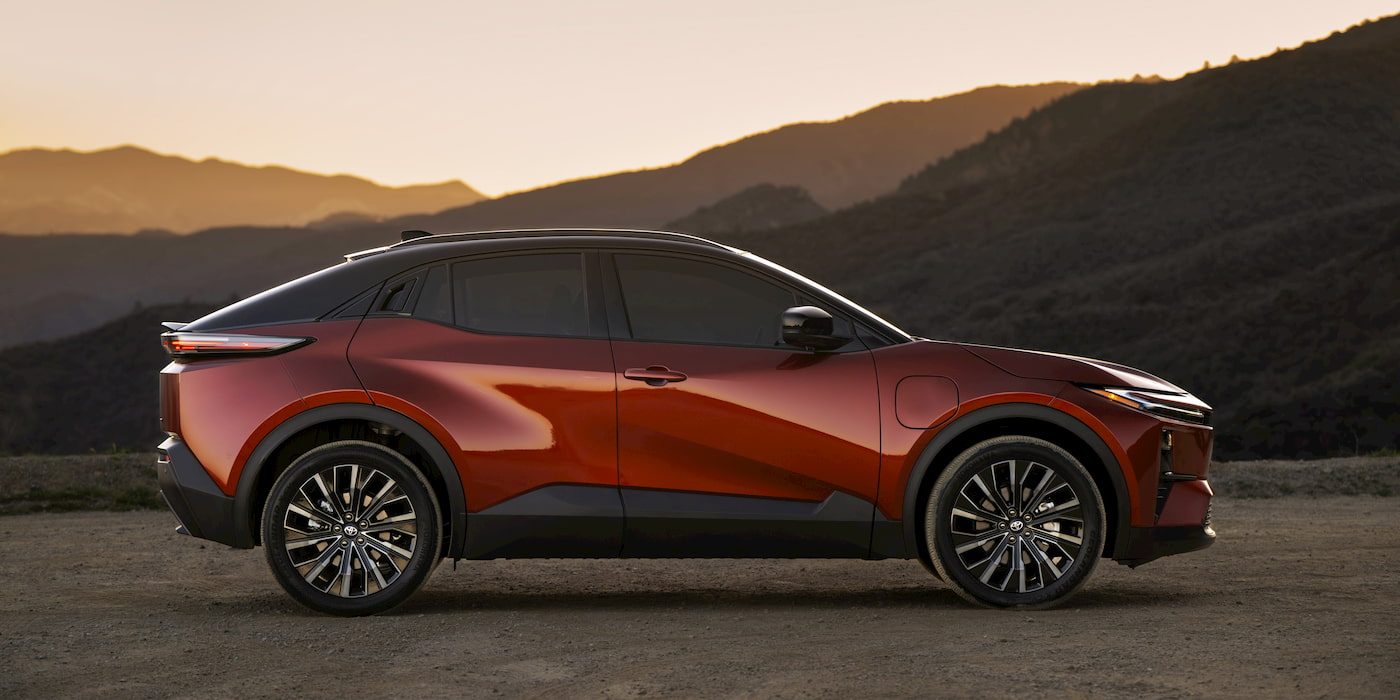
Rounding out the trio is the 2027 Toyota C-HR, which reimagines the nameplate as a sleek, coupe-like electric crossover tailored for urban environments and design-conscious motorists. Positioned slightly above the standard bZ in terms of baseline pricing, the C-HR starts at $37,080 for the SE trim and $39,080 for the XSE variant (excluding the $1,595 delivery fee).
Measuring approximately 6.7 inches shorter than the bZ with a more compact wheelbase, the C-HR delivers nimble handling characteristics without sacrificing powertrain performance. Like its stablemates, it features standard dual-motor all-wheel drive, putting out a spirited 338 horsepower.
Range and Trims
The C-HR is offered exclusively with the 74.7 kWh battery pack. Efficiency varies slightly depending on wheel selection: models equipped with standard 18-inch wheels achieve an EPA-estimated range of 287 miles, while upgrading to the visually striking 20-inch wheels on the XSE trim reduces the range to 273 miles.
Despite its sloping, aerodynamic roofline, the C-HR cleverly maximizes internal packaging, offering up to 59.5 cubic feet of rear cargo space with the seats folded down—eclipsing the standard bZ’s 56.9 cubic feet of rear cargo capacity. Standard amenities on the C-HR include dual wireless phone chargers, low-profile roof rails, Fabric/SofTex-trimmed seating, heated front and steering amenities, Toyota Safety Sense 3.0 driver-assistance features, and a power liftgate.
Market Implications and Future Outlook
The diversification of Toyota’s electric SUV portfolio marks a significant maturation of the brand’s zero-emission strategy. By offering three distinct vehicles at competitive price points—ranging from the high-value bZ commuter to the rugged bZ Woodland and the stylish C-HR—Toyota is systematically covering the most critical segments of the crossover market.

Market analysts note that this trifecta positions Toyota to capture shifting consumer demographics as EV adoption transitions from early adopters to mainstream buyers. Furthermore, with the impending arrival of the Highlander EV slated for release next year—representing Toyota’s first three-row electric SUV—the company is building a comprehensive electric infrastructure designed to defend its market share against both established EV pure-plays and traditional legacy competitors.
As dealerships process deliveries of the 2027 model year, consumers are given unprecedented flexibility to choose an electric vehicle tailored precisely to their daily driving habits, aesthetic preferences, and recreational needs. Whether this robust lineup will be enough to challenge Tesla’s long-standing North American market dominance remains to be seen, but Toyota’s rapid ascent in the EV sales rankings proves that the sleeping giant of the automotive industry has firmly arrived in the electric era.
Related posts: