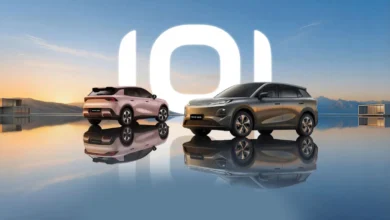
Parading BYD and CATL at a state dinner forces Washington to engage the exact firms it has flagged as security risks

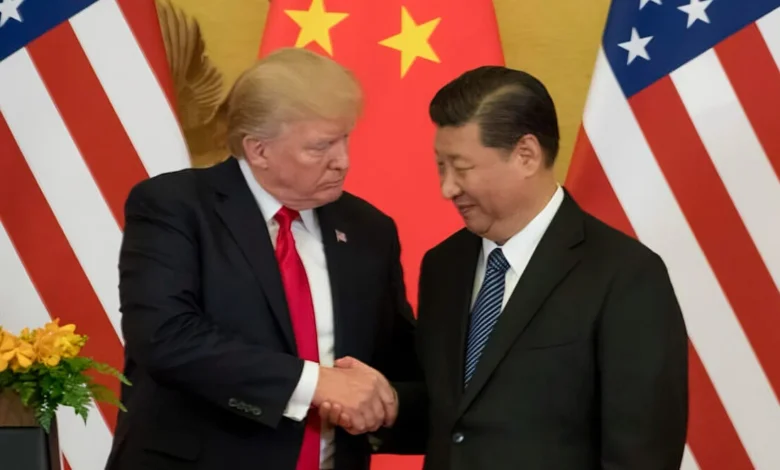
Washington and Beijing are currently finalizing an elite delegation of Chinese business leaders to accompany President Xi Jinping during his official state visit to Washington on September 24. According to reports from Reuters, prominent corporate heavyweights including electric vehicle giant BYD, consumer electronics and EV maker Xiaomi, and battery powerhouses CATL and Gotion are among the key entities under active consideration for the trip. Final invitations are expected to be issued within days, pending high-stakes weekend negotiations between US Treasury Secretary Scott Bessent and Chinese Vice President He Lifeng.
This prospective delegation represents a profound diplomatic and regulatory paradox. The inclusion of these specific Chinese executives forces the highest levels of the United States government into direct engagement with corporate entities that Washington itself has formally designated as national security risks. As trade diplomacy collides with hardline national security policies, the upcoming summit highlights the deep contradictions defining contemporary US-China economic relations.
The Anatomy of a Contradictory Delegation
The anticipated roster of visiting executives is notable primarily because a significant portion of the candidate companies currently face aggressive US regulatory pressure, sanctions, or blacklists. Contemporary Technology Co. (CATL) and BYD—two undisputed global leaders in the green energy transition—were added to the Pentagon’s restricted list of companies purportedly tied to the Chinese military in January 2025 and June 2026, respectively.
According to diplomatic sources familiar with the planning, President Xi specifically intends to bring business leaders who are grappling with US sanctions or blacklists. This strategic move mirrors a diplomatic playbook utilized earlier this year by President Donald Trump. In May, during his own delegation visit to Beijing, President Trump notably included executives from Chinese-scrutinized firms such as semiconductor giant Nvidia, demonstrating a mutual willingness to leverage corporate titans as diplomatic chips despite underlying strategic competition.
The inclusion of BYD Chairman Wang Chuanfu, in particular, serves as an immediate stress test for President Trump’s stated economic pragmatism. Earlier in September, Trump signaled that he would be receptive to Chinese automakers establishing manufacturing plants within the United States, provided they hire domestic American workers. However, this rhetorical openness exists in stark contrast to existing trade barriers: a punitive 100% tariff on imported Chinese electric vehicles remains firmly in place. Furthermore, a sweeping Biden-era regulatory rule is scheduled to bar China-linked automakers from selling new connected vehicles—including those assembled domestically—starting from model year 2027.
A Timeline of Escalating US-China Industrial Friction
To understand the gravity of the upcoming September 24 summit, it is necessary to examine the rapid escalation of legislative and regulatory hurdles that have transformed the US automotive and energy landscape over recent years.
- January 2025: The US Department of Defense officially adds battery manufacturer CATL to its blacklist of alleged Chinese military-linked companies, citing national security concerns and supply chain vulnerabilities.
- May 2025: President Trump leads a high-profile business delegation to Beijing, incorporating technology firms facing regulatory friction, setting a precedent for reciprocal corporate diplomacy.
- June 2026: BYD is added to the Pentagon’s restricted list, expanding military-industrial prohibitions to encompass the world’s largest electric vehicle manufacturer.
- September 2026 (Early): President Trump reiterates his conditional openness to accepting Chinese-owned automotive manufacturing plants on US soil, provided they utilize domestic American labor.
- September 24, 2026: President Xi Jinping arrives in Washington for a high-stakes state dinner and bilateral summit, accompanied by a delegation of top-tier Chinese industrialists, testing the limits of US protectionist policy.
- Model Year 2027 Implementation: Department of Commerce restrictions on connected vehicle hardware and software originating from China take full effect, alongside National Defense Authorization Act procurement bans.
Corporate Lobbying and Domestic Industry Pushback
Domestically, traditional US automakers have strongly urged the administration not to open the American automotive market to Chinese competitors under any circumstances. Among domestic original equipment manufacturers (OEMs), the strategic stakes are arguably highest for Ford Motor Company. Ford’s controversial licensing arrangement with CATL—utilized to power its upcoming battery manufacturing plant in Marshall, Michigan—has already drawn intense scrutiny from federal officials.
Transportation Secretary Sean Duffy recently delivered a sharply critical letter to Ford leadership regarding the project. Furthermore, Duffy publicly lambasted Ford over its joint manufacturing ventures in Spain involving Chinese firm Geely, as well as ongoing, closed-door discussions with administration officials concerning potential joint venture frameworks that might allow Chinese automakers to legally operate inside the United States.
The operational hurdles facing these cross-border projects are immense. CATL’s inclusion on the Pentagon’s restricted list carries concrete legal consequences beginning in 2027. Under Section 154 of the National Defense Authorization Act (NDAA), the US military is strictly barred from purchasing battery cells produced by CATL or sourced through its broader supply chains. This legislative restriction threatens to severely complicate Ford’s ability to supply defense-related vehicle fleets with batteries produced at its Marshall facility.
At the same time, Ford’s eligibility for lucrative federal tax credits depends entirely on maintaining a precise legal and structural framework. Treasury regulations governing the Section 45X Advanced Manufacturing Production Credit apply a rigorous "effective control" test. Currently, Ford manages to qualify by retaining legal ownership of the physical plant site and operational equipment. However, any modification to its foundational licensing terms with CATL risks triggering immediate disqualification under stringent Foreign Entity of Concern (FEOC) rules—a threshold penalty that could strip the automaker of tens of millions of dollars in annual federal subsidies.
Legal Battles Beyond the Beltway
The friction between Chinese automotive investment and domestic US enforcement extends far beyond traditional carmakers. Subsidiary conflicts are currently playing out across the American legal system.
In Michigan, battery components manufacturer Gotion is embroiled in a contentious lawsuit against Green Charter Township. Gotion alleges that local officials unlawfully blocked its planned $2.36 billion EV-components facility, highlighting the intense local political resistance greeting Chinese industrial investments. Meanwhile, major automotive parts supplier Wanxiang agreed in December to pay more than $53 million to resolve a sprawling Justice Department investigation concerning customs violations and anti-dumping duties levied on imported Chinese auto parts.
These legal battles underscore a fundamental reality: the collision between Chinese industrial expansion and American protectionism is already being litigated in federal and state courts, long before any diplomatic breakthroughs can be formalized at a presidential summit.
Fact-Based Analysis of Broader Implications
The juxtaposition of President Xi parading blacklisted corporate titans like Wang Chuanfu and Zeng Yuqun in the heart of Washington highlights a profound shift in modern economic statecraft. Economic security has officially subsumed traditional trade policy.
For the Trump administration, engaging with executives from firms flagged as national security threats presents a delicate balancing act. On one hand, inviting these leaders signals a pragmatic willingness to negotiate inward foreign direct investment that could theoretically create American blue-collar jobs. On the other hand, it exposes the administration to severe domestic political criticism from national security hawks who view any accommodation of Chinese battery and EV technology as an unacceptable surrender of critical infrastructure.
Ultimately, whether Wang Chuanfu’s potential presence in Washington signals a genuine, lasting openness to Chinese onshore manufacturing—or merely serves as a reciprocal diplomatic gesture mirroring Trump’s Beijing visit—will remain unclear until the summit concludes. The true test of this engagement will not be measured by the optics of a state dinner, but by whether the two superpowers can forge a coherent regulatory framework that reconciles America’s aggressive national security posture with the undeniable global dominance of China’s green technology supply chain.
Related posts: