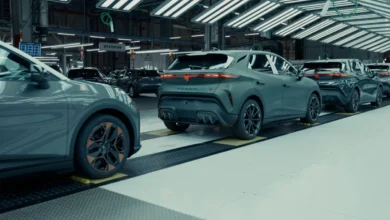
The Volkswagen Group, one of the undisputed titans of the global automotive industry, stands at a critical juncture in its illustrious history, facing an unprecedented convergence of financial pressures, technological disruptions, and structural inefficiencies that threaten to fundamentally alter its global footprint. According to recent strategic assessments by industry analysts, the German automotive conglomerate is poised to undergo a radical transformation over the next few years, characterized by severe production cutbacks, potential factory closures, and a significant pruning of its historically sprawling and overly complex model lineup. Authored against a backdrop of declining domestic profitability and intensifying competition from nimble electric vehicle (EV) upstarts in critical international markets, these projected changes are expected to reverberate across every single brand sheltered under the Volkswagen Group umbrella—from volume leaders like Skoda and SEAT to luxury and performance icons like Audi and Porsche—while directly impacting manufacturing operations and workforce stability at production facilities worldwide.
The challenges confronting the Wolfsburg-based manufacturer are multifaceted, deeply rooted in legacy cost structures, sluggish software development cycles, and a delayed pivot to next-generation electromobility that has allowed competitors, particularly in China and North America, to capture vital market share. For decades, Volkswagen operated under a philosophy of exhaustive market coverage, striving to offer a vehicle in virtually every conceivable segment and price point. However, this strategy of proliferation has ultimately birthed a labyrinthine manufacturing and administrative apparatus that struggles with agility and cost control. As industry expert Ian Henry observes, the path forward necessitates the emergence of a much leaner, more disciplined core brand capable of generating sustainable margins in a rapidly evolving macroeconomic landscape. This paradigm shift signals the potential end of an era defined by sheer volume dominance, prompting critical questions regarding whether the Volkswagen brand is inadvertently steering toward a permanently reduced global status.
Background Context of the Volkswagen Crisis
To understand the gravity of Volkswagen’s current predicament, one must examine the compounding pressures that have accumulated over the past decade. The diesel emissions scandal of 2015 served as a profound structural shock, forcing the company to pivot massive financial and engineering resources toward electrification and compliance while simultaneously paying out tens of billions of dollars in fines, legal settlements, and vehicle buybacks. Although the group successfully navigated the immediate fallout by accelerating its multi-brand electric vehicle strategy under platforms like the MEB (Modular Electric Drive Matrix), the execution has been chronically plagued by software integration hurdles.
Compounding these internal friction points are external headwinds. The European automotive market has failed to return to pre-pandemic sales volumes, weighed down by persistent inflation, elevated energy costs following geopolitical disruptions, and the gradual phasing out of government incentives for electric vehicle adoption. Meanwhile, in China—traditionally Volkswagen’s most lucrative market—the automotive ecosystem has shifted at breakneck speed. Domestic original equipment manufacturers (OEMs), spearheaded by companies like BYD, have successfully democratized high-tech, software-defined electric vehicles at price points that legacy European manufacturers struggle to match. Consequently, Volkswagen’s market share in China has eroded, exposing the vulnerability of its traditional product portfolio in the face of hyper-localized, software-centric competition.
Chronology of Events Leading to the Restructuring
The trajectory toward today’s drastic restructuring measures can be traced through a series of escalating operational warnings and strategic pivots over the recent past:
Late 2021: Volkswagen Group unveils its "NEW AUTO" strategy, aiming to transition the company into a vertically integrated mobility provider centered on software, autonomous driving, and battery electric vehicles by 2030.
September 2022: Following the departure of long-time CEO Herbert Diess, Oliver Blume assumes the helm, immediately signaling a more pragmatic, financially disciplined approach to capital allocation and platform sharing across group brands.
2023: Management introduces performance programs aimed at boosting efficiency, targeting €10 billion in cost savings at the core Volkswagen brand alone by 2026 to address deteriorating operating margins.
Late 2023 to Early 2024: Public tensions escalate between management and labor representatives as executive leadership refuses to rule out plant closures in Germany, breaking a decades-old job security pact that protected domestic workers.
Mid-2024: Financial results reveal continued margin compression, prompting management to issue explicit warnings that factory closures on German soil are no longer unthinkable, sending shockwaves through the nation’s political and industrial establishment.
Late 2024: Discussions intensify regarding deep headcount reductions, wage freezes, and the potential elimination or consolidation of underperforming model variants across the group’s sprawling portfolio.
Supporting Data and Financial Metrics
The necessity for radical operational surgery is vividly illustrated by the company’s financial disclosures and operational metrics. In recent quarters, Volkswagen’s profit margins have faced severe compression, frequently trailing behind major competitors such as Toyota and Hyundai. While group revenues have remained relatively robust due to higher average selling prices during the post-pandemic supply chain crunch, the profitability of the core Volkswagen passenger car brand has hovered well below the management’s long-term target of 6.5%.
Specifically, the core brand’s return on sales has frequently dipped into the low single digits, rendering it acutely vulnerable to economic downturns. Concurrently, capital expenditures remain exceptionally high as the company simultaneously funds the transition to electric architectures, the development of proprietary software through its Cariad subsidiary, and the construction of a sprawling network of proprietary battery cell manufacturing plants under the PowerCo banner. With global vehicle delivery volumes falling short of the peaks achieved in the late 2010s—where annual group deliveries routinely hovered around the 10 to 11 million mark—the fixed costs associated with maintaining massive, underutilized production capacities have become economically untenable.
Statements and Reactions from Related Parties
The prospect of sweeping plant closures and structural contraction has elicited sharp, emotive reactions from key stakeholders across the automotive ecosystem, reflecting the high stakes involved in Germany’s industrial heartland.
Management, speaking through corporate channels and financial updates, has maintained a tone of resolute urgency. Executives argue that decisive, painful action today is the only viable safeguard against terminal decline. Chief Financial Officer Arno Antlitz and CEO Oliver Blume have repeatedly emphasized that the European automotive market is suffering from structural overcapacity, producing roughly two million fewer cars annually than it did prior to 2020. In recent communications, leadership has stressed that without immediate structural cost reductions, Volkswagen risks losing the financial stamina required to compete globally against aggressively subsidized or digitally native competitors.
Conversely, labor unions and employee representatives have mounted fierce resistance against any measures that threaten jobs or domestic manufacturing sites. IG Metall, one of Europe’s most powerful labor unions, alongside the powerful Volkswagen works council led by Daniela Cavallo, has strongly condemned management’s proposals. Representatives have characterized the threat of factory closures as a breach of historic social contracts and a failure of executive strategy rather than a failure of the workforce. Labor leaders have countered proposed plant shutdowns by offering alternative efficiency proposals, including voluntary departures, early retirement schemes, and temporary working-hour adjustments, while vowing to utilize all available legal and industrial tools to protect German manufacturing sites.
Political figures at both the regional and federal levels have also weighed in heavily. Given that the state of Lower Saxony holds a significant equity stake in Volkswagen and wields blocking minority voting rights, government officials have urged both labor and management to find a compromise that preserves jobs while ensuring long-term competitiveness. Economists and industry analysts remain divided; while many agree that structural consolidation is overdue, concerns persist regarding the broader socio-economic fallout for suppliers and regional economies deeply dependent on Volkswagen’s supply chain.
Broader Impact and Implications for the Global Automotive Industry
The impending transformation of the Volkswagen Group carries profound implications that extend far beyond the corporate boundaries of Wolfsburg, signaling a watershed moment for the traditional European automotive sector.
First, the contraction of Volkswagen’s model range serves as a bellwether for the wider industry. For decades, traditional automakers operated under the assumption that market dominance required infinite segmentation—offering niche coupes, convertibles, and derivative crossovers to capture every fractional consumer preference. Volkswagen’s retreat toward a streamlined, high-volume, platform-shared portfolio demonstrates that the capital intensity of developing electric and software-defined vehicles necessitates rigorous product rationalization. Brands will likely focus strictly on high-margin, high-volume segments where economies of scale can be reliably captured.
Second, the potential shuttering of domestic German manufacturing plants shatters a long-standing taboo in European industrial policy. For generations, domestic production was viewed as sacrosanct, insulated by close ties between corporate leadership, labor unions, and political entities. If Volkswagen—a company deeply entwined with the national identity of German manufacturing—succeeds in implementing deep domestic restructuring and plant rationalization, it will establish a stark precedent for other European heritage automakers facing similar cost and competitive pressures.
Finally, the strategic recalibration raises critical questions about Volkswagen’s future global status. By prioritizing leaner operations, higher margins, and rigorous cost discipline over sheer volume supremacy, Volkswagen may effectively cede the title of the world’s largest automaker to competitors like Toyota or aggressively scaling Chinese entities. However, leadership appears increasingly comfortable with this trade-off, shifting corporate philosophy from chasing volume at all costs to securing resilient, sustainable profitability in a profoundly transformed global marketplace. Whether this calculated shrinkage paves the way for a resilient, highly competitive future or heralds a permanent dimming of Volkswagen’s global stature remains the defining automotive question of the decade.
Related posts: