Toto Wolff ‘proud’ of Mercedes turnaround after winning F1 2026 Constructors’ Championship at Sao Paulo Grand Prix

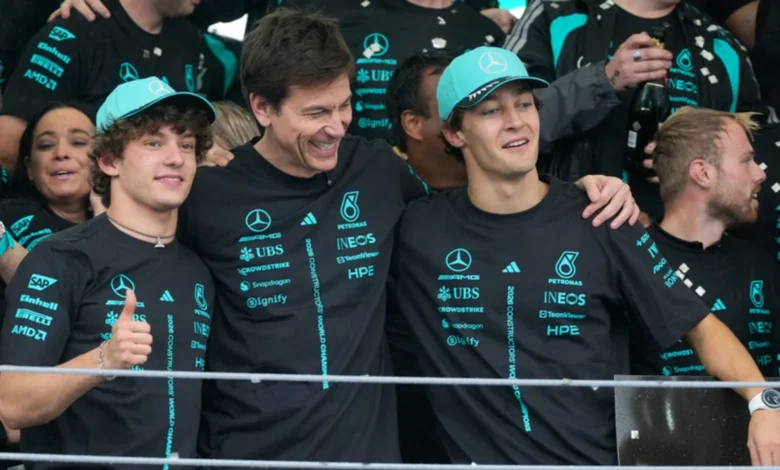
The conclusion of the 2026 Sao Paulo Grand Prix marked a watershed moment for the Mercedes-AMG PETRONAS Formula 1 Team, as the outfit officially reclaimed the Constructors’ Championship title. This victory serves as the definitive punctuation mark on a five-year rebuilding process, effectively ending a period of relative drought that followed the team’s unprecedented era of eight consecutive titles between 2014 and 2021. For team principal Toto Wolff, the triumph is not merely a statistical milestone but a testament to the organizational resilience and technical fortitude required to navigate the complexities of modern Formula 1 regulation cycles.
A Chronology of Recovery: From Dominance to Resurgence
To understand the magnitude of this achievement, one must look at the timeline of Mercedes’ recent history. The 2022 season represented a significant structural shift in the sport, as the introduction of ground-effect aerodynamics caught the Brackley-based team off guard. The W13 chassis, plagued by "porpoising" and severe correlation issues between simulation data and real-world track performance, signaled an abrupt end to the team’s hegemony.
For four years, the team operated in a state of flux. While they remained a competitive force—securing victories in every season between 2022 and 2025—they were frequently eclipsed by rivals who had better adapted to the technical regulations. The years 2022 through 2025 were characterized by iterative development, soul-searching within the engineering departments, and a fundamental reassessment of their design philosophy.
The 2026 season was earmarked early on as the true test of the team’s recovery. With the introduction of the latest generation of power units and chassis regulations, Mercedes arrived at the season opener with a package that finally maximized the potential of the current ground-effect rules. Having secured the Drivers’ Championship with Kimi Antonelli earlier this month, the confirmation of the Constructors’ title in Brazil serves as the final validation of their technical resurgence.
Technical Resilience and Organizational Culture
The narrative of Mercedes’ 2026 success is rooted in the internal stability of the organization. During the lean years, the team maintained a consistent leadership structure and a steadfast focus on long-term development rather than short-term fixes. Toto Wolff has consistently attributed this success to the collective output of the team’s 2,500 employees across their facilities in Brackley and Brixworth.
"When you are in these difficult moments, it is not easy to keep going," Wolff remarked following the race in Brazil. "Looking back, you say we needed these tough moments to grow as an organization. But when you are down, that is difficult to feel. We finished second, third, and fourth during these years; we won races. By the numbers, it wasn’t a failure, but by our standards, it felt like a significant departure from our peak."
This perspective highlights the internal pressure inherent in an organization that has set the gold standard for performance. The transition from a "winning-first" mentality to a "recovery-first" culture required a shift in how the team managed its personnel and resources. The resilience shown by staff, who continued to push for marginal gains even when the championship seemed out of reach, became the bedrock of the 2026 title challenge.
Statistical Context and Historical Standing
With the 2026 victory, Mercedes has solidified its place in the pantheon of Formula 1 history. The team now sits level with Williams Racing, both holding nine Constructors’ Championship titles. They remain behind only McLaren, which holds 10, and Ferrari, which stands as the most successful team in the sport’s history with 16 titles.
The 2026 campaign has been defined by a superior baseline performance. Unlike previous years where the team relied on specific track conditions or rival errors to secure victories, the 2026 iteration of the Mercedes car demonstrated consistent pace across varying circuit types, weather conditions, and tire compounds. Even in Brazil, where the team faced a challenging race weekend—with George Russell finishing fourth and Kimi Antonelli finishing fifth—the cumulative points haul was sufficient to mathematically seal the title with rounds still remaining on the calendar.
Perspectives from the Drivers
For the drivers, the championship represents the culmination of a high-stakes transition period. Kimi Antonelli, who has enjoyed a meteoric rise to the top of the sport, has been instrumental in the team’s ability to maintain high performance levels throughout the season. Reflecting on the team’s success, the Italian driver emphasized the collaborative nature of the effort.
"They have done an incredible job this year," Antonelli told reporters. "It is an amazing group of people who push every day to give us the best opportunity. The success we have had this season is a direct result of that relentless work ethic."
George Russell, who joined the team in 2022 at the start of the "difficult years," offered a reflective view on the journey. "When I joined, we hoped we would be fighting for championships regularly. To have gone through the process of rebuilding and now be back at the top is something the whole organization should be proud of. We would have liked to win it in style, but the objective was always the title, and we achieved that."
The Strategic Implications of the 2026 Win
The broader implications of this title win are significant for the landscape of Formula 1. Firstly, it demonstrates that the current regulation set, which was designed to increase parity, does not prevent a team from mounting a comeback if they can master the intersection of aerodynamics and power unit efficiency.
Secondly, the victory provides stability for Mercedes’ future. Winning both the Drivers’ and Constructors’ titles in the first year of a new regulatory cycle typically provides a substantial "cushion" for development. It allows the team to allocate resources toward the 2027 and 2028 seasons with a degree of confidence that their foundational design concepts are sound.
Thirdly, the win serves as a psychological boost for the entire Mercedes-Benz brand. As a manufacturer-backed team, the success on the track is inextricably linked to the brand’s reputation for engineering excellence. After four years of questioning whether the team had lost its "magic," the 2026 title effectively silences critics and reaffirms Mercedes’ status as a dominant force in high-performance automotive engineering.
Looking Ahead: The Las Vegas Grand Prix and Beyond
As the circus moves to The Strip for the Las Vegas Grand Prix, the pressure on Mercedes has shifted. With both championships secured, the team can approach the final stages of the season with a developmental focus. The remaining races provide an opportunity to test experimental components and gather data for next year’s chassis without the immediate burden of points-scoring for a championship fight.
For the fans and the wider sport, the resurgence of Mercedes brings a familiar element back to the grid: a benchmark of excellence that forces other teams to innovate. The competition from McLaren, Red Bull, and Ferrari remains intense, and the 2026 season has shown that the margins for victory are thinner than ever.
In conclusion, Mercedes’ 2026 title win is a story of institutional endurance. It serves as a reminder that in Formula 1, longevity is not merely about maintaining a lead, but about the ability to adapt, fail, learn, and eventually, return to the front. Toto Wolff’s assessment of his "2,500 superstars" serves as a fitting epitaph for a season where the team proved that while the drivers take the glory, the championship is won in the quiet corners of the factory, through years of painstaking research, development, and an unwavering refusal to accept anything less than the pinnacle of performance. The team’s return to the top is not just a comeback; it is a restatement of their purpose in the sport.
Related posts: