The latest headlines from Wednesday morning papers reveal significant turmoil at Manchester United and intense transfer market activity across Europe.


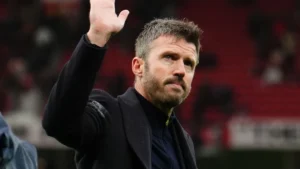
The internal structure at Manchester United remains a primary focus as the club navigates a period of extreme sporting volatility. Recent reports from The Telegraph suggest that despite the mounting pressure surrounding the coaching staff—specifically Michael Carrick—the executive hierarchy remains firmly in place. Omar Berrada and Jason Wilcox, who were brought in to spearhead the club’s new sporting vision, are expected to retain their positions regardless of any potential coaching changes. This indicates a clear separation between the club’s long-term administrative strategy and the immediate performance-related outcomes on the pitch.
The Carrick Conundrum and Coaching Strategy
The uncertainty regarding Michael Carrick’s future has dominated the narrative at Old Trafford. While Carrick remains in the hot seat, the club’s leadership has reportedly explored contingency plans to bolster the technical side of the squad. According to BBC reports, Manchester United had identified Bayern Munich assistant Aaron Danks as a target during the summer window, signaling a desire to add tactical depth to the coaching setup. This move suggests that the club’s hierarchy is not just looking for a new manager, but is actively seeking to modernize the entire supporting structure of the team.
Kieran McKenna, a former member of the United coaching staff who has garnered significant praise for his work elsewhere, has also been linked with a return to the club should a vacancy arise. However, ESPN reports that such a move is considered unlikely. The complexities of the current environment at Old Trafford, combined with the desire for a specific profile of leadership, appear to be cooling the interest in a reunion with the young tactician, at least in the immediate future.
Defensive Recruitment Targets for Manchester United
Beyond the management situation, Manchester United’s recruitment department is already preparing for a critical January transfer window. Defensive stability has been identified as a key area of concern, with the club reportedly scouting three high-profile center-back options: Calvin Bassey, Jarrad Branthwaite, and Nathan Collins.
The logic behind these targets is rooted in the club’s need to address persistent injury issues and a lack of depth in the backline. Jarrad Branthwaite, in particular, has seen his stock rise significantly following a breakout period in the Premier League. His physicality and ability to play out from the back align with the profile of the modern defender that United’s scouts are currently targeting. Meanwhile, Nathan Collins offers Premier League experience, having established himself as a reliable performer, and Calvin Bassey represents a more versatile option capable of filling multiple roles across the defensive line.
Arsenal’s Ambitious January Strategy
Arsenal is also expected to be a major player when the transfer window opens in January. The North London club is reportedly eyeing a move for Real Madrid’s teenage sensation Endrick, a pursuit that would underscore their commitment to signing high-potential talent. While Endrick’s future at the Santiago Bernabéu is currently a subject of intense speculation—with AS reporting that the forward is exploring loan options to gain more playing time—Arsenal’s interest remains a clear signal of their intent to add firepower to their attack.
Beyond Endrick, Arsenal’s shortlist for potential wingers is extensive. The Independent notes that the club is evaluating Alex Baena, Antonio Nusa, and Junior Kroupi. Each of these players represents a different stylistic profile, suggesting that Mikel Arteta and the recruitment team are looking for specific tactical flexibility in the final third. The potential acquisition of any of these players would likely be geared toward maintaining the high-intensity attacking football that has defined Arsenal’s recent campaigns.
In addition to offensive reinforcements, Arsenal is dealing with interest in their own midfield talent. Martin Zubimendi, who has been a standout performer, is reportedly being monitored by a trio of European giants: Real Madrid, Atletico Madrid, and Chelsea. The interest from these clubs confirms the high regard in which Zubimendi is held across the continent, and Arsenal may face a difficult challenge in retaining his services if a formal bid materializes in the new year.
Broader Trends and European Football Developments
The ripple effects of transfer speculation are not limited to the Premier League. In Spain, the situation surrounding Endrick is reflective of a wider trend where high-potential youngsters seek immediate playing time to satisfy national team ambitions. With interest from clubs like Roma and Sporting, the Brazilian forward is at a crossroads where he must weigh the prestige of Real Madrid against the necessity of consistent competitive minutes.
Elsewhere, the landscape of managerial movement continues to shift. Following reports regarding Crystal Palace and Pierre Sage, it has become clear that the professional pathway for managers is becoming increasingly precarious. The report from Fabrizio Romano highlighting Sage’s intention to step away from football for a period after a potential departure from Palace illustrates the psychological toll of the modern game. This reflective approach to career management is becoming more common among coaches who prioritize long-term health over the relentless nature of the Premier League merry-go-round.
Financial Impacts and Youth Development
The financial health of smaller clubs is often tied to the success of their academy graduates, a point exemplified by the recent developments at Fleetwood Town. Following James Hill’s first senior England call-up, the League Two side is set to receive a windfall of over £1 million. This injection of capital is a testament to the importance of the English football pyramid and the role it plays in developing international-level talent. Such payments are vital for the sustainability of lower-league clubs, providing them with the resources to invest in facilities and infrastructure that ultimately benefit the national game.
In Scotland, the managerial market has seen a notable rejection of a return to the dugout. Former Celtic boss Wilfried Nancy, currently linked with various high-profile roles, has reportedly declined the opportunity to manage Ligue 1 side Le Havre. This decision reflects a careful approach to career progression, where managers are becoming more selective about the projects they choose to lead, often waiting for the right structural support and long-term vision before committing to a new position.
Analysis: The January Transfer Window Outlook
As the winter transfer window approaches, the narrative across the board is one of calculated risk. For Manchester United, the January window represents a chance to rectify early-season shortcomings, though the primary focus remains on the structural stability provided by Berrada and Wilcox. The club is moving toward a model where scouting and recruitment are decoupled from the immediate pressures of the managerial hot seat.
For Arsenal, the priority is clearly the refinement of their attacking unit. By casting a wide net that includes established talents like Baena and emerging prospects like Nusa, the club is signaling that they are not content with their current standing and are willing to invest in depth to ensure a sustained challenge for domestic and European honors.
The convergence of these events—managerial uncertainty at Manchester United, aggressive recruitment plans at Arsenal, and the tactical reshuffling of talent across Europe—points to a winter window defined by high stakes. Clubs are increasingly focusing on data-driven recruitment, prioritizing players who fit specific profiles and tactical systems. As the season progresses, the success of these strategies will be measured not just in points, but in the long-term stability and competitive edge that these clubs manage to establish in an increasingly volatile sporting market.
The coming weeks will likely see an intensification of these rumors as clubs begin to formalize their interest and negotiate terms. For supporters and analysts alike, the focus will remain on how these boardroom decisions translate onto the pitch, as the pressure to deliver results continues to dictate the pace of change in the modern game.