Fernando Alonso reignites controversy over grid standards following collision with Alex Albon at United States Grand Prix


The Formula 1 paddock has been stirred by a fresh wave of criticism directed at the competitive standards of the sport’s midfield and back-marker teams. Fernando Alonso, the veteran Aston Martin driver and two-time World Champion, has once again vocalized his dissatisfaction with what he describes as the "low level" of talent and race craft among drivers occupying the bottom third of the current starting grid. This critique follows a high-stakes encounter at the United States Grand Prix in Austin, where a first-lap collision between Alonso and Williams driver Alex Albon served as the catalyst for the Spaniard’s latest remarks.
The Austin Incident: A Catalyst for Debate
The friction originated during the opening lap of the United States Grand Prix at the Circuit of the Americas. As the field bunched up heading into the Turn 11 hairpin—a notoriously tight braking zone—Alex Albon attempted an aggressive maneuver to seize 12th position from the Aston Martin. The resulting contact caused structural damage to both vehicles, significantly compromising their aerodynamic efficiency and race pace for the remainder of the event.
Despite the intensity of the contact, the FIA stewards opted not to issue a formal penalty to either driver, classifying it as a racing incident. Both Alonso and Albon managed to limp their damaged cars to the finish line, concluding the race in 16th and 17th positions respectively. While the stewards saw no grounds for disciplinary action, the incident provided a platform for a broader critique of driving standards, one that has persisted into the media sessions ahead of the Mexico City Grand Prix.
Alonso’s Critique of Competitive Maturity
Speaking to the press ahead of the Mexico City weekend, Alonso did not shy away from the intensity of his earlier comments. He argued that the frequency of errors occurring in the opening laps of races, particularly among those in the lower half of the classification, is indicative of a systemic issue regarding talent and experience.
"I think it is simply a very low level of driving and a lack of talent," Alonso stated. "When you make repeated mistakes throughout the season and have crashes, and 50 per cent of your race is in Lap 1, if I were the team principal, I would not be happy. But if they are happy, I am okay with that."
Alonso contrasted the current trend of early-race aggression with the clinical approach adopted by world champions such as Max Verstappen and Lewis Hamilton. He pointed to historical examples, including Kimi Räikkönen’s famous charge through the field at Monza, as evidence that elite drivers possess the patience and technical ability to recover positions systematically rather than forcing maneuvers that lead to retirement. According to the veteran, the "need" to fight for every inch in the first corner is a symptom of a lack of confidence and technical patience.
The Perspective from Williams: Albon’s Rebuttal
Alex Albon, a driver widely regarded for his technical feedback and maturity, responded to the criticism during an official FIA press conference. Albon expressed disappointment at the nature of the remarks, noting his personal respect for Alonso’s career trajectory. However, he fundamentally rejected the characterization of the grid as lacking in talent.
"I have a huge respect for Fernando. I looked up to him a lot growing up as a kid," Albon remarked. "It is not nice to hear those comments in many ways. You are racing someone that you look up to, but at the same time, I don’t agree. It is as simple as that."
Albon countered that the current Formula 1 grid is one of the most competitive and professional in recent history. He specifically highlighted the evolution of the field over the last decade, noting the disappearance of "pay drivers"—individuals who secure seats primarily through financial sponsorship rather than merit. He argued that every driver currently holding a super license has earned their place through consistent performance in junior categories, thereby raising the overall floor of the sport’s competitive level.
Historical Context and the Impact of the Cost Cap
To understand the tension, one must consider the environment in which modern F1 teams operate. The introduction of the FIA Cost Cap has fundamentally changed the risk-reward calculus for smaller teams. With a finite budget, every front-wing replacement or suspension repair caused by a first-lap collision directly impacts a team’s ability to bring performance upgrades to future races.
Alonso noted this financial pressure in his defense, arguing that while smaller teams might be "happy" to accept such risks, the consequences are severe. "There are teams that are happy with the cost cap and breaking things every race. They can pay for them," he noted with a hint of irony.
From an analytical standpoint, the volatility at the back of the grid is exacerbated by the inherent instability of the cars themselves. As Alonso pointed out, cars in the lower half of the field often struggle with reduced downforce and mechanical grip. This creates a "vicious cycle": because the cars are more difficult to drive, drivers are prone to more frequent errors, which in turn leads to more incidents, which then drains the budget, leaving the car with fewer performance-enhancing parts.
Statistical Realities and Driver Performance
Data from the current season suggests that the middle of the grid is more compressed than ever before. With the field separated by mere tenths of a second during qualifying, the temptation to make up time during the chaotic first lap is immense. However, the statistics show a clear divide between the top-tier teams and the rest of the field in terms of consistency.
While drivers like Verstappen and Hamilton often benefit from superior machinery that allows for easier overtaking, the midfield battle remains a high-pressure environment where even a minor misjudgment can result in a DNF. For teams like Williams, which are fighting for every point in a highly contested Constructors’ Championship, the "fight for nothing" described by Alonso is, in reality, a fight for millions of dollars in prize money that determines the financial viability of the team for the following season.
The Role of the Stewards and Future Regulation
The controversy also highlights a growing divide between veteran drivers and the officiating standards of the modern era. While Alonso maintains that some incidents are "not necessary," the current regulatory framework, overseen by the FIA, has largely moved toward a "let them race" philosophy. This approach aims to reduce the number of penalties and keep the action on the track, but it has seemingly fostered a culture where aggressive, and at times reckless, maneuvers are tolerated as part of the sport’s competitive nature.
Alonso has confirmed that he does not intend to raise the issue in the upcoming drivers’ briefings, acknowledging that "it is part of the game." Instead, he has pivoted the responsibility toward his own team, Aston Martin, suggesting that the only way to avoid the risks of the midfield is to ensure the team consistently qualifies higher up the order.
Implications for the Mexico City Grand Prix and Beyond
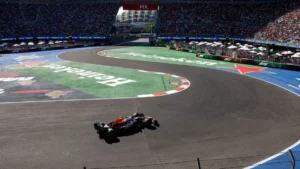
As the sport moves into the high-altitude, low-downforce challenge of the Autódromo Hermanos Rodríguez in Mexico City, the topic of race craft will remain a focal point for both fans and participants. The track features one of the longest straights on the calendar, leading into a heavy braking zone at Turn 1, which has historically been a site of significant first-lap drama.
If the recent rhetoric is any indication, drivers will be under intense scrutiny this weekend. For Albon and his peers in the midfield, the challenge is to prove that their race craft is not only competent but also respectful of the elite standards demanded by the pinnacle of motorsport. For Alonso, the weekend represents an opportunity to distance himself from the chaos of the pack and demonstrate the "talent" he claims is lacking in others.
Ultimately, this debate underscores a broader, long-standing tension in Formula 1: the conflict between the necessity of aggressive racing to gain positions and the requirement for disciplined, calculated driving to preserve equipment and points. As the 2026 season progresses through its final stages, this narrative of "talent versus opportunity" will likely continue to evolve, reflecting the pressures of a sport that is as much about engineering and finance as it is about the skill of the individuals behind the wheel. The outcome of the upcoming race in Mexico City will provide the next chapter in this ongoing dialogue, as the field navigates the thin air and high stakes of one of the most demanding circuits on the calendar.