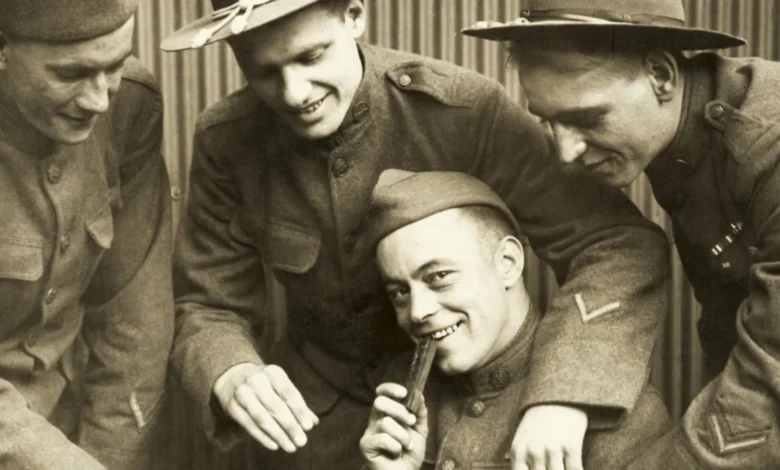
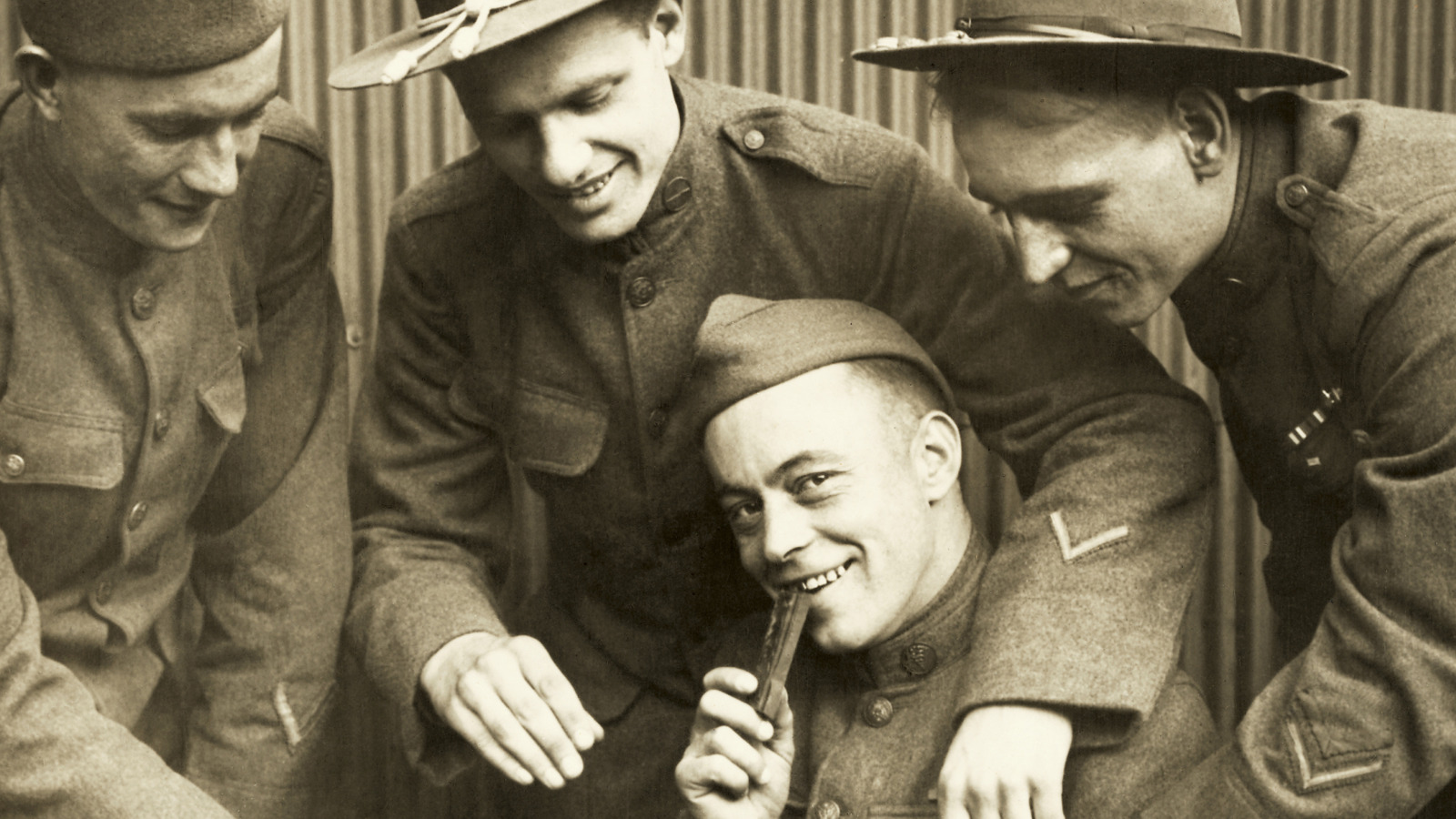
Long before confectionery items became ubiquitous impulse purchases positioned near the checkout counters of modern grocery stores and supermarkets, a humble Pennsylvania-based sweet was engineered to withstand international transit across the globe. That enduring creation is the Clark Bar, an American classic whose origins predate the expectations of many modern consumers. Introduced to the public in 1917, precisely as the United States formally entered World War I, the chocolate-covered confection was explicitly commissioned and designed to sustain troops serving on foreign battlefields. Featuring a distinctive crunchy peanut butter interior encased within an innovative milk chocolate layer, the bar quickly became a morale-boosting staple for military personnel and domestic civilians alike. More than a century after its initial introduction, this Pittsburgh-born candy continues to endure within the American confectionery landscape.
The Genesis of a Confectionery Innovation
The creation of the Clark Bar is attributed to David L. Clark, an Irish immigrant who established a confectionery enterprise in Pittsburgh, Pennsylvania. Prior to the invention of the famous bar, the D.L. Clark Company produced a diverse assortment of sweets, most notably traditional chocolate drops. However, these early products possessed a fundamental structural vulnerability that rendered them entirely unsuitable for long-distance military logistics. Under the environmental conditions of military transport—enduring fluctuating temperatures, humidity, and rough handling aboard cargo ships and supply trains—the chocolate drops frequently melted, deformed, or spoiled before ever reaching their intended recipients.
Recognizing an urgent logistical challenge, representatives from the United States military approached Clark with a specific mandate: develop a durable, individually wrapped confectionery product that could successfully withstand the rigorous demands of international shipping and prolonged storage without sacrificing taste or structural integrity.
Clark’s response to this wartime challenge was nothing short of revolutionary for the era. While individual packaging is taken for granted by modern consumers, in 1917, the concept of a mass-produced, individually wrapped candy bar was still in its infancy. The original iteration of the Clark Bar measured approximately four inches in length and was retailed to the public for just five cents.
The Engineering and Appeal of the Clark Bar
What truly distinguished the Clark Bar from its contemporaries was its complex structural composition. While many popular candies of the early 20th century relied on simple, single-ingredient formulas—such as plain caramel blocks, hard sugar candies, or basic solid chocolate blocks—the Clark Bar introduced a multi-textured experience. It combined a crisp, flaky peanut butter honeycomb core with a rich milk chocolate exterior.
This deliberate combination of textures—crunchy, nutty, and smooth—served a dual purpose. Beyond providing a dense caloric boost, which was vital for soldiers engaged in physical exertion on European fronts, the intense flavor profile offered a much-needed psychological comfort and a nostalgic taste of home for troops stationed thousands of miles away.
Predictably, the bar achieved immediate popularity among military servicemen. The success of supplying the American Expeditionary Forces transformed the D.L. Clark Company from a regional confectioner into a major national brand in the post-war era. Archival records from the Pittsburgh Post-Gazette indicate that by 1929, the enterprise had expanded its operations to produce upwards of 900,000 bars per day, cementing its status as an industrial powerhouse in Pennsylvania’s booming manufacturing sector.
A Century of Corporate Transitions and Financial Turmoil
Despite its enduring popularity among consumers, the corporate history of the Clark Bar has been marked by a series of turbulent ownership changes, financial restructuring, and operational relocations over the past century. Following decades of family ownership, the brand was sold multiple times to various corporate conglomerates looking to capitalize on its legacy status.
A critical juncture in the brand’s modern history occurred in 1999, when the Clark Bar was acquired by the New England Confectionery Company, more widely known as Necco. Best recognized as the historic manufacturer of Necco Wafers, the company absorbed the Clark Bar into its portfolio, where it remained for nearly two decades.
However, Necco’s operations ultimately faced insurmountable financial pressures, culminating in a sudden and dramatic bankruptcy filing in the summer of 2018. The abrupt closure of Necco’s manufacturing facilities threatened to cast the historic Clark Bar into obscurity, turning it into a casualty of shifting corporate landscapes.
A Symbolic Homecoming to Pennsylvania
The threat of extinction was mercifully brief, thanks to the intervention of the Boyer Candy Company. Headquartered in Altoona, Pennsylvania, Boyer is historically celebrated for producing regional favorites such as Mallo Cups and Smoothie cups. Recognizing the profound cultural and historical significance of the Clark Bar, Boyer stepped forward during the 2018 bankruptcy proceedings to acquire the complete brand package.
The acquisition encompassed not only the intellectual property, brand rights, and historical trademark, but also the proprietary recipe and the specialized manufacturing machinery required to produce the candy. For confectionery historians and loyal consumers alike, the transaction represented a true homecoming. The Clark Bar was effectively rescued from out-of-state corporate distress and returned to its native soil in Pennsylvania, where local workers could oversee its continued production.
Revival, Expansion, and Modern Market Realities
Under Boyer’s stewardship, the Clark Bar has experienced a measured resurgence, though production challenges have occasionally tested the patience of dedicated fans. As of late 2026, the candy remains an active listing on Boyer’s official product catalog, though high consumer demand frequently outpaces manufacturing capacity, resulting in intermittent stock shortages across retail networks.
Capitalizing on the enduring nostalgia surrounding the brand, Boyer has not merely replicated the original recipe; the company has also actively expanded the product line. Notably, the firm reintroduced the Clark Crush Bar, a brand-new variation developed from a recently discovered historical archive recipe dating back nearly half a century. This modern iteration incorporates classic elements of peanut butter and chocolate while introducing textural chunks of "Clark crunch" to appeal to contemporary palates.
Wartime Confectionery Trends: A Historical Context
The trajectory of the Clark Bar is reflective of a broader historical phenomenon wherein geopolitical conflict actively shaped the American food and beverage landscape. World War I acted as a massive catalyst for the commercial food processing industry, forcing manufacturers to innovate in the areas of mass production, preservation, and packaging.
Much like the chocolate-coated candies that would later be adapted for soldiers during World War II—spurring the mass expansion of products like M&Ms—World War I provided the initial proving ground for the modern candy bar. Products that were engineered to survive the harsh conditions of trench warfare possessed an inherent durability that naturally translated well to domestic grocery distribution and retail shelf-life expansion in the peacetime decades that followed.
Broader Economic and Cultural Implications
The survival and ongoing production of the Clark Bar carry significant implications for the preservation of regional American manufacturing heritage. In an era dominated by consolidated multinational food conglomerates that frequently discontinue legacy brands in favor of streamlined, high-margin product lines, the preservation of the Clark Bar highlights the vital role played by mid-sized regional manufacturers.
By stepping in to rescue distressed legacy brands, companies like Boyer Candy Company help maintain the tangible links to America’s industrial past. Furthermore, the resilience of the Clark Bar underscores the enduring power of consumer nostalgia. Products forged during times of national crisis often transcend their utilitarian origins, evolving into cultural touchstones that bridge generational divides.
As the Clark Bar navigates its second century of production, its journey from a specialized wartime ration commissioned by the United States military to a cherished Pennsylvania confectionery staple stands as a testament to industrial adaptability. Through changing corporate ownership, financial bankruptcies, and shifting consumer preferences, the century-old bar has repeatedly proven that quality craftsmanship and a distinct flavor profile can withstand the test of time, ensuring that future generations of consumers will continue to experience the taste of history.