Hollywood Reinvents the Blockbuster as Summer Box Office Hits Record Revenue Despite Lower Attendance

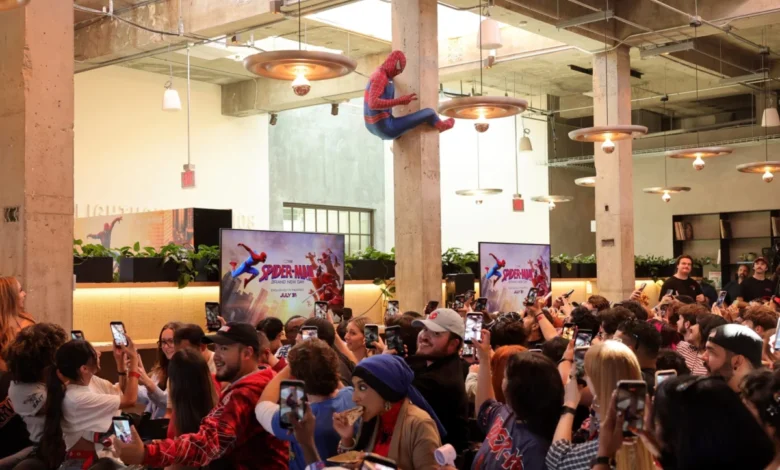
The 2026 summer box office season, which spanned from May 1 through Labor Day, has concluded with a headline-grabbing figure: $4.765 billion in domestic revenue. This total narrowly surpassed the previous all-time record of $4.756 billion set in 2013. However, beneath the surface of this record-breaking performance lies a fundamental shift in the economics of cinema. While the industry is celebrating a financial resurgence, the volume of tickets sold tells a vastly different story, highlighting a post-pandemic business model that prioritizes higher margins per customer over the mass-market volume that defined previous generations of film consumption.
The Attendance Gap and the Inflationary Filter
A critical analysis of the 2026 data reveals that while revenue has reached historic peaks, audience participation remains significantly dampened compared to pre-pandemic benchmarks. According to data provided by box-office analytics firm Rentrak, North American cinemas sold approximately 249 million fewer tickets through mid-August compared to the same period in 2019. When adjusted for inflation, this summer’s box office performance remains roughly 17% below the 2019 benchmark.
The industry has historically utilized raw, unadjusted revenue as its primary metric for success. By this traditional accounting, the summer of 2026 outperformed the summer of 2019 by 9%. Yet, when inflation is factored in—adjusting the 2019 total to roughly $5.7 billion in today’s dollars—the discrepancy becomes stark. S&P Global Market Intelligence reports that North American theaters moved 547.1 million tickets through mid-August of this year, a sharp decline from the 795.9 million tickets sold during the same timeframe seven years ago.
This phenomenon is compounded by the duration of the season. The 2026 summer window extended for 130 days, providing the industry with one week of additional operational time compared to the 2013 record-setting season. Texas Capital, in a research note dated September 8, emphasized that this extended runway was a contributing factor to the final tally.
A New Economic Model: Premiumization and Profitability
The modern theater business is no longer built on the expectation of filling every seat for every screening. Instead, exhibitors like AMC and Cinemark have pivoted toward a "premium-first" strategy. Financial filings indicate that this transition is yielding significant dividends, even as total attendance lags behind historical highs.
Cinemark’s second-quarter performance offers a clear case study. Premium large-format (PLF) screenings accounted for nearly 15% of the company’s total worldwide box office, despite these specialized auditoriums representing only 6% of its total theater footprint. Furthermore, demand for immersive experiences has surged, with sales of D-BOX motion-controlled seating increasing by over 50% year-over-year, marking an all-time quarterly record for the chain.
Strategic pricing has become the bedrock of this model. Cinemark reported a 4.2% increase in its average U.S. ticket price, reaching $10.83. This, combined with a 4.3% rise in concession spending per patron—averaging $8.70—brought the total per-customer spend to $19.53. AMC has reported similar trends, concluding 2025 with record per-patron revenue metrics and a 17.9% increase in attendance during the second quarter of 2026, which helped drive a company-record $1.6 billion in revenue.
Eric Wold, an equity analyst at Texas Capital Securities, suggests that this model is structurally sound for the current environment. "Theaters continue to face headwinds from a reduced volume of theatrical releases and the persistent growth of the streaming ecosystem," Wold noted. "However, the demographic that continues to frequent theaters is increasingly demonstrating a preference for premium formats and is willing to pay a premium for the experience. By exercising tighter control over operating expenses, companies are successfully generating greater profitability from a lower total number of tickets sold."
The Cultural Pivot: Fine Dining vs. Cinematic Fast Food
Industry experts are observing a transformation in audience behavior that goes beyond simple ticket pricing. Paul Dergarabedian, head of marketplace trends at Rentrak, views the current landscape as a maturation of the medium rather than a decline. He draws a parallel to the rise of dietary shifts in the food industry, suggesting that while the "volume" of moviegoers may have decreased, the "value" of the experience has increased.
"The audience is telling you they want a mix of that cinematic fast food and cinematic fine dining," Dergarabedian explained. He pointed to the disparate successes of highbrow, critically acclaimed works like The Odyssey and mass-market blockbusters like Spider-Man, each of which grossed over $1 billion worldwide. Together, these two films accounted for nearly one-third of the total summer box office revenue, proving that audiences are highly selective.
This selectivity extends to the social habits of younger demographics. Research indicates that Gen Z, often characterized by a lower propensity for alcohol consumption compared to older generations, is increasingly viewing the movie theater as a destination for a "wholesome" night out. This provides an opportunity for theaters to capture discretionary spending that might have previously gone to bars or other late-night venues.
Implications for the Future: The Road to $10 Billion
Despite the attendance shortfall, the year-to-date box office revenue of $7.384 billion—a 20.8% increase over the previous year—has provided a clear path toward reaching a $10 billion annual total for the first time since the pandemic. The strategy of concentrating revenue through high-end experiences is about to face its most significant stress test yet.
On December 18, the industry will release two major tentpole films simultaneously: Avengers: Doomsday and Dune: Part Three. Both films are being positioned as "event" cinema, designed to drive traffic to premium auditoriums. Dune: Part Three has already begun pre-sales for 70mm IMAX screenings, while Disney is utilizing Avengers: Doomsday to launch its "Infinity Vision" certification, a new standard for high-end exhibition involving laser projection and advanced audio systems.
Analysts are optimistic about this year-end surge. Dergarabedian predicts that the weekend of December 18 could potentially become the largest single box-office weekend in history. He draws a direct line between the current cinematic landscape and the formative experiences of his own youth, such as seeing Jaws in 1975 or Star Wars in 1977.
"There’s a future for this industry that I think is assured and bolstered by the fact that younger audiences are coming out—that’s the future of the business, generational attendance," Dergarabedian said. However, he offered a note of caution for the year ahead. "While 2026 is proving to be a landmark year for the industry’s recovery, 2027 will find this year a very tough opening act to follow."
Summary of Strategic Shifts
| Factor | Pre-Pandemic (2019) | Current Model (2026) |
|---|---|---|
| Revenue Driver | High attendance volume | High per-patron spend |
| Primary Pricing | Standardized pricing | Strategic & premium pricing |
| Audience Focus | Mass-market broad appeal | Experience-based selection |
| Concessions | Ancillary revenue | Core profitability pillar |
| Exhibition | Standard auditoriums | PLF & Immersive experiences |
As Hollywood moves into the final quarter of 2026, the data confirms that the industry has successfully decoupled total revenue from total attendance. By focusing on premium formats and increasing the cost of entry, theater chains have stabilized their bottom lines. The question remains, however, whether this model can sustain long-term growth as the industry exhausts its ability to raise prices further, or if it will eventually require a return to broader audience engagement to fuel the next decade of production. For now, the theater is no longer just a place to watch a movie; it has become a luxury retail experience where the price of the ticket is merely the beginning of the transaction.
Related posts: