The Paradox of Modern American Discourse: Why We Fight Over Everything Yet Agree on So Little

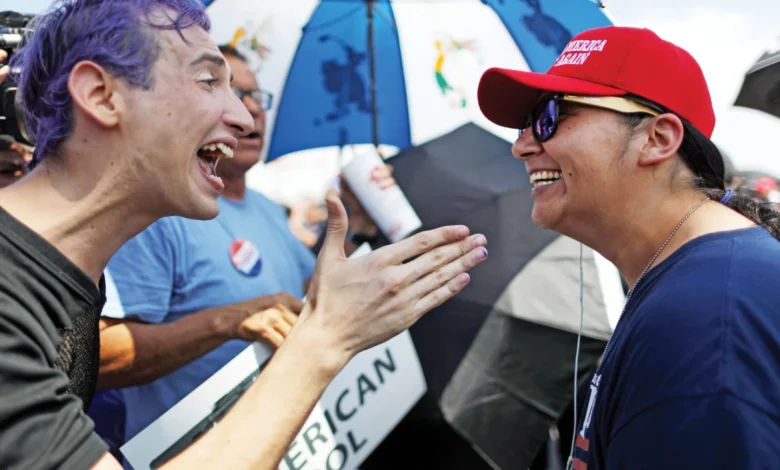
Americans disagree about almost everything. We argue about very little. This profound paradox sits at the heart of contemporary civic life in the United States, capturing a cultural moment defined by hyper-polarization, digital echo chambers, and a seemingly endless series of ideological battlegrounds. While cable news networks, social media algorithms, and political campaigns thrive on manufacturing outrage over seemingly trivial or hyper-partisan issues, the foundational consensus on the fundamental rules of governance, shared identity, and national direction has rarely felt more fragile or elusive.
To understand how modern society arrived at this juncture requires examining the intricate interplay between media ecosystems, political strategy, and shifting cultural norms. The contemporary landscape is not merely divided; it is structurally partitioned, creating an environment where citizens can simultaneously inhabit entirely different realities while living side by side.
The Anatomy of Modern Political Polarization
In the United States today, political polarization has evolved from a policy disagreement between the left and the right into an all-encompassing cultural identity. According to data compiled by major sociological research institutions, partisan animosity has reached historic highs over the past decade. Citizens no longer view opposing political parties merely as groups with different ideas on taxation or foreign policy; instead, they increasingly perceive political opponents as existential threats to the nation’s way of life.

This polarization is fueled by a relentless news cycle and algorithmic amplification on platforms such as X (formerly Twitter), Meta, and TikTok. These platforms are engineered to maximize user engagement, a metric that heavily favors sensationalism, outrage, and emotional validation over nuanced debate. Consequently, everyday policy discussions—ranging from infrastructure spending to public health guidelines—are rapidly weaponized into cultural flashpoints.
Yet, beneath this cacophony of daily grievances lies a striking vacuum. While Americans vociferously argue over the symptoms of societal friction, they rarely engage in deep, substantive debates about the foundational structures causing them. Discussions concerning wealth inequality, systemic institutional decay, or the long-term viability of democratic norms are frequently sidelined in favor of symbolic culture-war skirmishes. This dynamic explains the acute observation that while Americans argue about almost everything, they argue about very little of enduring substance.
A Chronology of the Great Divide: Key Milestones
The trajectory of modern American polarization did not happen overnight. It is the result of decades of political realignment, media decentralization, and socioeconomic shifts. Tracing this evolution provides essential context for the current state of affairs:
- The Late 20th Century (1980s–1990s): The abolition of the Fairness Doctrine in 1987 paved the way for the explosive growth of partisan talk radio and cable news networks. This era marked the beginning of media fragmentation, allowing consumers to isolate themselves within ideologically homogeneous information silos.
- The Turn of the Millennium (2000–2008): The contentious 2000 presidential election, resolved by the Supreme Court in Bush v. Gore, injected deep skepticism into the legitimacy of electoral outcomes. Following the events of September 11, 2001, an initial wave of national unity gradually gave way to fierce divisions over the wars in Iraq and Afghanistan.
- The Social Media Revolution (2009–2015): The widespread adoption of smartphones and social media transformed citizens from passive news consumers into active content creators and curators. Algorithms began prioritizing engagement-driven content, accelerating the siloing of public opinion and the rapid spread of misinformation.
- The Era of Populism and Pandemic (2016–Present): The political realignments of the mid-2010s intensified populist movements on both the left and the right. The COVID-19 pandemic further strained social cohesion, turning basic public health measures into intense ideological battlegrounds and deepening distrust in once-respected public institutions.
Data and Demographics: Measuring the Chasm
Quantitative studies consistently reinforce the qualitative sense that the American public is drifting apart. According to surveys conducted by the Pew Research Center, the percentage of Americans who hold consistently conservative or consistently liberal views has more than doubled over the past thirty years. Furthermore, cross-party animosity—measured by how unfavorably members of one party view members of the other—has risen precipitously.

Beyond partisan metrics, demographic shifts have played a significant role. Geographic sorting has accelerated, with like-minded individuals increasingly clustering in ideologically uniform neighborhoods, towns, and states. This self-sorting reduces cross-partisan interactions in daily life, diminishing empathy and increasing reliance on negative stereotypes propagated by media narratives.
Economic factors further compound these divisions. Stagnant middle-class wages in many regions, coupled with the rapid accumulation of wealth in major urban tech and financial hubs, have generated widespread economic anxiety. Rather than uniting across regional lines to address systemic economic challenges, working-class Americans are often encouraged by political elites to direct their frustrations toward cultural scapegoats.
Institutional Trust and the Erosion of Shared Facts
A functioning democracy relies on a baseline of shared facts and trust in foundational institutions, including the judiciary, academia, scientific bodies, and the free press. Today, that baseline is severely fractured.
Public confidence in the mainstream media has plummeted to historic lows, driven by perceived bias and sensationalist reporting. Trust in government institutions—ranging from Congress to federal law enforcement agencies—has similarly eroded. When citizens no longer trust the arbiters of information, society loses its capacity to forge a consensus on objective reality.

This erosion has profound implications for freedom of speech and public debate. Activism, once viewed as a vehicle for broad-based social reform, has in some instances devolved into rigid ideological litmus tests. Discourse is frequently policed through social media campaigns, creating a chilling effect that discourages independent thought and nuanced exploration of complex issues.
Implications for the Future of American Society
The persistent state of superficial conflict combined with deep structural stagnation carries significant risks for the future of the republic. When a society is consumed by endless proxy wars over cultural symbols, it loses the collective focus and political will required to address existential challenges—such as national debt, technological disruption, educational reform, and geopolitical competition.
However, historians and political scientists note that American history is replete with periods of intense polarization followed by necessary recalibration. Overcoming the current paralysis will require a concerted effort from civic leaders, educational institutions, and everyday citizens to rebuild local community engagement, foster media literacy, and restore spaces for genuine, good-faith dialogue.
Until Americans move past the performative outrage that dominates the digital and political spheres to confront the foundational questions of their shared future, the paradox will persist: a nation fiercely debating everything, yet agreeing on almost nothing of consequence.