American Muslim Reformers Condemn Wajahat Ali Over "Radicalization" Warning Amid Michigan Senate Bid

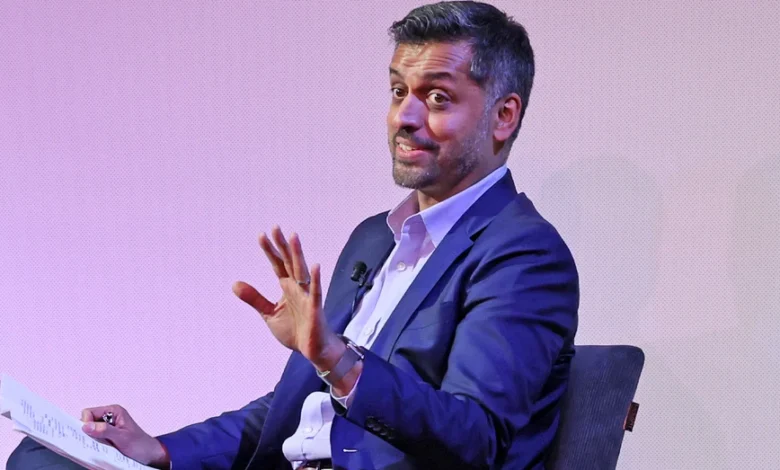
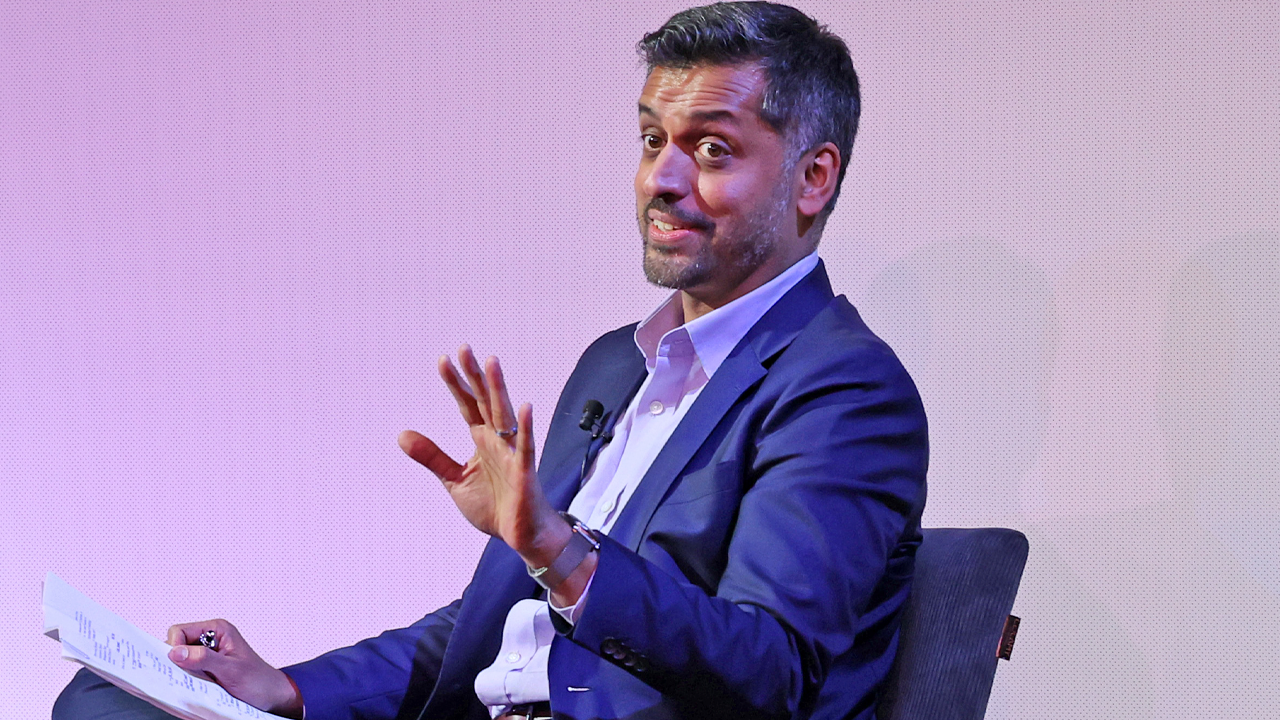
Political commentator Wajahat Ali has sparked a fierce intra-community debate and drawn sharp rebukes from prominent American Muslim reform leaders following controversial remarks regarding the Michigan Senate campaign of Democratic candidate Abdul El-Sayed. In social media posts that immediately reverberated across the political landscape, Ali warned that an election loss for El-Sayed would serve as a "watershed moment" that would cause "the fire [to] rise" and result in citizens becoming "radicalized." These statements have prompted swift pushback from secular and reform-minded Muslim intellectuals, who argue that the rhetoric mirrors intimidation tactics historically deployed by Islamist groups in the Middle East prior to major elections.
The controversy highlights a deep and growing ideological fissure within American Muslim politics. On one side are establishment organizations and figures who embrace political Islam—or Islamism—advocating for religion to directly shape governance and public policy. On the other side are secular and reform-minded activists who challenge traditional orthodoxy, reject anti-Western and anti-Israel rhetoric, and advocate firmly for the separation of mosque and state. Critics argue that Ali’s language crosses the line from robust democratic participation into the realm of coercive pressure, warning voters of impending chaos if political outcomes do not favor their preferred candidates.
Origins of the Controversy and Social Media Backlash
The friction began when Ali took to the social media platform X to discuss the stakes of Abdul El-Sayed’s senatorial bid in Michigan. In his initial post, Ali wrote that a defeat for El-Sayed would fundamentally alter Democratic politics, predicting that "the fire will rise" and that individuals would become "radicalized against corporate, pro-Israel Dems." He added that a political reckoning was inevitable regardless of the election’s outcome, asserting that a victory would likewise mark a historic turning point.
The remarks immediately attracted widespread condemnation from political observers, centrist Democrats, and reformist intellectuals who interpreted the phrase "radicalized" and the reference to a rising fire as veiled threats of political unrest or violence. Rather than scaling back his remarks, Ali doubled down on his stance in a subsequent post published the following morning. He dismissed the criticism as evidence of underlying bigotry, writing, "Ah, that Islamophobia and anti-Arab bigotry are so pure and naked." He further accused his detractors of exposing their true sentiments regarding Muslim political participation. Despite multiple media inquiries, Ali declined to offer further clarification or respond to requests for formal comment.
The Islamist Intimidation Playbook: Perspectives from Middle Eastern Reformers
Prominent Muslim reformers have rejected Ali’s defense, arguing that invoking bigotry is a standard deflection tactic used to shield extremist rhetoric from legitimate scrutiny. Dalia Ziada, an Egyptian-born human rights activist and the Washington, D.C., director at the Institute for the Study of Global Antisemitism and Policy, noted that Ali’s warnings bear an uncomfortable resemblance to tactics used by authoritarian religious movements in the Middle East, such as the Muslim Brotherhood in Egypt.
According to Ziada, political Islamists frequently utilize a binary narrative during electoral cycles: either voters choose their preferred candidates, or society must brace for violent instability and radicalization. "The threat is usually: If you don’t choose us, this will lead to radicalization, and this will lead to violence," Ziada explained in an interview. She cautioned that such messaging undermines the foundational principles of democratic pluralism by weaponizing the threat of civil unrest to achieve political ends.
Furthermore, Ziada drew parallels between the foreign policy rhetoric surrounding El-Sayed’s campaign and political strategies observed in foreign authoritarian states. She argued that the persistent demonization of Israel—a cornerstone of the progressive-Islamist coalition supporting El-Sayed—mirrors how Middle Eastern dictators historically manufactured external crises to distract domestic populations from systemic economic and governance failures.
Broadening Criticism Over "Jihad First" Political Framing
Echoing these concerns, Dr. Zuhdi Jasser, a Muslim reformer, founder of the American Islamic Forum for Democracy, and congressional candidate in Arizona, asserted that Ali’s commentary exemplifies what he terms a "Jihad First" mindset. Jasser argued that this ideological filter causes certain political influencers to view every domestic and international conflict through an uncompromising lens of religious grievance and hostility toward Western democratic institutions.
"Wajahat Ali, like Abdul El-Sayed, proves yet again their decades of anti-American Islamist obsession and the ‘Jihad First’ lens through which they view every cultural, social, military, and political conflict," Jasser stated. He emphasized that the critique is not directed at the legal right of Muslim Americans to participate in the political process, but rather at the utilization of coercive pressure tactics that threaten social harmony.
Soraya Deen, a Muslim reform activist, attorney, and co-founder of the Los Angeles Women’s Multifaith Alliance, similarly argued that electoral losses cannot be used as justification for extremism. "His words are deeply troubling," Deen remarked, pointing specifically to the phrases predicting a "reckoning" and the rise of a "fire." She added, "Losing an election is not a license for radicalization. We must reject intimidation, political extremism, and the politics of perpetual grievance."
Mapping Abdul El-Sayed’s Political Network and Coalition
The controversy surrounding Ali’s remarks unfolds against the backdrop of a complex and expansive political coalition supporting Abdul El-Sayed’s Michigan Senate bid. An analysis of campaign disclosures, public endorsements, and voter mobilization initiatives reveals a broad alliance linking progressive organizations, labor unions, Palestinian advocacy groups, and Muslim civic associations.
Campaign records and public statements indicate that approximately 70 Muslim groups, political action committees, and high-profile influencers have amplified or endorsed El-Sayed’s campaign in various capacities. Prominent entities within this network include CAIR Action, Americans for Justice in Palestine Action, Emgage Action, the US Campaign for Palestinian Rights, and regional bodies such as the Yemeni American Michigan Democratic Caucus and the Michigan Bangladeshi American Democratic Caucus. Additionally, online commentators and political figures—including Linda Sarsour, Hasan Piker, Rep. Ilhan Omar, and Rep. Rashida Tlaib—have lent their platforms to support the broader movement.
Critics frequently characterize this coalition as a "red-green alliance," uniting far-left progressive and democratic socialist political elements ("red") with Islamist or religiously motivated advocacy groups ("green"). This coalition shares overlapping policy priorities, including demands for an immediate arms embargo against Israel, strict opposition to U.S. foreign aid for the Jewish state, and aggressive challenges to moderate factions within the Democratic Party.

Contextualizing Ali’s Career and Prior Controversies
The backlash against Ali also draws upon a long public record of political commentary. Over the past two decades, Ali has established a prominent media profile, contributing to outlets such as The New York Times, The Daily Beast, CNN, and The Guardian, while also hosting programming for Al Jazeera America. His public profile grew significantly in the wake of the September 11 terrorist attacks, during which time he participated in campus activism at the University of California, Berkeley.
In recent years, Ali has faced repeated scrutiny for high-profile statements regarding U.S. politics and foreign policy. Earlier this year, during a joint broadcast with former MSNBC host Joy Reid, Ali participated in a discussion condemning political opponents using heated rhetoric. More recently, Ali hosted a guest speaker who levied severe insults against Democratic House Leader Hakeem Jeffries, referring to him as an "AIPAC monkey" in response to political contributions received from the American Israel Public Affairs Committee. That episode drew widespread condemnation from lawmakers across the political spectrum, who labeled the attack as both antisemitic and racially offensive given Jeffries’ status as a Black leader.
Broader Implications for American Democratic Norms
As the Michigan Senate race progresses, the public debate ignited by Ali’s remarks underscores broader anxieties regarding the health of political discourse in the United States. Reform-minded Muslim leaders stress that the integration of immigrant and minority communities into the American political fabric depends on a shared commitment to constitutional governance, peaceful transitions of power, and the rejection of intimidation.
Analysts note that as coalitions bridging progressive left-wing movements and identity-based political organizations gain influence within the Democratic Party, the tension between moderate liberals and ideological radicals will likely intensify. For secular and reformist Muslims, the primary objective is ensuring that extreme political rhetoric does not come to define the political aspirations of millions of American Muslims who value pluralism, civic responsibility, and the separation of religion from the state.
As Soraya Deen concluded, the fundamental tenets of democracy require accepting electoral outcomes through institutional channels rather than veiled threats of civic unrest. "Any honest Muslim who reads that post will see a dangerous prioritization of ideological grievances over the common good," reform advocates maintain, calling on political leaders from all backgrounds to definitively distance themselves from the politics of intimidation.