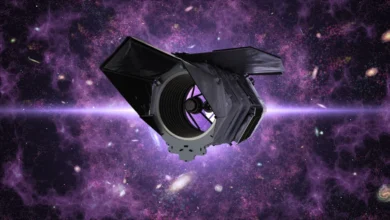
The Militarization of the Heavens: United States Acknowledges Deployment of Orbital Space Control Weapons

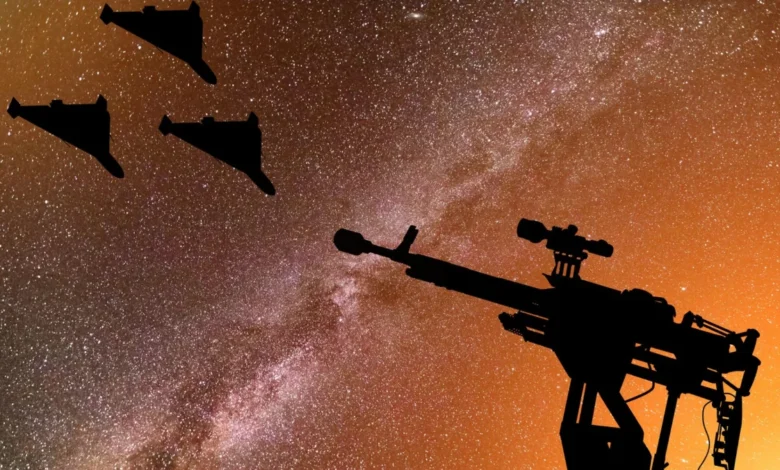
The United States has officially confirmed the deployment of on-orbit space control weapons, marking a pivotal and controversial shift in global military strategy that effectively transitions outer space from a peaceful scientific frontier to a contested domain of active warfare. The announcement, made by U.S. Air Force Secretary Troy Meink during the Air, Space and Cyber Conference in Maryland on Monday, Sept. 14, represents the first time the U.S. government has openly acknowledged the existence of offensive or defensive weaponry stationed in orbit. This development fundamentally alters the geopolitical landscape of the cosmos, signaling an end to the era where space was viewed solely as a theater for communication, reconnaissance, and civilian exploration.
The Shift in Strategic Doctrine
For decades, the United States maintained a policy of strategic ambiguity regarding its space-based assets. While satellite technology has long been integrated into the "Joint Force"—the unified military command structure—the transition from passive surveillance to active kinetic or electronic defense represents a significant departure from historical precedent. Secretary Meink described these systems as essential for "defending the Joint Force against hostile adversary action," a framing that underscores the Pentagon’s assessment that orbital assets are increasingly vulnerable to terrestrial and space-based threats from rival nations.
The deployment of these weapons is a direct response to the rapid modernization of anti-satellite (ASAT) capabilities by other global powers. As military reliance on GPS, encrypted satellite communication, and high-resolution imagery has grown, the "space domain" has become a strategic center of gravity. Neutralizing an adversary’s space assets is now considered a prerequisite for achieving air, land, and sea superiority in a modern conflict.
A Chronology of the Space Arms Race
The path to this moment has been paved with incremental developments over the past quarter-century. While the Cold War era focused primarily on ground-based intercontinental ballistic missiles, the 21st century has seen the quiet escalation of orbital activity:
- 2007: China successfully destroyed one of its own aging weather satellites using a land-based kinetic-kill missile, demonstrating the capability to create vast amounts of orbital debris and neutralize assets in low-Earth orbit (LEO).
- 2019: The United States officially established the Space Force as the sixth branch of the military, a move that formalized the recognition of space as a distinct theater of war.
- 2020: The U.S. Space Command began reporting "unusual and unprofessional" maneuvers by Russian satellites in close proximity to American surveillance assets, fueling concerns about "stalker" satellites.
- 2022-2023: Increased testing of directed-energy weapons and satellite-jamming technology by both Russia and China led to internal Pentagon debates regarding the necessity of a "space control" deterrent.
- September 2024: The official U.S. admission of on-orbit weapon deployment concludes this period of clandestine development, bringing the reality of space-based conflict into the public sphere.
The Fragility of the 1967 Outer Space Treaty
The central legal framework governing space remains the 1967 Outer Space Treaty (OST). Drafted at the height of the Cold War, the OST sought to ensure that space remained "the province of all mankind." Article IV of the treaty explicitly prohibits the placement of nuclear weapons or other weapons of mass destruction (WMD) in orbit around the Earth.
However, the treaty is conspicuously silent on conventional, non-nuclear, and non-WMD space-to-space or space-to-ground weapons. Legal scholars have long noted that this "loophole" was a product of the technology available in the 1960s; policymakers at the time could not have envisioned the sophisticated, miniaturized, or electronic-warfare-based systems that exist today. Furthermore, the OST lacks an international enforcement body or a verification regime, making it difficult to police compliance.
The U.S. announcement highlights the limitations of international law in an era where technology outpaces diplomacy. By acknowledging the deployment of these weapons, the U.S. is operating under the interpretation that its actions remain within the letter of the law, even if they challenge the spirit of peaceful exploration.
Global Reactions and Geopolitical Tensions
The announcement has triggered immediate concern from the international community, particularly from Beijing and Moscow. In the immediate aftermath of the conference, Chinese diplomatic representatives issued a stern warning, suggesting that the U.S. deployment would inevitably fuel an aggressive arms race. China’s Foreign Ministry stated that the move "severely threatens the security of space assets of all countries and undermines international peace and stability."
Strategic analysts suggest that this reaction is a calculated effort to frame the U.S. as the primary provocateur in space. For years, China has advocated for a treaty on the Prevention of the Placement of Weapons in Outer Space and of the Threat or Use of Force against Outer Space Objects (PPWT), which the U.S. has historically resisted, arguing that such a treaty would be unverifiable and would disproportionately disadvantage American interests.
Economic and Environmental Implications
Beyond the immediate security concerns, the deployment of space control weapons introduces significant risks to the commercial space industry. The modern global economy relies on a fragile web of thousands of satellites, many owned by private companies such as SpaceX, OneWeb, and various telecommunications giants.
The presence of weapons in orbit increases the probability of an accidental or intentional collision. A kinetic event in orbit does not merely destroy a satellite; it generates a "Kessler Syndrome" scenario—a cascading chain reaction where debris destroys other satellites, creating further debris, eventually rendering specific orbital shells unusable for generations. With the growth of the "New Space" economy, which involves satellite internet constellations, space mining ventures, and orbital manufacturing, any escalation of military activity poses a direct threat to trillions of dollars in global assets.
Expert Analysis: The New Frontier of Deterrence
Military strategists argue that the U.S. deployment is, in fact, a deterrent—a "peace through strength" approach. By demonstrating the capability to defend its own orbital assets, the U.S. hopes to dissuade adversaries from attempting to disable the GPS and communications infrastructure that underpins the global economy.
"The goal is not to initiate a war in space, but to ensure that the cost of doing so is prohibitively high for any potential adversary," says Dr. Aris Thorne, a fellow at a leading security think tank. "When space was an uncontested environment, the risk to satellites was low. Now that the domain is contested, the Pentagon is moving to a model of active denial. The challenge is ensuring that this new posture does not lead to a miscalculation that spirals into conflict."
Future Outlook and Policy Challenges
As the international community grapples with this new reality, the focus is shifting toward establishing "rules of the road" for space. Diplomatic efforts, such as the United Nations Open-Ended Working Group (OEWG) on reducing space threats, have attempted to draft norms of responsible behavior. However, the U.S. admission complicates these negotiations. How can nations agree on "responsible behavior" when the fundamental definitions of defensive vs. offensive orbital systems remain classified?
The path forward likely involves a period of intense technological competition. As the U.S. formalizes its space control doctrine, other nations are expected to accelerate their own programs. The absence of a robust verification regime means that trust will remain in short supply.
Ultimately, the events of September 14 mark a point of no return. Outer space has been integrated into the strategic calculus of great-power competition. While the heavens remain a place of wonder and scientific discovery, they are now also a place of tactical maneuvers and silent, circling threats. The challenge for the 21st century will be to prevent the cold, vacuum-sealed environment of orbit from becoming the next battlefield of human history. As the international community observes these developments, the consensus remains clear: the final frontier is becoming significantly more crowded, more complex, and significantly more dangerous.