The men’s luxury footwear market has undergone a significant architectural shift over the past several seasons. For years, the landscape was dominated by over-engineered silhouettes, loud branding, and chunky proportions that prioritized viral social media moments over timeless utility. Today, however, consumer preferences are experiencing a widespread design reset. Discerning buyers are increasingly turning away from garish, overly bulky athletic shoes and returning to the foundational principles that made premium sneakers worth purchasing in the first place: thoughtful engineering, elegant lines, elevated materials, and understated sophistication.
This evolution in menswear reflects a broader maturation in how luxury consumers build their wardrobes. Rather than seeking out fleeting trends or confusing cross-brand collaborations, style-conscious individuals are investing in footwear that bridges the gap between casual comfort and formal polish. These elevated sneakers offer exceptional versatility, transitioning effortlessly from a high-powered office environment styled with business-casual tailoring to weekend outings paired with denim, cargo pants, or structured shorts. While the premium price tags associated with these designer labels reflect their superior material sourcing and craftsmanship, the longevity and adaptability of these shoes make them sound, long-term investments. Major fashion authorities and style publications have continuously highlighted a select group of legacy fashion houses and contemporary innovators that have consistently defined this elevated footwear category.
The Evolution of the Luxury Sneaker Market
To understand the current dominance of minimalist and refined luxury sneakers, one must examine the trajectory of the footwear industry over the past decade. The mid-2010s marked the apex of the "dad shoe" phenomenon and logomania, an era where bulkiness and immediate visual recognition were the primary drivers of sales. Streetwear culture heavily influenced luxury fashion houses, leading to a saturation of chunky soles, neon accents, and heavy branding.
However, fashion is cyclical. By the turn of the decade, a market fatigue set in. Consumers grew weary of footwear that felt dated within months of purchase. Creative directors across major European and Japanese luxury houses recognized this shift, pivoting back to low-profile silhouettes, vintage athletic archives, and artisanal craftsmanship. This reset favored brands that had quietly perfected their sneaker programs for decades alongside newer labels introducing fresh, streamlined interpretations of classic sportswear.
The financial implications of this shift are substantial. According to recent luxury retail analyses, footwear remains one of the highest-performing categories in men’s designer retail, often serving as an entry point for younger consumers into high-end fashion houses. Within this category, versatile, low-profile leather and suede sneakers have consistently outperformed trend-driven, heavily branded alternatives in terms of year-over-year sell-through rates and secondary market retention.
Prada: Pioneering Technical Elegance Since the Late 1990s
While many traditional luxury houses treated sneakers as an afterthought until recently, Prada has maintained a masterclass in athletic footwear design since the late 1990s. The Italian fashion titan introduced cultural touchstones like the iconic America’s Cup sneaker—originally engineered for the Luna Rossa sailing team—proving that technical performance and luxury could coexist seamlessly.
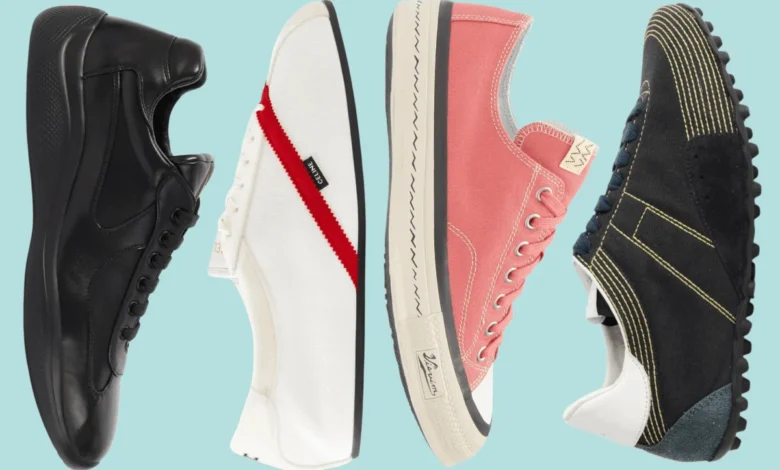
Prada’s contemporary footwear portfolio is bifurcated into two distinct design philosophies. On one side are the clean, minimalist shapes that appeal to traditionalists; on the other are progressive, trend-leading silhouettes aimed at consumers looking to make a bolder sartorial statement. Recent releases such as the Montecarlo, Collapse, and Speedrock models have played a pivotal role in the industry-wide slimming down of sneaker silhouettes. Prada’s ability to influence the broader footwear market has spawned countless iterations at nearly every price point. Yet, for consumers able to invest in the original craftsmanship, Prada remains an undisputed gold standard.
Industry analysts note that Prada’s ongoing commitment to technical nylon, premium leather, and proprietary sole construction allows the brand to command a loyal consumer base that spans multiple generations, from heritage fashion enthusiasts to younger streetwear devotees.
Maison Margiela: The Benchmark of Quiet Luxury
When discussing the blueprint for modern luxury footwear, Maison Margiela occupies a singular position. The brand’s Replica sneaker—inspired by 1970s German army athletic footwear—set the global standard for what a designer sneaker should be: distinctive yet unflashy, simple without being boring.
Constructed from premium calfskin leather and soft suede, the Replica has become a cornerstone of the modern menswear uniform. Its design longevity is a testament to the power of archival resurrection done right. Beyond the iconic Replica, Margiela’s broader assortment continues to innovate. The introduction of the Sprinter model serves as a calculated nod to retro running shoes, combining nylon, leather, and suede into a lightweight package that mimics the look of a vintage thrift store find without the exhaustive search.
Fashion historians and retail experts frequently cite Margiela’s footwear as a masterclass in quiet luxury. By stripping away overt logos and focusing entirely on texture, proportions, and heritage silhouettes, the label has insulated itself against the rapid fluctuations of micro-trends.
Rick Owens: Subversive Simplicity and Architectural Soles
Rick Owens is globally renowned for his avant-garde, gothic-leaning apparel, yet his footwear collection offers a masterclass in pared-back, grown-up simplicity. Rather than leaning into chaotic design, Owens focuses primarily on deconstructing and reimagining classic American sports sneakers through an elevated, architectural lens.
The label’s footwear output—including its celebrated mainline silhouettes like the Ramones and a long lineage of acclaimed collaborations—is characterized by a strict monochrome color palette, premium leather treatments, and exaggerated, sculptural sole units. While these sneakers naturally complement Owens’ signature drop-crotch shorts and dramatic outerwear, their true strength lies in their versatility. Styled with wide-leg cargo pants or oversized tailored trousers, they anchor an outfit with a distinct, grounding weight that traditional athletic shoes cannot replicate.
Retail data indicates that Owens’ footwear maintains exceptionally strong retention value on secondary luxury marketplaces, driven by a dedicated global subculture that values his uncompromising aesthetic vision and heavyweight construction standards.
Dries Van Noten: Capturing the Zeitgeist with Slimline Sophistication
Following structural changes and leadership transitions at his eponymous label, Dries Van Noten’s collections continue to resonate powerfully within the upper echelons of menswear. Long celebrated for bridging sophisticated tailoring with a playful, artistic edge, the Belgian fashion house has recently delivered what many style critics consider the defining footwear zeitgeist of the era: slimline, low-soled suede lace-ups.
Striking a precise balance between 1970s retro aesthetics and 1990s minimalist cool, these low-profile sneakers have quickly become ubiquitous among fashion editors, musicians, and stylists alike. Their adaptability is virtually unmatched; they pair effortlessly with everything from relaxed denim and corduroys to shorts with wool socks and double-breasted suits. Industry insiders consistently advise that due to high demand and limited production runs, securing a pair in standard sizing requires immediate action.
Visvim: The Connoisseur’s Choice for Heritage Americana
Since the mid-2000s, Japanese brand Visvim has commanded a revered status among menswear purists and fashion forum historians. Under the creative direction of Hiroki Nakamura, the independent label has spent the last 25 years producing masterclasses in elevated Americana, utilizing traditional artisanal techniques and rare material sourcing.
Visvim’s footwear philosophy mirrors its apparel: deeply respectful of vintage heritage yet uncompromisingly luxurious. The brand’s leather-trimmed canvas sneakers represent the platonic ideal of classic vulcanized footwear. Void of corporate branding, gimmicks, or temporary hype, Visvim shoes are frequently described by stylists as "your favorite menswear designer’s favorite sneaker." Because the company remains fiercely independent, its production scale is limited, ensuring that ownership feels exclusive and deliberate.
Bottega Veneta: Artisanal Mastery Meets Contemporary Skate Culture
Under the guidance of its recent creative directors, Italian luxury house Bottega Veneta has shattered its historical reputation as a purveyor of quietly polite staples, evolving into one of the most closely watched and culturally relevant brands in the global fashion industry. The house applies astonishing levels of artisanal craft to even the most casual silhouettes.
A prime example is the brand’s interpretation of classic slip-on skate shoes. Rather than relying on simple printed patterns, these shoes are constructed using strips of contrasting leather meticulously interwoven by hand in the house’s signature intrecciato technique. This dedication to traditional leather-working methods does not sacrifice modern wearability. The result is a contemporary silhouette that feels fresh, artistic, and entirely grounded in modern street culture. Furthermore, recent seasonal offerings like the Orbit ballet sneaker have dominated street-style coverage during international fashion weeks, cementing Bottega Veneta’s authority in footwear innovation.
Celine: Ushering in the Return of Preppy Sophistication
As menswear experiences a pronounced pivot back toward refined tailoring and preppy elegance, Celine under the creative direction of Michael Rider has positioned itself at the absolute center of the cultural conversation. Rider’s tenure has been widely praised for reinvigorating classic collegiate and tailored dressing for a modern audience.
Central to this aesthetic resurgence is the brand’s line of low-profile balletic sneakers. Worn widely by cultural icons and musicians such as Harry Styles and Role Model, these sleek, understated trainers have emerged as must-have accessories for the modern wardrobe. Blending traditional athletic lines with delicate proportions, Celine’s footwear bridges the gap between casual ease and high-fashion exclusivity.
On: Bridging the Gap Between Elite Athletics and High-End Lifestyle
The corporate evolution of Swiss athletic brand On serves as a fascinating case study in modern brand positioning. Backed by tennis legend Roger Federer as both a shareholder and brand ambassador, On successfully expanded its footprint from competitive running tracks and marathons into the boardrooms of Davos, the ski chalets of Aspen, and elite lifestyle boutiques worldwide.
While the flagship Cloud model remains an industry workhorse for daily wearers and frequent travelers, the brand has expanded its lifestyle appeal through forward-thinking designs like the Cloudvista. Featuring energetic colorways and responsive, technical soles, these shoes pair naturally with technical outerwear and utility cargo pants. For consumers seeking a dedicated lifestyle silhouette, On’s premium vegan-leather and mesh tennis offerings provide an effortless athletic-luxury hybrid that meets the demands of an active, on-the-go lifestyle without compromising on visual sophistication.
Market Implications and Future Outlook
The sustained growth of the luxury sneaker market indicates a fundamental shift in consumer behavior rather than a temporary trend. As hybrid work models persist and formal dress codes continue to relax globally, the demand for high-end footwear that can seamlessly navigate professional, social, and active environments will only accelerate.
For brands, the challenge lies in balancing heritage craftsmanship with continuous innovation. Labels that rely solely on past successes risk stagnation, while those that push too far into avant-garde territory often alienate the core demographic of buyers looking for wearable luxury. The brands highlighted by style authorities—ranging from heritage Italian houses like Prada and Bottega Veneta to artisanal specialists like Visvim and Maison Margiela—demonstrate that enduring success in the luxury sneaker space requires a delicate equilibrium: honoring traditional manufacturing techniques while remaining hyper-attentive to the evolving lifestyle needs of the modern consumer.