The Final Ride: Exploring the Curious History and Cultural Phenomenon of Automotive Burials

The intersection of automotive passion and funerary tradition has produced some of the most unconventional final send-offs in modern history. While traditional interment remains the standard across most cultures, a distinct, albeit rare, subset of individuals has chosen to conclude their existence not in a conventional casket, but behind the steering wheel of their most prized possessions. This phenomenon, while widely regarded as an eccentric outlier, serves as a profound reflection of the role that automobiles play in defining personal identity, status, and legacy. From the polarizing C4 Chevrolet Corvette to the high-performance engineering of vintage Ferraris, these automotive entombments represent a final act of self-expression that challenges the boundaries of traditional memorialization.
The Case of George Swanson: A Corvette Legacy
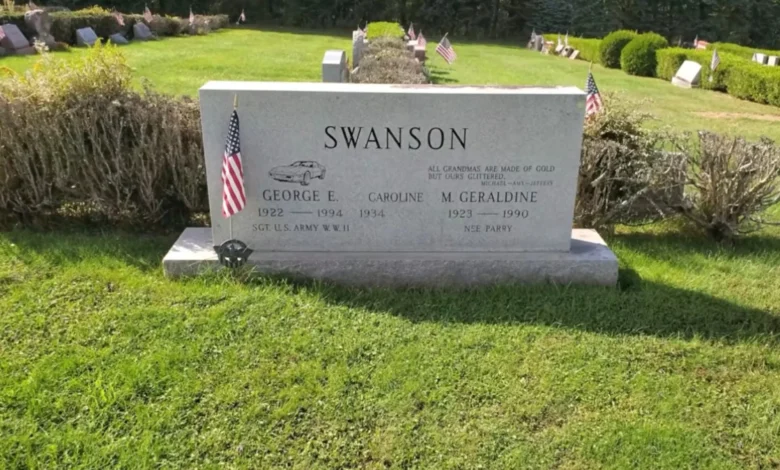
In 1994, George Swanson made headlines not merely for his passing, but for the logistical complexity of his final wishes. Swanson, an enthusiast whose affinity for the C4 Chevrolet Corvette (produced between 1984 and 1992) was absolute, requested that his remains be interred within his own white 1984 model. This specific generation of Corvette has historically occupied a contentious space among automotive enthusiasts; some critics point to its early electronic gremlins and stiff suspension as a low point for the marque, while others champion its innovative chassis design and transition into a modern performance era.
For Swanson, the vehicle was an extension of his identity. His burial was far from a simple ceremony. The process required the acquisition of 12 contiguous burial plots to accommodate the physical footprint of the vehicle. When the cemetery initially attempted to renege on the agreement, legal intervention became necessary to enforce the decedent’s wishes. The final interment was a spectacle of engineering and emotion: a crane was deployed to lower the vehicle into a subterranean vault. In a final, poignant gesture, his wife, Caroline, arrived in her own Corvette to scatter his ashes onto the driver’s seat of his car, while the strains of Englebert Humperdinck’s "Release Me" played—a fitting, if idiosyncratic, soundtrack for a man who refused to leave his passion behind.
A Chronology of Automotive Interment
While Swanson’s 1994 burial is a touchstone of the practice, it was not the first instance of a high-profile car-centric funeral. To understand the evolution of this trend, one must look back to the late 1970s.
- 1977: The San Antonio Precedent: Sandra West, a wealthy socialite and heiress, was interred at the Alamo Masonic Cemetery in San Antonio, Texas, seated behind the wheel of her 1964 Ferrari—widely believed to be a rare 330 America. Clad in an Italian lace nightgown, West’s burial set a structural precedent: the car was placed in a large wooden crate, lowered into a massive grave, and encased in a thick shell of concrete. The concrete was not merely a stylistic choice; it served a practical purpose, designed to deter grave robbers and souvenir hunters who might be tempted by the high-value vehicle.
- 1994: The Swanson Corvette Burial: As detailed previously, this event highlighted the bureaucratic and physical hurdles of such requests, specifically the need for significant land acquisition and specialized heavy-lifting equipment.
- 2009: The Practical Legacy: Lonnie Holloway, at age 90, chose to be buried in his 1973 Pontiac Catalina. Unlike the high-fashion intent of West or the enthusiast focus of Swanson, Holloway’s choice was deeply pragmatic. Having purchased the car upon his retirement, he viewed it as a companion. Furthermore, he included his personal firearm collection within the vehicle, citing a desire to ensure the weapons were permanently removed from circulation—a reflection of the car as a secure, personal vault.
Fact-Based Analysis: Why the Car?
Sociologists and funeral directors have long noted that the automobile is rarely "just a machine" in Western culture. For many, particularly those of the post-war generation, the car represents the pinnacle of personal liberty, social mobility, and technological achievement.
When an individual chooses to be buried in a vehicle, they are often attempting to preserve the "peak self." A car is a sensory environment—it holds the smells, textures, and memories of a lifetime of travel. By choosing to be interred with or within a vehicle, the deceased is signaling that the machine is not merely a tool for transportation, but a core component of their life’s narrative.
However, the trend is not without its complications. From a cemetery management perspective, car burials present significant challenges. Traditional burial plots are standardized to accommodate rectangular caskets. A modern passenger vehicle requires an area nearly four times the size of a standard plot, necessitates specialized vault engineering to prevent the earth from collapsing the roof of the vehicle, and requires complex heavy-lifting logistics that can disrupt the operations of a quiet cemetery.
The "Casket-Mobile" Distinction
It is important to distinguish between actual automotive burials and the "casket-mobile" phenomenon. A notable example is that of Willie "The Wimp" Stokes, the son of a Chicago mob boss. His funeral gained notoriety for his burial in a coffin custom-built to resemble a Cadillac. While this honored the aesthetic of the luxury automobile, it did not involve the mechanical reality of the car itself. This distinction is vital: the former is a statement of mechanical obsession and personal attachment, while the latter is a stylistic choice regarding the vessel of the body.
Broader Implications and Funeral Industry Responses
The evolution of the funeral industry has shifted toward "personalized memorialization." Modern funeral homes are increasingly aware that a "final ride" is not just a joke, but a legitimate request from clients seeking to make a statement of status or legacy.
Funeral directors now approach these requests with a blend of professional discretion and logistical caution. In states with more permissive land-use regulations, private family cemeteries have become the most common sites for such burials, as public cemeteries often have strict bylaws regarding the size of burial vaults and the materials that can be interred.
Furthermore, there is a growing environmental debate regarding these burials. The fluids—oil, transmission fluid, and coolant—that remain in a vehicle’s engine block and transmission pose a potential environmental hazard to the soil and groundwater. Modern regulations often require that any vehicle intended for interment must be "de-commissioned" or "purged" of all hazardous fluids before the burial can be legally permitted by local health departments.
Conclusion: A Final Act of Identity
The phenomenon of being buried in a car remains a niche activity, yet it remains a permanent fixture of our cultural curiosity. It bridges the gap between the mechanical world and the spiritual realm, asserting that for some, the journey is not over simply because the engine has stopped running. As society continues to grapple with how to memorialize lives in an increasingly personalized era, the car burial stands as a testament to the enduring, often irrational, and deeply human bond between a person and their machine. Whether driven by a desire for status, a love for engineering, or a wish to take a piece of one’s history into the next life, these final, metallic departures serve as an objective reflection of the values held by those who refuse to leave their drive behind.