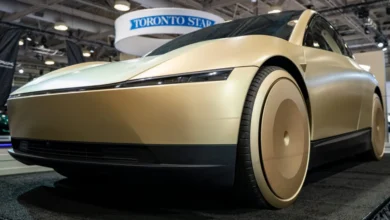
Major Satisfaction Survey Finds Automakers Could Learn Something From Vacuum Cleaners

This marginal difference of one point might seem negligible at first glance, but when viewed through the lens of product complexity, cost, and emotional investment, the implications for automakers are profound. A modern vehicle represents the second-largest purchase most consumers will ever make, often costing upwards of $50,000, yet the experience of owning and operating these machines is currently trailing behind that of a household appliance designed to suck up dirt. The ACSI study, which benchmarks various manufacturing sectors, places athletic shoes and soft drinks at the top of the satisfaction hierarchy with scores of 83, while traditional subscription television remains at the bottom with a 70. The fact that automobiles are trending closer to the middle of the pack suggests a growing disconnect between manufacturer offerings and consumer expectations.
The Metrics of Discontent: Warranties and Dependability
The ACSI study breaks down satisfaction into several key benchmarks, including durability, energy efficiency, and ease of use. In the automotive sector, these are categorized under "Dependability," whereas in the vacuum industry, they fall under "Durability." While both sectors perform reasonably well in these categories—luxury cars and vacuums both earned an 81, while mass-market vehicles achieved an 82—the divergence begins when looking at the support systems surrounding the product.
Warranty coverage has emerged as a significant pain point for car owners. Vacuum cleaners currently hold a satisfaction score of 80 for their warranty programs, compared to a score of 79 for automobiles. While this is a narrow gap, the stakes are vastly different. A vacuum cleaner may cost between $200 and $1,000, making a warranty claim a matter of convenience. In contrast, a vehicle involves a complex web of mechanical and electronic systems where a lack of comprehensive coverage can lead to thousands of dollars in out-of-pocket expenses.
Industry analysts suggest that as vehicles become more complex—incorporating advanced driver-assistance systems (ADAS), lithium-ion batteries, and sophisticated infotainment software—the standard three-year or 36,000-mile warranty is increasingly viewed as inadequate by the modern consumer. The ACSI data shows that warranty coverage ranks 11th out of 14 benchmarks for luxury brands and 12th for mass-market brands, indicating that this is one of the primary areas where automakers are failing to meet the mark.
Efficiency, Range, and the "Economy of Use"
Another area where household appliances are outperforming the automotive sector is energy efficiency. Modern vacuum cleaners, including cordless and robotic models, received a satisfaction score of 79 for their efficiency. Automakers, however, are struggling to convince consumers of the value proposition regarding fuel economy and driving range.
The ACSI data highlights a bifurcated struggle within the car industry. Luxury vehicle owners expressed the lowest levels of satisfaction with their vehicle’s range, scoring it a 72. Gas mileage for luxury cars did not fare much better, scoring a 78. Mass-market consumers were slightly more satisfied with their gas mileage (79) but remained frustrated with the range of their vehicles, particularly those owning electric vehicles (EVs), which resulted in a range satisfaction score of 74.
These scores suggest that "range anxiety" and the cost of operation remain dominant factors in the consumer psyche. Despite the push toward electrification, the infrastructure and battery technology have not yet reached a level where consumers feel the same "set it and forget it" confidence they have with smaller electronic devices. The discrepancy suggests that consumers expect a higher level of "economy of use" from their vehicles, especially as the price of fuel and electricity remains volatile.
The Complexity Crisis: Simplicity vs. Touchscreens
Perhaps the most telling takeaway from the ACSI report is the "Ease of Operation" benchmark. Vacuum cleaners scored a staggering 84 in this category, making it the highest-rated benchmark across the industry. Whether it is a traditional upright or a sophisticated LiDAR-mapped robot vacuum, consumers find these devices intuitive and straightforward to use.
The automotive industry, conversely, is grappling with a complexity crisis. Ease of operation in a vehicle is measured through two primary lenses: Driving Performance (handling and drivability) and Technology (touchscreens, voice commands, and interior controls). In both the luxury and mass-market segments, satisfaction with vehicle technology is lower than the ease-of-use scores for vacuum cleaners.
For over a decade, automakers have moved toward "minimalist" interiors that replace physical buttons and knobs with centralized touchscreen interfaces. While this reduces manufacturing costs and allows for over-the-air updates, it has created a significant usability hurdle for drivers. The ACSI data reflects a growing frustration with these systems, which are often perceived as distracting or unresponsive. This trend has become so pronounced that some manufacturers, including Volkswagen and certain luxury brands, have publicly committed to bringing back physical buttons in response to customer backlash. Even the Euro NCAP (European New Car Assessment Programme) has announced plans to penalize vehicles that do not have physical controls for basic functions like turn signals and windshield wipers by 2026.
Financial Pressure and the $50,000 Milestone
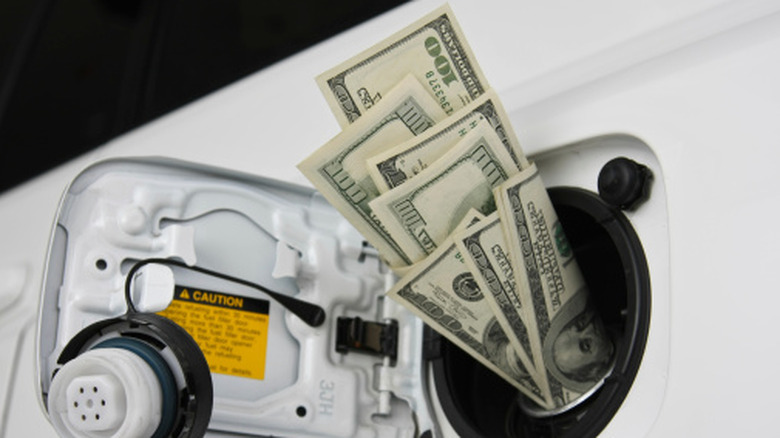
The context of these satisfaction scores cannot be separated from the current economic reality. The average price of a new car in the United States recently surpassed the $50,000 mark, a historic high that has been driven by supply chain disruptions, a shift toward larger SUVs, and the high cost of EV batteries.
As vehicles become more expensive, consumers naturally become more critical of every flaw. The ACSI report notes that satisfaction with resale and trade-in values is currently near the bottom of the automotive benchmarks. Historically, cars are depreciating assets, but the rapid pace of technological obsolescence—especially in EVs—has made consumers wary of how much their investment will be worth in five years.
"Our cars are getting more expensive and taking longer to pay for," the ACSI report prefaces, highlighting that the average auto loan term has stretched to 68 months or longer. When a consumer is locked into a six-year payment plan for a product that they find difficult to use or expensive to fuel, satisfaction inevitably plummets. In contrast, the relatively low cost and high utility of a vacuum cleaner make it a much "safer" purchase in the eyes of the American consumer.
Historical Context and Industry Implications
To understand how the automotive industry reached this point, one must look at the trajectory of the ACSI scores over the last decade. Historically, automobiles were among the highest-rated products in the manufacturing sector. However, the post-pandemic era has introduced a "perfect storm" of challenges:
- Inventory Shortages: Consumers were forced to pay "market adjustments" above MSRP, leading to immediate buyer’s remorse.
- Quality Control Issues: Rapid shifts to new platforms (EVs) led to an increase in initial quality problems.
- Software-Defined Vehicles: The transition from mechanical engineering to software engineering has resulted in "glitchy" interfaces that frustrate non-technical users.
The fact that vacuum cleaners—a category that includes brands like Dyson, Shark, and iRobot—have overtaken cars suggests that these companies have been more successful at integrating "smart" technology without sacrificing the core utility of the product. A robot vacuum may be complex under the hood, but for the user, it remains a "one-button" solution. Automakers have yet to find that balance.
Future Outlook: A Return to Basics?
The ACSI 2024-2025 study serves as a wake-up call for Detroit, Stuttgart, and Tokyo. The data suggests that the path to higher customer satisfaction does not necessarily lie in more screens or more horsepower, but in fundamental reliability and ease of use.
To bridge the gap, industry experts suggest that automakers must prioritize several key areas:
- Standardizing Physical Controls: Reintroducing tactile feedback for critical safety and comfort functions.
- Extended Warranty Programs: Offering longer "bumper-to-bumper" coverage to offset the perceived risk of high-tech repairs.
- Transparent Range Reporting: Providing more accurate, real-world range data for EVs to manage consumer expectations.
- Streamlined UI/UX: Reducing the number of sub-menus required to perform basic tasks like adjusting the climate control or mirrors.
As the automotive industry continues its most significant transformation in a century, the humble vacuum cleaner stands as an unlikely mentor. It proves that even in an age of high technology, the products that "suck" the least are the ones that stay out of the user’s way and simply do the job they were hired to do. For the $50,000 price tag of a modern car, consumers are signaling that they expect at least the same level of seamlessness they get from the machine they use to clean their rugs.
Related posts: