Peter Krause reflects on his storied television career and his transition from 9-1-1 to the new NBC action-thriller Line of Fire

For over three decades, Peter Krause has remained a constant presence in the landscape of American television. Since his 1990 debut in Carol & Company, Krause has cultivated a reputation for portraying complex, morally grounded characters in critically acclaimed series including Sports Night, Six Feet Under, and Parenthood. His career, characterized by a near-unbroken streak of annual screen appearances—with the exception of a brief hiatus in 1993—now enters a new chapter with the NBC action-thriller Line of Fire.
A Career Defined by Moral Complexity
Krause’s transition from the high-stakes world of emergency response in 9-1-1 to the clandestine operations of the Secret Service in Line of Fire highlights his enduring appeal to audiences. Reflecting on his body of work, Krause notes that he is consistently drawn to characters who strive to adhere to a strict moral compass.
"I have been fortunate to work on a wide variety of projects, but I am particularly attracted to people who are attempting to lead a good life and answer to their internal ethics," Krause stated. This thematic consistency has become a hallmark of his career, allowing him to bridge the gap between niche prestige dramas and mass-market broadcast hits.
Line of Fire: A New Narrative Architecture
In his latest project, created by Joshua Safran and executive produced by Jenna Bush Hager, Krause stars as Mike Hollingsworth, a Secret Service agent and patriarch to a family of high-ranking law enforcement officials. The series explores the intersection of personal dynamics and professional duty, a recurring motif in Krause’s filmography.
The Hollingsworth family—comprising an estranged wife, Jane (Hope Davis), a U.S. Marshal, and their three adult children employed by the FBI, Secret Service, and Department of Justice—finds themselves the target of a serial killer in the series premiere. The show utilizes a narrative structure that balances high-octane suspense with the "soapy" domestic tensions inherent in a family where every member carries a badge.
The production of the series, which is currently filming its seventh episode, has required a rigorous rehearsal process. Krause compared the choreography of scenes to theatrical stage plays, noting that the show blends standard single-camera television formats with intricate, multi-layered movement. "It is a masterclass in story architecture," Krause remarked. "The way the characters weave in and out of their family home while juggling professional crises creates a frantic, almost farcical tension that provides a unique rhythm to the drama."

The Legacy of 9-1-1 and the Departure of Bobby Nash
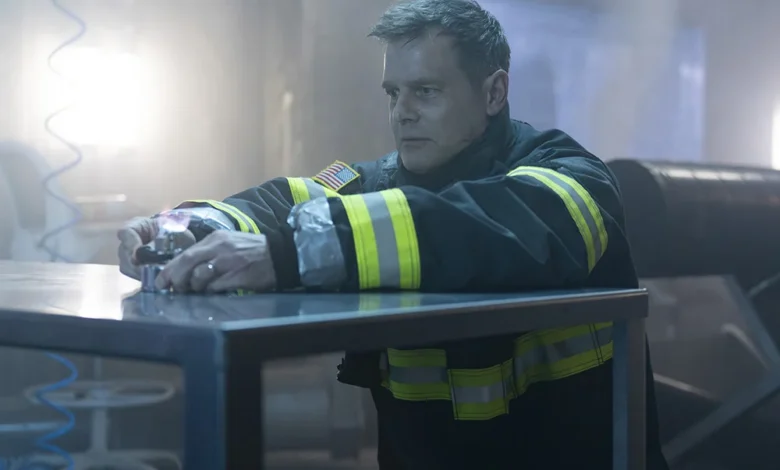
The most significant point of discussion regarding Krause’s recent professional life remains his departure from the ABC series 9-1-1. After an eight-season run, his character, Fire Captain Bobby Nash, was killed off in a twist that left both the audience and his co-stars in disbelief.
The exit, which occurred during a high-stakes storyline involving an infected laboratory, served as a catalyst for a major shift in the series’ narrative trajectory. For many viewers, the death of Bobby Nash represented the end of an era. The character, defined by his struggle with addiction and his role as a mentor to the 118 firehouse, was a central pillar of the show’s success.
"Tim Minear, the showrunner, reached out to me personally to explain the creative decision," Krause explained. "While it was a difficult goodbye, I believe it was a necessary evolution for the show. 9-1-1 is a unique entity—a comic book about first responders brought to life—and losing a core character forced the remaining ensemble to grow in ways they hadn’t previously."
Despite the finality of the character’s death, fan theories persist, with some viewers suggesting that Bobby Nash may return, perhaps suffering from amnesia or being held in a government facility. Krause, while maintaining a neutral stance on these speculations, acknowledged the deep connection audiences formed with the character. "I hope they remember him fondly. I certainly loved playing him, and I think the fact that people are still searching for a way he could be alive speaks to the impact of the show’s unbridled storytelling."
A Historical Perspective on Television Evolution
Krause’s perspective on the medium of television is informed by his formative years as a viewer. Having grown up watching staples such as The Waltons, Roots, and The Mary Tyler Moore Show, he views his career as a continuation of a lifelong fascination with serialized storytelling.
His transition from the grounded reality of Parenthood to the high-concept drama of Six Feet Under illustrates his versatility. Regarding the 25th anniversary of Six Feet Under, Krause reflected on the show’s enduring legacy as a meditation on mortality. He noted that the series encouraged viewers to live more authentically, a sentiment frequently shared by fans who approach him in public.
"The show challenged people to think about the obstacles preventing them from living the lives they truly wanted," Krause said. "It was a weekly exercise in existential inquiry. Seeing the impact that had on people—inspiring them to change their lives or face their grief—has been one of the most rewarding aspects of my career."

Implications for the Future of Broadcast Drama
As Krause moves forward with Line of Fire, his career trajectory serves as a case study for the longevity of traditional broadcast stars in an era of fragmented streaming audiences. By consistently choosing roles that balance professional action with deeply personal, flawed character studies, he maintains a bridge between the "golden age" of television and the modern streaming-first ecosystem.
The success of Line of Fire will depend largely on its ability to maintain the balance between the procedural thriller elements and the complex family dynamics that Krause identifies as the show’s core. With an ensemble cast including Campbell Scott, Chris Chalk, and Sam Waterston, the series is positioned to capture a demographic that appreciates the "story architecture" inherent in network dramas.
Conclusion and Looking Ahead
As the television industry continues to evolve, the demand for veteran actors who can anchor long-form narratives remains high. Peter Krause’s journey—from sketch comedy with Carol Burnett to the intense, dramatic rigors of network television—underscores a dedication to craft that remains rare.
For the audiences watching Line of Fire, the show offers more than just a suspenseful thriller; it provides a look at a professional actor who, after 35 years in the industry, remains as committed to his craft as he was when he first stepped onto a soundstage. Whether or not he eventually finds his way to the Saturday Night Live stage—a long-held ambition from his youth—remains to be seen. For now, Krause is focused on the immediate future of the Hollingsworth family and the intricate, high-stakes world they inhabit.
Line of Fire airs Mondays at 10/9c on NBC, with episodes available for streaming the following day on Peacock. As the season progresses, viewers can expect the narrative to delve deeper into the complex history of Mike and Jane Hollingsworth, setting the stage for what producers hope will be a long-running, multi-seasonal success.