Nintendo Launches Customer Appreciation Sale Following $300 Million Tariff Refund

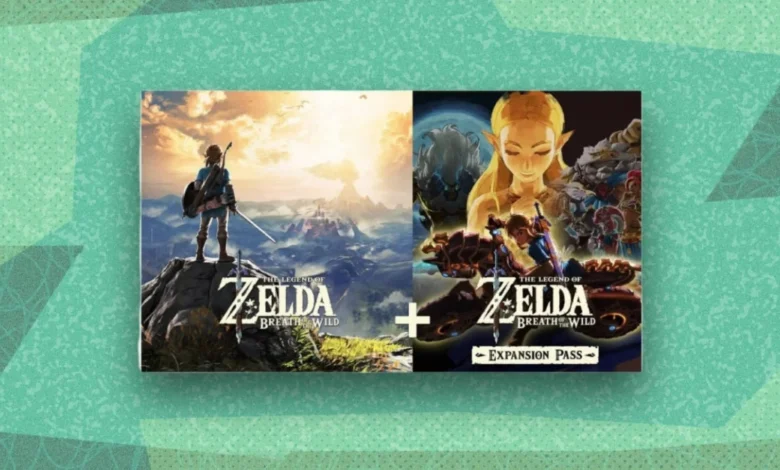
Nintendo of America has officially initiated a widespread "Customer Appreciation Sale," offering significant discounts on a range of digital titles, physical games, accessories, and apparel. This promotional event, which runs through September 26, 2026, comes in the wake of a substantial $300 million government tariff refund granted to the Japanese gaming giant. The sale is accessible across the Nintendo eShop, the official Nintendo Store, and major third-party retailers including Amazon, Best Buy, and Walmart.
The Catalyst for the Sale: Tariff Refunds and Corporate Policy
The announcement of this sale follows a period of complex trade discussions regarding electronics imports. Nintendo of America successfully secured $300 million in federal tariff refunds, a development that has directly influenced the company’s decision to engage in this aggressive pricing strategy. While major corporations often reinvest such windfalls into research and development or shareholder dividends, Nintendo has opted to pass a portion of these savings to its consumer base.
Industry analysts note that this move serves two strategic purposes: it mitigates potential public scrutiny regarding the nature of the tax refund while simultaneously clearing inventory ahead of the holiday shopping season. By framing the price reductions as a "Customer Appreciation Sale," the company strengthens its brand loyalty during a transitional phase in its hardware lifecycle.
Market Context and Sales Chronology
The sale comes at a pivotal moment in the gaming calendar. September 2026 has been marked by heightened consumer interest, fueled by the announcement of upcoming titles such as The Legend of Zelda: Ocarina of Time remasters. This excitement has created a "halo effect," driving increased traffic to Nintendo’s storefronts and physical retail partners.
The current promotional timeline is as follows:
- September 11, 2026: Reports confirm that Nintendo of America received the $300 million tariff refund.
- September 14, 2026: Official launch of the Customer Appreciation Sale across all platforms and major retailers.
- September 26, 2026: Scheduled conclusion of the promotional pricing period.
During this window, consumers are seeing discounts of up to 30% on a wide variety of goods. While the sale does not extend to the new Nintendo Switch 2 hardware, it provides a rare opportunity to acquire first-party software at lower price points.
Analysis of Key Deals and Hardware Compatibility
A primary focus of the current sale is the promotion of the Nintendo Pro Controller, which remains a cornerstone of the company’s accessory ecosystem. With the recent launch of the Nintendo Switch 2, questions regarding peripheral compatibility have been prevalent among the gaming community. Nintendo has confirmed that the standard Pro Controller maintains full compatibility with the newer console.
The current retail price for the Pro Controller has been adjusted to $55.99, down from the standard $79.99. This represents a significant value proposition compared to the newer "Pro Controller 2," which is currently retailing at $90 without promotional discounts. The decision to discount the original controller suggests an inventory management strategy aimed at maintaining relevance for legacy hardware while transitioning users to the new ecosystem.
In the software sector, the bundle containing The Legend of Zelda: Breath of the Wild and its associated Expansion Pass has emerged as a focal point of the sale. Currently priced at $55.97, the bundle is a significant reduction from its $79.98 MSRP. This pricing strategy is designed to capture both new Switch owners and those who have delayed purchasing high-value legacy titles.

Broader Economic Implications for the Gaming Industry
The interaction between government tariff policy and consumer-facing retail strategy provides a compelling case study in corporate economic management. By aligning the refund with a public-facing sale, Nintendo has effectively neutralized potential negative feedback regarding the financial windfall.
Economists observing the gaming sector suggest that this sale could trigger a broader trend among hardware manufacturers facing similar import challenges. When companies receive large-scale reimbursements or tax benefits, the standard expectation is a boost in quarterly earnings reports. However, in the hyper-competitive market of 2026, where consumer sentiment is volatile, prioritizing market share through aggressive sales may yield better long-term returns than simple profit realization.
Furthermore, the participation of large-scale retailers like Walmart and Best Buy indicates a coordinated supply chain effort. These retailers are likely utilizing the Nintendo-funded discounts to draw foot traffic into their physical stores and online platforms, hoping that customers will bundle these discounted gaming items with other electronics or household goods.
Consumer Impact and Future Outlook
For the average consumer, the current sale represents a rare opportunity to acquire "evergreen" titles—games that rarely see deep discounts—at reduced prices. The emphasis on physical games and accessories also highlights the company’s continued commitment to the retail market, even as digital distribution becomes the industry standard.
As the sale progresses toward its September 26 conclusion, observers will be looking for data on inventory turnover and customer engagement levels. If the sale successfully moves a significant volume of legacy inventory, it may embolden Nintendo to repeat this model in future fiscal quarters.
However, there is also the consideration of the "Zelda effect." The overwhelming demand for Zelda-themed hardware and software in September 2026 suggests that consumer appetite remains strong, provided the price point is accessible. The success of this sale will likely serve as a benchmark for how the company manages promotional activities during the next phase of the Nintendo Switch 2’s market penetration.
Conclusion and Strategic Considerations
The $300 million refund is not merely a financial transaction; it is a strategic asset. By deploying these funds into a broad-reaching discount campaign, Nintendo is positioning itself to capture consumer spending before the end-of-year shopping surge.
While the sale does not offer discounts on the most cutting-edge hardware, the breadth of the discounts on accessories and legacy software ensures that there is something for every segment of the user base. As the industry moves further into the second half of 2026, the long-term impact of this "appreciation" strategy will be measured not just in units sold, but in the sustained engagement of a consumer base that continues to prioritize Nintendo’s intellectual property despite the shifting technological landscape.
Consumers are encouraged to verify availability across multiple retailers, as inventory levels for popular items such as the Pro Controller are expected to fluctuate significantly before the sale concludes at the end of the month. As with all promotional periods, the availability of these items is subject to supply chain logistics and regional retail policies.