Charli XCX Navigates Legacy and Mortality Through Artistic Collaboration with David Cronenberg in New Album Music Fashion Film

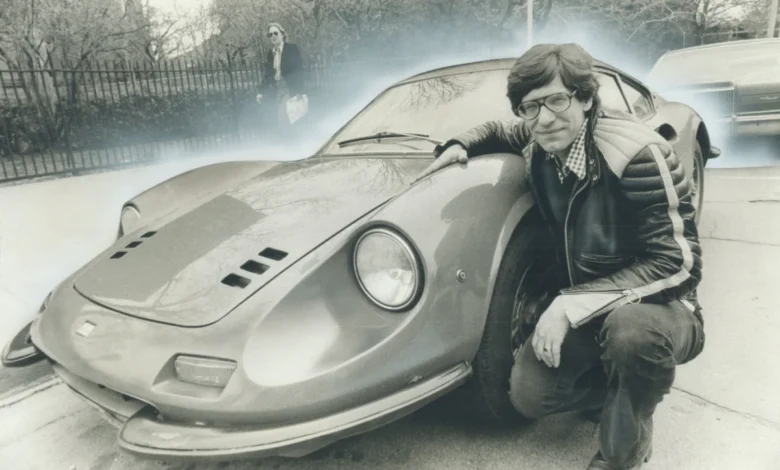
The release of Charli XCX’s latest studio album, Music, Fashion, Film, marks a significant pivot in the career of an artist who has spent the last decade oscillating between underground hyperpop experimentation and mainstream chart dominance. Following the unprecedented cultural saturation of her previous era, the singer-songwriter has opted for a project that prioritizes legacy, introspection, and a dialogue with the titans of 20th-century art. Central to this new narrative is an unexpected collaboration with legendary Canadian filmmaker David Cronenberg, whose voice provides the philosophical anchor for the album’s closing track, "No One Lasts Forever." This partnership serves as the culmination of Charli XCX’s growing immersion in the world of cinema and her public grappling with the fleeting nature of celebrity.
The Post-Brat Landscape and the Search for Authenticity
To understand the weight of Music, Fashion, Film, one must first consider the gravity of its predecessor. The 2024 album Brat was more than a commercial success; it was a global phenomenon that birthed the "Brat Summer" aesthetic, influencing everything from high-street fashion to political campaigning. However, the intensity of such fame often brings a specific kind of artistic claustrophobia. While Brat was celebrated for its messy, club-oriented vulnerability, Music, Fashion, Film appears to be a calculated response to the scrutiny that followed.
The new album arrives at a time when Charli XCX has increasingly positioned herself within the "cinephile" community. Her active presence on Letterboxd, a social media platform for film enthusiasts, has transformed her from a pop star who likes movies into a recognized "power user" within the digital film discourse. This transition from consumer to participant reached a milestone when it was revealed that her new project would feature not only the voice of Cronenberg but also visual tributes to Martin Scorsese, Velvet Underground co-founder John Cale, and fashion designer Marc Jacobs. These figures represent the "Music, Fashion, Film" of the title—men who have secured their places in the cultural canon through decades of influential work.
The Cronenberg Connection: From Body Horror to Sonic Philosophy
The inclusion of David Cronenberg on the track "No One Lasts Forever" is the realization of a long-standing creative affinity. Charli XCX has frequently cited Cronenberg’s 1996 film Crash—an adaptation of J.G. Ballard’s novel exploring the eroticism of car accidents—as a primary influence. Her 2022 album, also titled CRASH, utilized the film’s themes of power, destruction, and machinery as a metaphor for the music industry.
The collaboration for Music, Fashion, Film was initiated in 2023 when Charli XCX traveled to Toronto to record a long-form conversation with the director. Cronenberg, known as the "Father of Body Horror," has spent his career exploring the boundaries of the human physique and the psychological impact of technology. His contribution to the album, however, is less about the visceral and more about the existential. The spoken interlude used in the final track is a reflection on a near-death experience, where the director admits that in a moment of true mortality, the pursuit of art becomes secondary to the reality of human connection.
Analyzing No One Lasts Forever: The Anatomy of the Final Track
"No One Lasts Forever" serves as the thematic resolution to the album’s internal conflicts. Musically, the track departs from the high-energy synthesizers of the Brat era, leaning instead into a mid-tempo, atmospheric soundscape that reflects a "6 a.m. after-party" atmosphere. The lyrics describe a scene in Paris where the protagonist engages in philosophical debate with a "French girl" as the stimulants of the night begin to fade.
In this setting, Charli XCX addresses the paradox of her public persona. She acknowledges the "irresponsible and rude" labels often applied to her by the media and the public, contrasting the thrill of the party with the weight of constant surveillance. The chorus—"nothing’s gonna last forever"—is a refrain of both resignation and relief. By the time Cronenberg’s voice enters, the song has transitioned from a personal lament into a broader meditation on the end of all things.
Cronenberg’s monologue is chillingly pragmatic. He recounts lying on a sidewalk after an accident, noting that he did not think about his filmography or his status as an auteur. Instead, he thought about people and life. He posits that while art may survive for thousands of years, the artist themselves will inevitably face "oblivion." Crucially, he defines this oblivion not as a tragedy, but as "freedom."
A Visual and Sonic Departure: Supporting Data and Style
The aesthetic shift of Music, Fashion, Film is reflected in its production choices and visual identity. Unlike the neon-green minimalism of Brat, the new album’s artwork is a sophisticated tableau. By posing with Scorsese, Cale, and Jacobs, Charli XCX is making a claim to a different kind of longevity. These are artists who have survived the "hype cycles" of their respective eras to become institutions.
Data from streaming platforms and initial critical reviews indicate a shift in audience reception as well. While Brat saw a massive spike in "club-ready" playlisting, Music, Fashion, Film has seen higher engagement in "indie-rock" and "experimental pop" categories. This is due in part to the album’s "atypically rocky sound," featuring live instrumentation and distorted guitars that distance it from the polished hyperpop of her previous work.
Industry analysts suggest this move is a strategic "rebranding" aimed at the Grammy Awards and other legacy-based honors. By aligning herself with "high art" figures like Cronenberg and Scorsese, Charli XCX is attempting to bridge the gap between being a "pop star of the moment" and a "permanent cultural fixture."
Chronology of the Music, Fashion, Film Era
The development of this project followed a strict timeline that suggests a deliberate move away from the spontaneity of her previous work:
- Late 2022: Completion of the CRASH tour and the beginning of Charli XCX’s public "cinephile" pivot.
- Early 2023: Initial recording sessions for what would become Music, Fashion, Film. Charli begins appearing at film festivals and fashion weeks as a primary guest rather than a musical performer.
- Mid 2023: The Toronto meeting with David Cronenberg. The hour-long conversation is recorded, intended for a multimedia project that eventually becomes the album’s closing track.
- June 2024: The peak of "Brat Summer." Despite the immense success, Charli XCX begins teasing a "complete departure" from electronic dance music.
- Late 2024: Reveal of the album artwork featuring Scorsese, Cale, and Jacobs. The image sparks widespread debate regarding the "gatekeeping" of high art and the role of the pop star within it.
- Early 2025: Release of Music, Fashion, Film, accompanied by a series of short films directed by emerging indie filmmakers, further cementing the album’s cinematic ties.
Official Responses and Cultural Implications
While Martin Scorsese and Marc Jacobs have remained largely silent on their inclusion in the album’s imagery—treating it as a silent endorsement of the singer’s "curatorial" eye—David Cronenberg has spoken briefly about the collaboration. In an interview with Triple J, Charli XCX noted that Cronenberg was intrigued by the intersection of pop music and his own "clinical" view of the world.
The implications of this album extend beyond Charli XCX’s individual discography. It represents a growing trend among "mainstream-adjacent" artists to seek validation through the lens of classic cinema and high fashion. By utilizing Cronenberg’s voice to declare that "oblivion is freedom," Charli XCX is effectively attempting to "kill" her own celebrity before the public can do it for her.
The "nihilistic" tone of the album has been met with mixed reactions from the fanbase. While long-term followers appreciate the intellectual depth and the rejection of "safe" pop tropes, newer fans brought in by the Brat phenomenon have expressed confusion over the lack of "danceable" hits. However, from a journalistic perspective, the move is a calculated risk. It shifts the conversation from "what is the song of the summer?" to "what is the nature of an artistic legacy?"
Conclusion: The Liberation of Oblivion
Music, Fashion, Film is an album about the end of things. It is about the end of a night, the end of a career cycle, and the eventual end of the artist themselves. By bringing David Cronenberg into the fold, Charli XCX has found a way to articulate the anxiety of being a "temporary" icon in a digital age.
Cronenberg’s final refrain—"They are dead, they are gone, no one lasts forever"—is not a warning, but a gift of perspective. It suggests that if legacy is ultimately out of an artist’s control once they are gone, the only logical response is to create without the burden of expectations. For Charli XCX, this album is the sound of an artist burning down the neon-green flag of her recent past to see what remains in the ashes. It is an assertive, self-aware, and ultimately liberating entry into a new chapter of her career, one where the boundaries between the pop stage and the cinema screen have finally dissolved.