Toyota Leads US New Electric Vehicle Sales Growth in August Driven by Refreshed Lineup and Lower Pricing

The United States electric vehicle market experienced a nuanced shift in August, balancing a year-over-year decline against encouraging monthly recovery. According to the latest data compiled by Cox Automotive in its August EV Market Monitor, overall new electric vehicle sales reached approximately 78,895 units. This figure represents a modest 2.5% increase compared to the previous month, signaling localized momentum despite broader market contractions.
When measured against the same period in the previous year, sales registered a substantial 46.9% decrease. Industry analysts attribute this sharp annual decline primarily to a high-water mark set in August of last year, when consumers rushed to finalize purchases ahead of anticipated federal policy adjustments and to claim the expiring $7,500 federal EV tax credit. Despite the annual cooling, the recent monthly uptick underscores a resilient consumer base drawn in by expanding inventory, improved vehicle technology, and, crucially, a wave of more aggressively priced entries from legacy automakers.
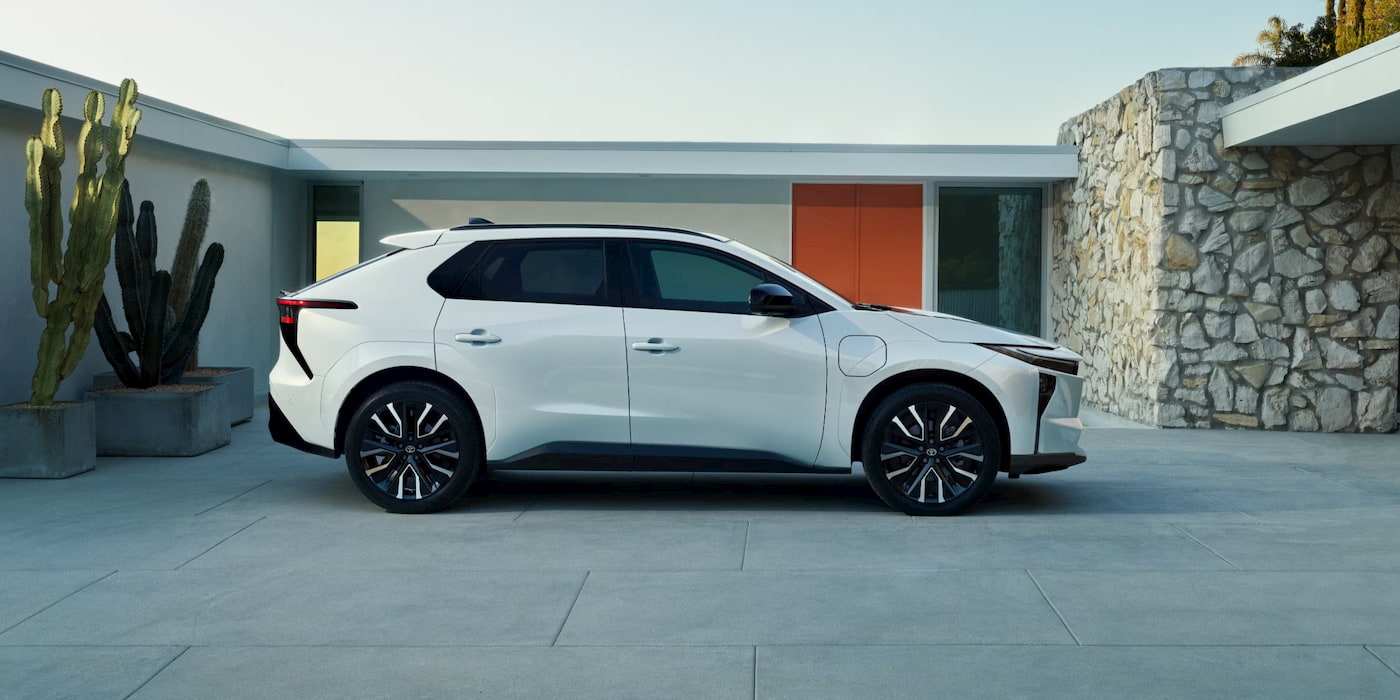
At the vanguard of this month-over-month growth was Toyota, which outpaced its competitors to lead US new electric vehicle sales growth in August. Bolstered by strategic revisions to its electric vehicle architecture and a newly optimized lineup of electric SUVs, the Japanese automaker posted a notable 35% jump from July, moving 4,964 units. This performance highlights a dramatic turnaround for a brand that was previously criticized by market observers for a sluggish transition to battery-electric platforms.
Shrinking the Price Gap Between Electric and Gas-Powered Vehicles
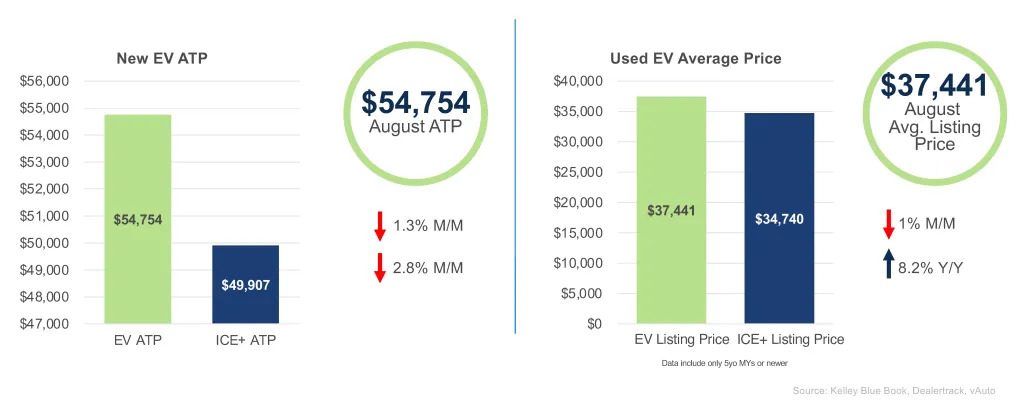
A primary catalyst for the broader market’s month-over-month stabilization in August was the steady decline in average transaction prices (ATPs) for new electric vehicles. Cox Automotive reported that the ATP for a new EV dropped to $54,754 during the month, marking a 1.3% reduction from July and a 2.8% decline year-over-year.
More importantly, the price parity gap between battery-electric vehicles and traditional internal combustion engine (ICE) vehicles continued to narrow. In August, the price premium for a new EV shrank to $4,847, representing a 9.7% difference. This narrowing margin has historically been identified by market researchers as a crucial tipping point for widespread consumer adoption. As manufacturing efficiencies scale and raw material costs—particularly for lithium-ion battery cells—moderate, automakers are better positioned to offer competitive pricing structures.
The downward pressure on average transaction prices was driven largely by strong sales performance in lower-priced market segments. Vehicles such as the Toyota bZ, the Chevrolet Bolt, the Toyota C-HR, and the Tesla Model 3—whose ATP dropped an additional 1.9% from July—served as volume drivers. By expanding choices below the $40,000 threshold, manufacturers successfully captured budget-conscious buyers who were previously priced out of the EV market.
Market Share Shifts and Manufacturer Performance
While broader market participation is diversifying, Tesla maintained its dominant position at the top of the US electric vehicle sales hierarchy in August. The Austin-headquartered company sold 40,816 vehicles during the month. However, increased competition from traditional original equipment manufacturers (OEMs) chipped away at its dominance. Tesla experienced a 3.8% sales decline from July, pulling its total market share down to 51.7%.
Following Tesla, Toyota secured the second position in market volume, outperforming several dedicated EV startups and established foreign competitors. Behind Toyota, brands such as Rivian, Hyundai, and Cadillac rounded out the top tier of US sales.
Several legacy brands also posted impressive month-over-month gains. Chevrolet saw its electric vehicle sales surge by 30% in August, while Cadillac recorded a 13% increase, and Kia posted a 12% rise. Conversely, some competitors struggled to maintain pace. For instance, Ford moved 15,484 Mustang Mach-E units through the first eight months of the year, representing a 55% decline compared to the same timeframe in the previous year. This divergence highlights a bifurcated market where consumers increasingly favor refreshed platforms equipped with updated charging infrastructure compatibility and extended driving ranges.
The Rise of the Toyota bZ: A Strategic Pivot
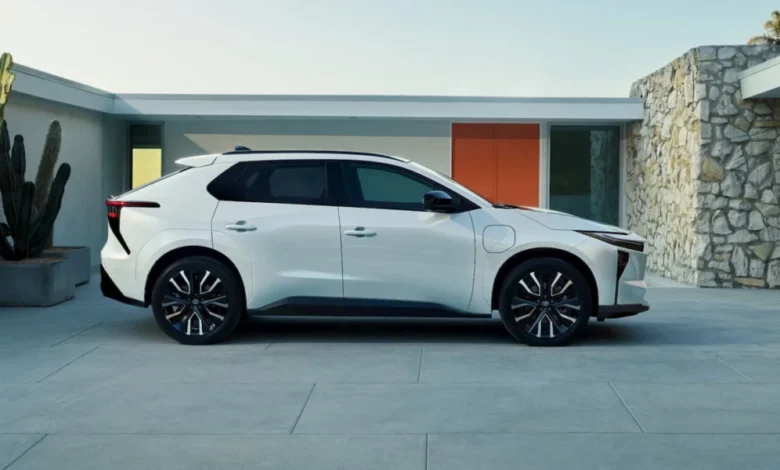
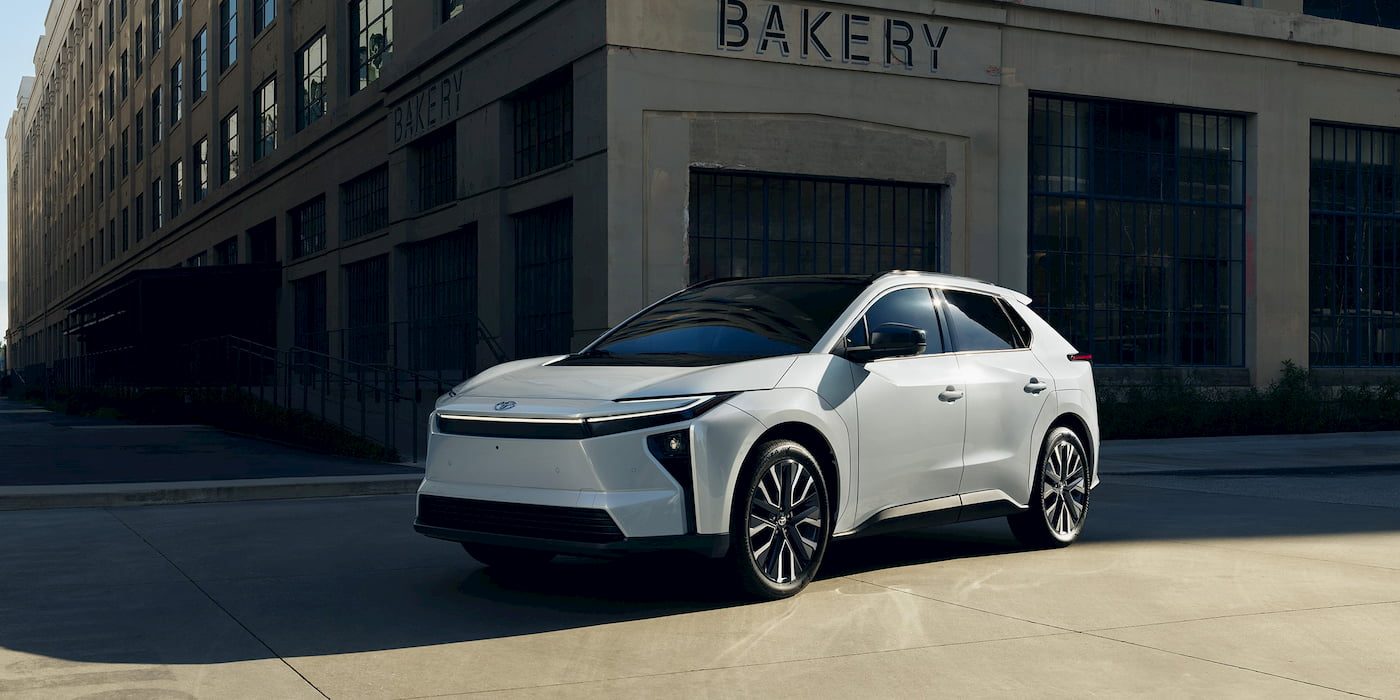
Toyota’s resurgence in the electric vehicle space centers on the commercial success of its flagship battery-electric SUV, now designated simply as the bZ. The vehicle’s trajectory over the past year illustrates how quickly consumer sentiment can shift in response to targeted engineering and pricing adjustments.
In August 2025, Toyota moved just over 1,000 units of the predecessor bZ4X. Following a comprehensive mid-cycle refresh introduced in October of that year, the rebranded bZ quickly ascended the sales charts. By the first half of the year, it had established itself as the fourth best-selling electric vehicle in the United States, trailing only the Hyundai IONIQ 5 and Tesla’s Model 3 and Model Y.
Cumulative sales data underscores this rapid acceleration. Through the first eight months of the year, Toyota has retailed more than 22,500 bZ models. This figure significantly eclipses the 15,609 total units sold of the earlier bZ4X variant across the entirety of the previous calendar year.
Industry analysts point to specific product updates as the primary catalyst for the vehicle’s commercial velocity. Recognizing initial consumer feedback regarding range anxiety and charging speeds, Toyota engineered substantial improvements where they mattered most. The updated bZ platform delivers enhanced driving range, faster DC fast-charging capabilities, and a fully integrated North American Charging Standard (NACS) port, allowing seamless access to the expansive Tesla Supercharger network.
Pricing, Range, and Interior Redesign
The 2027 Toyota bZ lineup demonstrates the brand’s aggressive strategy to capture mainstream market share through accessible pricing tiers and competitive performance metrics.
The entry-level 2027 Toyota bZ XLE FWD starts at an MSRP of $34,980, making it one of the most competitively priced midsize electric SUVs on the market. This base configuration provides an EPA-estimated driving range of up to 236 miles, satisfying the daily commuting needs of the average American driver. For consumers requiring greater long-distance capability, the FWD Plus model extends the EPA-estimated range to up to 314 miles, retailing at $37,980.
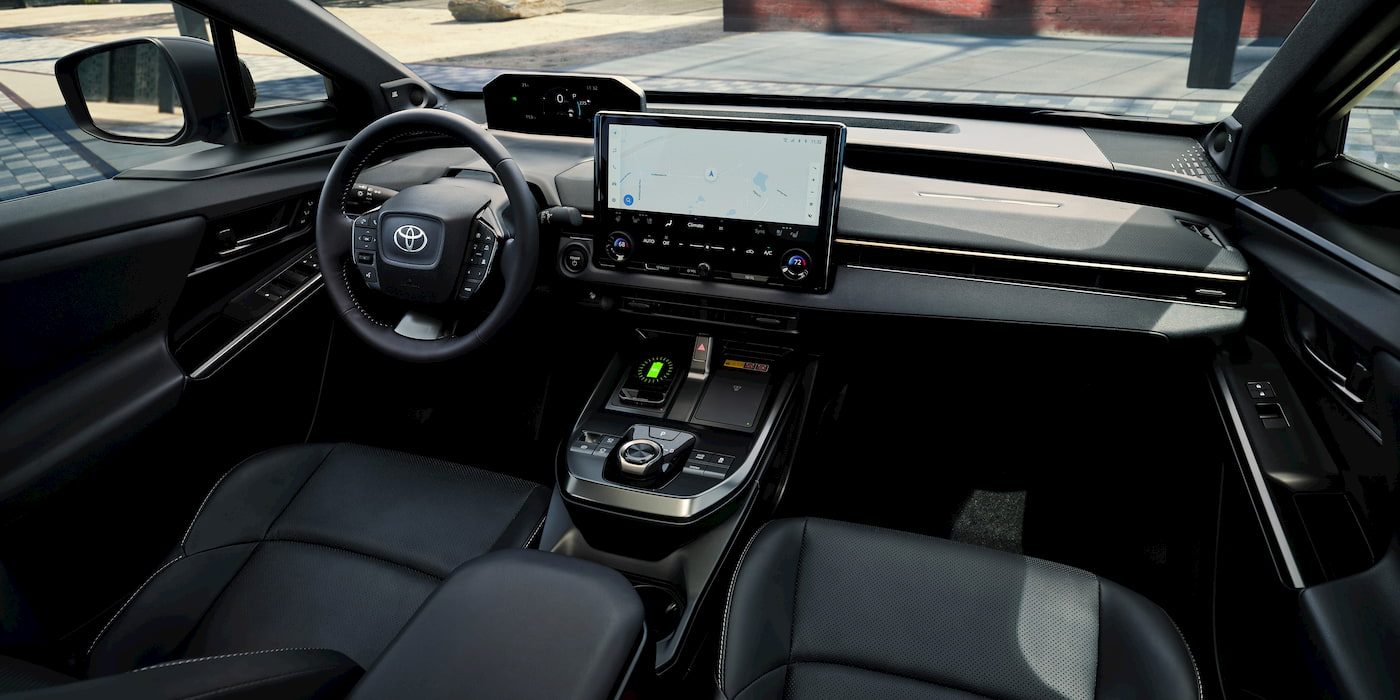
Beyond powertrain enhancements, the cabin architecture underwent a thorough modernization. The interior now features Toyota’s latest digital layout, anchored by a prominent 14-inch Toyota Audio Multimedia touchscreen interface. The system includes native wireless integration for both Apple CarPlay and Android Auto, addressing prior criticisms regarding software responsiveness and connectivity options.
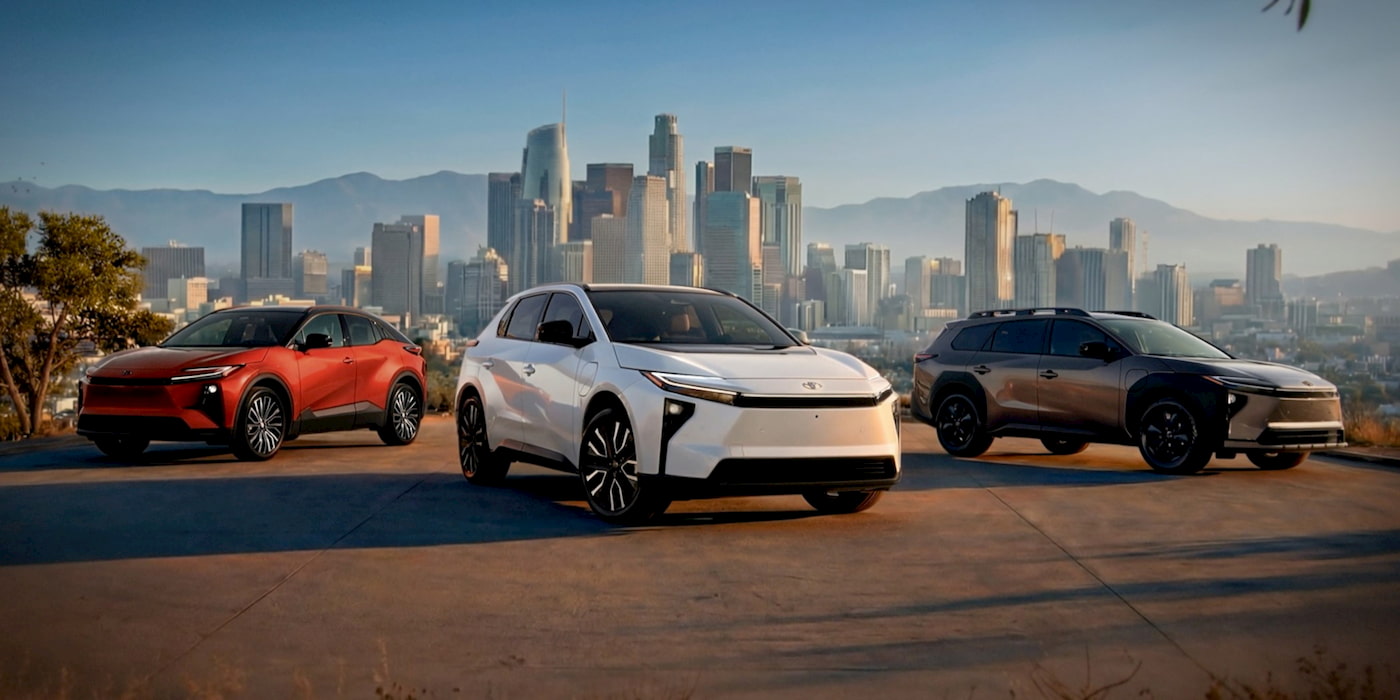
Toyota’s broader electric vehicle portfolio in the United States now encompasses a diversified trio of SUVs. Alongside the core bZ model, the automaker offers the compact C-HR electric starting at $37,080, and the rugged, adventure-focused bZ Woodland variant, which begins at $45,380. This tiered approach allows the brand to capture diverse consumer demographics ranging from urban commuters to outdoor enthusiasts.
Broader Industry Implications and Future Outlook
The August 2026 sales data and Cox Automotive insights point to a maturing domestic electric vehicle market. The transition from early-adopter enthusiasm to mass-market acceptance is proving to be contingent upon three critical pillars: affordability, infrastructure interoperability, and incremental technological refinement.

As legacy automakers ramp up production of sub-$40,000 electric vehicles, the historical barrier of high initial purchase prices is steadily eroding. The reduction of the average transaction price to below $55,000, paired with a narrow 9.7% price gap relative to gas-powered counterparts, suggests that cost considerations will exert less friction on future EV adoption curves.
Furthermore, the widespread industry adoption of the NACS charging standard—exemplified by Toyota’s integration of the port into its refreshed lineup—is expected to alleviate lingering consumer anxieties regarding long-distance travel and charging station availability. With a more reliable, unified charging ecosystem taking shape across North America, mainstream buyers are exhibiting greater confidence in making the switch from internal combustion engines to battery-electric platforms.
For Toyota, the successful execution of its electric vehicle strategy serves as validation for a measured, pragmatic approach to electrification. By pairing aggressive pricing with substantial hardware and software upgrades, the company has transformed a tentative market entry into a formidable commercial success. As automakers roll out subsequent model-year updates and clear out outgoing inventory, market watchers anticipate sustained competitive pressure across the sector as traditional brands challenge established EV pure-plays for market supremacy.
Related posts: