Hyundai Motor Chief Executive Warns US Must Impose Strict Conditions on Chinese EV Imports to Avoid European Market Disruption

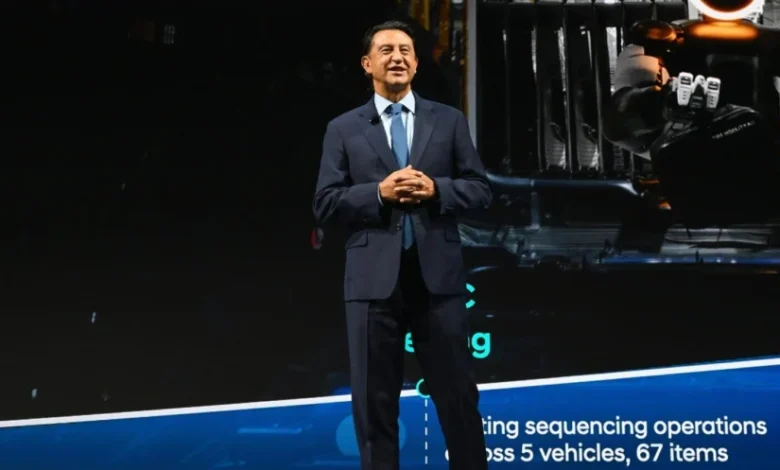
The global automotive landscape stands at a critical juncture as traditional legacy automakers grapple with the meteoric rise of low-cost Chinese electric vehicle (EV) manufacturers. Speaking at a high-profile industry briefing on 18 September, Hyundai Motor Chief Executive Jose Munoz issued a stark warning to policymakers in Washington: the United States risks repeating the severe market disruption currently crippling European automotive sectors unless the federal government maintains robust tariffs and strategic trade restrictions.
Munoz’s cautionary remarks highlight a growing anxiety among international legacy automakers. These established giants find themselves increasingly under pressure from Chinese EV giants capable of undercutting Western-built vehicles by staggering margins. As governments on both sides of the Atlantic weigh national security concerns, economic protectionism, and climate goals, the debate over how to handle the influx of affordable Chinese technology has ignited fierce policy divisions in Washington and major European capitals alike.
The European Warning: A Cautionary Tale for North America
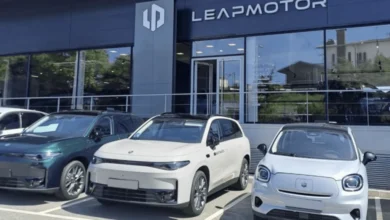
To illustrate the vulnerability of unprotected markets, Munoz pointed directly to the current economic realities in continental Europe and the United Kingdom. Despite the European Union’s implementation of defensive measures—including tiered tariffs and minimum-pricing frameworks on Chinese-built electric vehicles—Chinese models continue to aggressively capture market share. According to data compiled by the European Automobile Manufacturers’ Association (ACEA), Chinese-branded cars accounted for more than 9% of total EU sales during the first half of 2026. These vehicles frequently sell at prices 30% to 40% lower than comparable rival models manufactured by European heritage brands in key markets such as Italy, Spain, and France.
However, Munoz emphasized that the most definitive warning sign for American regulators comes from across the English Channel. The United Kingdom, which formally completed its departure from the European Union in 2020, never adopted comparable tariff structures or restrictive pricing mechanisms for Chinese automotive imports. Consequently, the UK has transformed rapidly into one of the most heavily penetrated markets outside of mainland China.
"The UK, which in the past was a very profitable, very strong market, has become like China," Munoz stated candidly during the briefing. "All the top sellers are Chinese because there are no barriers."
According to figures from the Society of Motor Manufacturers and Traders (SMMT), Chinese-branded cars captured a commanding 15% share of new vehicle registrations in the UK over the same period, underscoring how swiftly an open market can be reshaped when confronted with state-backed manufacturing scale and cost efficiencies.
Navigating Washington’s Complex Policy Framework
While Munoz’s primary objective is to protect Western manufacturing ecosystems from a destructive flood of cheap imports, his proposed solution diverges significantly from the hardline protectionist stances favored by certain figures within the political establishment. Rather than advocating for an absolute, permanent lockout of Chinese automotive manufacturers, the Hyundai CEO favors a conditional market-access framework.
This nuanced stance places Munoz remarkably close to the stated preferences of President Donald Trump. Unlike officials within the administration who advocate for total exclusion and aggressively interrogate domestic automakers over any perceived supply chain ties to China, Trump has repeatedly voiced openness to accepting Chinese car manufacturing plants within the United States. This acceptance, however, is contingent upon strict regulatory conditions: Chinese firms must agree to localize their production supply chains, build assembly plants on American soil, and hire domestic American workers.
"The US needs to impose conditions on Chinese companies to be able to minimize the impact," Munoz noted, while realistically acknowledging that the broader market disruption "is going to be there for sure."
This timeline aligns closely with warnings issued by other industry leaders. In July, Ford Chief Executive Jim Farley cautioned his own employees that Chinese automotive brands could realistically establish a physical and commercial foothold within the United States market within a five-to-ten-year window. The growing consensus among automotive executives suggests that keeping Chinese EVs entirely out of North America is an impossibility; the central policy challenge instead centers on managing the terms of their inevitable arrival.
Strategic Shifts in Autonomous Driving Technology
Alongside trade policy concerns, Munoz used the platform to address internal corporate developments at Hyundai, specifically regarding the company’s autonomous driving roadmap. The South Korean automotive giant has officially confirmed a two-year delay for the rollout of its proprietary Level 2++ driver-assistance system. Initially targeted for a late 2027 commercial debut, the software suite—which is pitched as a direct competitive answer to Tesla’s well-known Full Self-Driving (FSD) architecture—is now slated for a late 2029 release.
Munoz firmly attributed the timeline revision to the rigorous engineering demands of data collection, fleet validation, and safety performance optimization, rather than any fundamental technological roadblock. To bridge this development gap, Hyundai is championing a "data flywheel" strategy designed to drive continuous software iteration and refinement.
In the interim, Hyundai has forged a strategic partnership with semiconductor giant Nvidia. By leveraging Nvidia’s advanced computing platform, Hyundai plans to accelerate the deployment of interim Level 2+ and Level 2++ vehicle systems to market by 2028. Critically, these Nvidia-powered interim vehicles will actively generate real-world driving data that feeds directly back into Hyundai’s proprietary, in-house software development pipeline.
"I don’t like delaying anything," Munoz admitted, reflecting on the pragmatic pivot. "If you’re humble, you realize your technology is not good, maybe you need to try a partnership."
Despite the reliance on external hardware and software partnerships in the medium term, Munoz stressed that Hyundai’s long-term corporate vision remains anchored in complete technological independence. The group intends to fully internalize autonomous driving capabilities and battery production technologies over the coming decade. Whether through temporary joint ventures, targeted acquisitions—such as Hyundai’s ownership of US-based autonomous vehicle developer Motional—or organic research and development, proprietary control over core components remains a non-negotiable strategic pillar for the brand.
Accelerating Domestic US Manufacturing and Localization
Beyond software and trade policy, Munoz credited existing United States tariff frameworks and industrial legislation with directly catalyzing Hyundai’s aggressive domestic manufacturing expansion. Pointing to the successful production of the Santa Fe SUV at the company’s assembly plant in Montgomery, Alabama, Munoz demonstrated that localized manufacturing already delivers substantial economic returns under current trade compliance rules.
Looking ahead, Hyundai has committed to ambitious operational scaling across North America. The automotive group plans to inject substantial capital into regional operations to add 500,000 units of dedicated North American production capacity by 2030. Concurrently, Hyundai aims to elevate its domestic parts sourcing ratio above 80%, a significant jump from its current baseline of roughly 60%. This localization push is engineered to run in parallel with the company’s software timeline adjustments, ensuring that regulatory compliance and supply chain resilience remain insulated from external geopolitical shocks.
Broader Industry Implications and Washington Disconnect
The diverging perspectives within Washington and the global automotive sector underscore a deeper reality: a unified consensus regarding China’s automotive ascendance remains elusive. While trade hawks in the administration push for total decoupling and punitive barriers—frequently grilling domestic legacy executives over cross-border partnerships—industry leaders like Munoz and Ford’s Jim Farley recognize that market forces, cost advantages, and technological maturation will eventually breach traditional borders.
Munoz’s call for managed conditions rather than blanket exclusion highlights a pragmatic middle ground. By demanding that foreign entrants invest in local infrastructure, employ American labor, and adhere to strict regulatory compliance, the United States may harness the competitive pressures of the global EV transition to fortify its own industrial base. However, as the contrasting fortunes of the heavily protected European market and the wide-open British market demonstrate, the margin for error is razor-thin. As policymakers and automotive executives navigate the remainder of the decade, the decisions made in Washington boardrooms and legislative chambers will determine whether North America successfully defends its automotive manufacturing legacy or succumbs to the unstoppable tide of low-cost international competition.
Related posts: