Mercedes-Benz Navigates Production Slump with Multi-Fuel Strategy and Eyes 2030 Recovery Amid Global Market Shifts

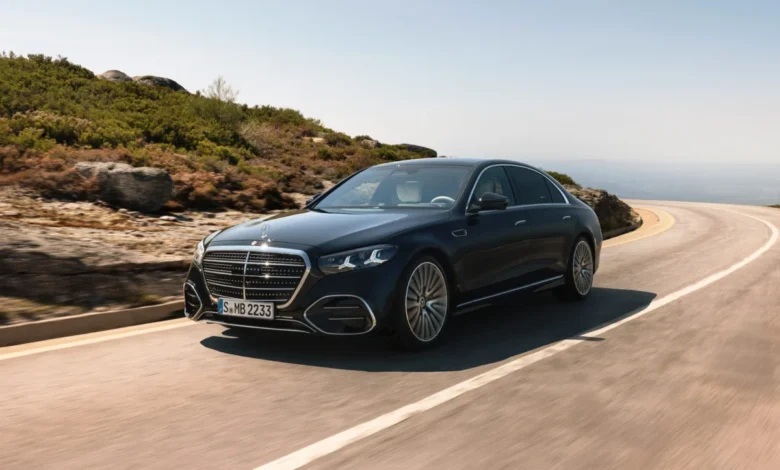
The global automotive sector continues to experience profound structural transformations, and few legacy luxury manufacturers embody this turbulent transition quite like Mercedes-Benz. According to the latest comprehensive long-term production forecast extending to 2030 published by Automotive World, the German automotive titan is currently navigating a severe manufacturing downturn. Following a notable contraction throughout 2025, the company faces a deeper trough in 2026 before beginning a protracted and cautious recovery path toward the end of the decade.
This strategic recalibration unfolds against a backdrop of weakening demand in critical overseas markets, most notably China, alongside shifting consumer adoption rates for battery-electric vehicles (BEVs). In response to these commercial headwinds, Mercedes-Benz leadership has fundamentally altered its industrial roadmap. Rather than pursuing an uncompromising, accelerated transition toward an exclusively electric vehicle portfolio, the manufacturer has pivoted toward manufacturing flexibility. By retooling its primary global assembly facilities for multi-fuel architectures, Mercedes-Benz has secured the operational agility required to sustain the production of internal combustion engine (ICE) and hybrid vehicles for an extended duration.
A Challenging Financial and Manufacturing Baseline
The root causes of the current production forecast lie in the sharp downward trajectory experienced over the past twelve months. Data compiled for the 2025 manufacturing cycle reveals a broad-based contraction across the company’s core vehicle segments. Passenger car output experienced a significant setback, declining by 8.5 percent year-over-year to settle at approximately 1.8 million units. Simultaneously, the commercial and passenger van division faced even steeper headwinds, with van output dropping by 10.6 percent to 353,710 units.
These figures reflect a convergence of macroeconomic pressures, supply chain normalization following years of post-pandemic disruption, and, crucially, a slower-than-anticipated consumer uptake of high-end luxury electric vehicles in Western markets. Furthermore, the intensifying competitive landscape in China—the world’s largest automotive market—has fundamentally disrupted the traditional dominance enjoyed by non-domestic original equipment manufacturers (OEMs). Domestic Chinese electric vehicle manufacturers have rapidly captured market share with technologically advanced, competitively priced alternatives, eroding the sales volumes of imported luxury marques.
Faced with these compounding challenges, Mercedes-Benz executive management enacted a strategic pivot away from rigid electrification timelines. Originally, the corporate strategy leaned heavily toward a rapid, all-electric paradigm under the banner of "Lead in Electric." However, practical market realities necessitated a pragmatic course correction. Capital expenditure was redirected to ensure that mainstream assembly lines could seamlessly intermix internal combustion engines, plug-in hybrids, and battery-electric variants on a single production line. This multi-fuel flexibility acts as an industrial hedge, insulating the company against volatile regulatory shifts and unpredictable consumer adoption curves across different global regions.
Chronology of the Slump and Projected Trajectory
Understanding the trajectory of Mercedes-Benz requires a detailed examination of the timeline governing its manufacturing output from the immediate past through the close of the decade.
- 2025: Mercedes-Benz records a steep decline in manufacturing output. Car production contracts to 1.8 million units (an 8.5% drop), while van manufacturing falls to 353,710 units (a 10.6% reduction). The company formally adjusts its electrification strategy, prioritizing multi-fuel plant flexibility over rigid all-electric mandates.
- 2026: Automotive World forecasts an additional 11 percent reduction in total vehicle output, driving production down to slightly more than 1.6 million units. This period is projected to represent the nadir of the current manufacturing cycle, heavily influenced by persistent headwinds for foreign automakers operating within mainland China.
- 2027–2030: A gradual, multi-year recovery phase takes hold. While production volumes begin to climb upward, average output across this four-year window is anticipated to remain approximately 7.7 percent below pre-2025 baseline levels. International manufacturing hubs in Hungary and the United States serve as the primary growth engines during this recovery window.
The anticipated downturn in 2026 underscores the lingering vulnerability of traditional European luxury brands in Asian markets. While management teams have worked tirelessly to localize production and tailor digital offerings to Chinese consumer preferences, the sheer velocity of the domestic EV transition in China has fundamentally altered the competitive equilibrium. Consequently, the 11 percent contraction expected in 2026 serves as a sobering reminder that legacy scale does not automatically translate to immunity from localized market disruptions.
Geographic Drivers of Recovery: Kecskemét and Tuscaloosa
As Mercedes-Benz navigates the trough of 2026, the subsequent recovery projected for the 2027–2030 timeframe will not be distributed evenly across its global industrial footprint. According to the Automotive World outlook, the primary momentum for volume restoration will emanate from specific international facilities, most notably the manufacturing plants located in Kecskemét, Hungary, and Tuscaloosa, Alabama, in the United States.
The plant in Kecskemét has long served as a crucial pillar for Mercedes-Benz’s compact and mid-size vehicle architectures. Recent investments directed toward retooling the Hungarian site have positioned it to efficiently pivot between diverse powertrain configurations. This adaptability ensures that the facility can rapidly scale production up or down in direct response to shifting European regulatory frameworks and fluctuating consumer demand profiles.
Similarly, the Tuscaloosa facility in Alabama—traditionally recognized as the global production center for Mercedes-Benz’s lucrative SUV portfolio, including the GLE and GLS models, alongside dedicated battery-electric SUVs—holds a pivotal role in maintaining North American volume. The strategic integration of localized battery assembly adjacent to the Tuscaloosa campus has insulated the brand from certain cross-border supply chain frictions, allowing the Alabama plant to sustain consistent output even as European operations wrestled with energy cost volatility and component shortages.
Despite the anticipated contributions from these key international hubs, the recovery path remains constrained. Industry analysts note that average output figures for the 2027 to 2030 period will continue to lag behind pre-2025 historical highs by roughly 7.7 percent. This permanent recalibration suggests that Mercedes-Benz is intentionally prioritizing margin resilience over pure volume expansion—a deliberate corporate strategy designed to protect profitability in an era of heightened capital expenditure and intense price competition.
The China Factor: Stabilization or Continued Headwinds?
No assessment of Mercedes-Benz’s long-term production forecast can be complete without a rigorous examination of its operations in the People’s Republic of China. For decades, the Chinese market functioned as the primary profit engine for German luxury automotive manufacturers. However, the rapid ascent of domestic new-energy vehicle (NEV) brands, supported by comprehensive state industrial policies and aggressive software integration, has fundamentally rewritten the rules of engagement.
The Automotive World forecast models its projection of a post-2026 recovery on the assumption that a series of recent and imminent product launches tailored specifically for the Chinese market will prove sufficient to stabilize the company’s sliding market share. Mercedes-Benz has invested heavily in localized research and development hubs in Beijing and Shanghai, aiming to compress vehicle development cycles and deliver in-car digital ecosystems that resonate directly with younger, tech-savvy Chinese demographics.
Nevertheless, industry observers emphasize that this stabilization assumption carries substantial execution risk. Should domestic competitors in China continue to accelerate their product cadence and price-to-value propositions, even a limited operational stabilization for Mercedes-Benz could prove overly optimistic. The risk remains that foreign legacy OEMs may find themselves locked into a diminishing niche of the Chinese luxury market, forcing structural adjustments that could require further revisions to global manufacturing footprints.
Broader Industry Implications and Fact-Based Analysis
The strategic pivot executed by Mercedes-Benz carries profound implications for the wider global automotive manufacturing sector. For years, financial markets and regulatory bodies pushed legacy automakers toward definitive, hard-stop deadlines for the complete phase-out of internal combustion engines. The manufacturing reality faced by Mercedes-Benz demonstrates the complex operational friction inherent in such an abrupt transition.
By publicly acknowledging the necessity of multi-fuel manufacturing flexibility, Mercedes-Benz has validated a more pragmatic, demand-driven approach to the energy transition. Rather than stranding capital in underutilized, dedicated electric vehicle assembly lines that outpace consumer adoption rates, the company has chosen to preserve capital discipline. This strategy allows industrial assets to pivot dynamically based on regional regulatory mandates and actual retail sales velocities.
At the same time, the extended timeline required to return production volumes to pre-2025 levels highlights the enduring scars of market share erosion in Asia. The automotive sector is witnessing a historical redistribution of technological leadership, where software integration, autonomous driving capabilities, and infotainment ecosystems often outweigh traditional brand heritage in driving consumer purchase decisions.
For Mercedes-Benz, the years leading up to 2030 will serve as a critical crucible. The success of its industrial turnaround will depend not merely on the operational efficiency of plants in Kecskemét and Tuscaloosa, but on the brand’s ability to successfully defend its core value proposition in an increasingly fragmented and hyper-competitive global marketplace. As the 2026 production nadir approaches, stakeholders across the global automotive supply chain will monitor closely to see whether the company’s flexible manufacturing gamble pays off, setting a new benchmark for how legacy giants manage the turbulent road to the next decade.
Related posts: