Room-Temperature Crude Oil Separation Breakthrough Promises to Upend Century-Old Refining Industry

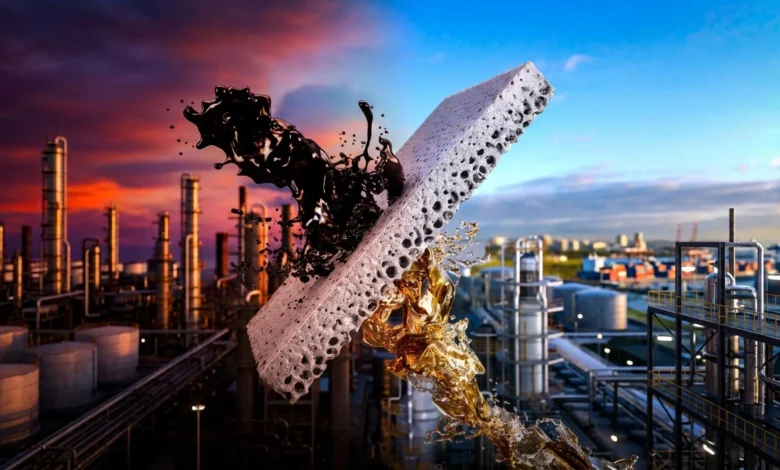
An international coalition of researchers has engineered a revolutionary, low-cost membrane capable of separating crude oil at room temperature, neatly bypassing the intense thermal processes that have dominated the global petroleum sector for more than a century. Published in the peer-reviewed journal Nature, the breakthrough was spearheaded by Professor Dong-Yeun Koh at the Korea Advanced Institute of Science and Technology (KAIST) in close cooperation with Professor Ryan Lively’s laboratory at the Georgia Institute of Technology. By upending traditional separation dogmas, this collaborative research initiative has unlocked a pathway toward dramatically lower operating expenses and significantly reduced carbon emissions across the worldwide petrochemical landscape.
Crude oil remains a fundamental pillar of modern industrial society, extending its utility far beyond traditional transportation fuels like gasoline, diesel, and aviation kerosene. Refined petroleum derivatives serve as the critical building blocks for modern manufacturing, supplying the raw inputs required to synthesize synthetic fibers, advanced packaging materials, medical devices, and an array of consumer plastics. Because the baseline economics of oil refining ripple outward to influence the cost structure of nearly every manufactured good, efficiency gains at the refinery level hold profound macroeconomic and environmental implications.
The Century-Old Thermal Paradigm and Its Heavy Toll
To understand the magnitude of the KAIST and Georgia Tech breakthrough, one must examine the baseline mechanics of contemporary petroleum engineering. Since the dawn of the commercial oil industry, refineries have relied almost exclusively on fractional distillation to fractionate raw crude oil into usable hydrocarbons. This legacy process requires heating heavy crude feeds to extreme thermal thresholds, frequently exceeding 350 degrees Celsius. Once vaporized, the complex mixture passes through massive distillation columns where components condense at varying heights depending on their individual boiling points.
The energetic cost of this thermal methodology is staggering. On a global scale, crude oil distillation consumes approximately 1,100 terawatt-hours (TWh) of thermal and electrical energy annually. To contextualize this massive figure, 1,100 TWh is roughly equivalent to the combined yearly electrical output of roughly 130 utility-scale nuclear power plants operating continuously at a one-gigawatt capacity. This prodigious appetite for heat makes conventional distillation one of the single largest industrial drivers of fossil fuel consumption and greenhouse gas emissions worldwide.
In recent decades, tightening environmental regulations, fluctuating global commodity markets, and corporate sustainability mandates have intensified the search for low-energy separation alternatives. While membrane technologies have long been recognized as a theoretically superior alternative to thermal distillation—owing to their ability to separate molecular mixtures via selective permeability—their commercial implementation has historically encountered severe technical roadbloacks.
Overcoming the Membrane Paradox: When Fouling Becomes an Advantage
For years, materials scientists operated under the assumption that achieving precise molecular separations through a membrane required the application of ultra-thin, highly engineered surface coatings. While these specialized selective layers could theoretically discriminate between hydrocarbon molecules of varying sizes and structures, they proved notoriously difficult and expensive to manufacture. Furthermore, these delicate coatings were exceptionally prone to microscopic defects when scaled up for industrial-grade deployment, rendering widespread adoption economically unviable.
The research teams at KAIST and Georgia Tech approached the bottleneck from an entirely unconventional angle. Rather than engineering a complex, multi-layered chemical coating, the investigators utilized a completely bare, unmodified membrane manufactured from porous polyacrylonitrile (PAN). PAN is an inexpensive, chemically resilient polymer already widely utilized as a structural support substrate in standard industrial filtration hardware.
When the research team fed raw, unprocessed crude oil—supplied directly by industrial partner HD Hyundai Oilbank—through the bare PAN membrane, an unexpected chemical phenomenon occurred. As the complex hydrocarbon mixture migrated through the microscopic pores of the polymer, heavier hydrocarbon molecules progressively accumulated along the interior walls of the channels. This continuous internal deposition systematically constricted the physical dimensions of the pores, eventually narrowing them down to ultra-fine pathways measuring less than 2 nanometers in diameter.
In essence, the crude oil engineered its own sophisticated filtration matrix on the fly. These spontaneously formed nanochannels permitted lighter fractions such as naphtha, gasoline, and kerosene to permeate the membrane rapidly, while effectively blocking the larger, heavier molecular constituents from passing through unchecked.
This discovery fundamentally challenged standard chemical engineering doctrine. In conventional membrane science, the accumulation of foreign matter within filtration pores—a phenomenon universally known as membrane fouling—is regarded as a fatal flaw that degrades operational performance, accelerates component wear, and necessitates frequent chemical cleaning or physical replacement. By harnessing the fouling process rather than fighting it, the researchers transformed a traditional liability into a high-performance asset.
Performance Metrics and Experimental Validation
The empirical results generated by the uncoated PAN membrane exceeded initial laboratory expectations. During controlled trials utilizing authentic industrial feedstocks, the untreated membrane achieved crude oil permeation rates roughly 23 times higher than those documented for previous state-of-the-art hydrocarbon separation membranes. Crucially, the system demonstrated robust operational stability, maintaining consistent separation performance over a continuous 28-day testing window.
Professor Ryan Lively of Georgia Tech highlighted the practical significance of these performance gains during a briefing on the discovery. One of the primary historical headwinds facing membrane systems in the petroleum sector has been their notoriously low productivities, which failed to justify the capital expenditure required for retrofitting. The PAN membranes, propelled by their unique self-optimizing separation mechanism, drastically elevate unit productivity to a threshold where major industrial players must seriously evaluate commercial integration.
Integration Mechanics: A Modular Approach to Industrial Retrofitting
One of the most commercially attractive attributes of the new membrane platform is its compatibility with existing petroleum infrastructure. Rather than demanding a complete overhaul of multi-billion-dollar refinery layouts—which would likely stall adoption due to prohibitive capital costs—the technology is designed for modular implementation.
Under this deployment model, the membrane systems would be installed as upstream pre-processing units positioned to filter crude oil before it enters traditional thermal distillation towers. By siphoning off lighter fractions at room temperature, the upstream membrane reduces the total volumetric workload required during the subsequent heating and distillation phases. This allows refiners to retain their legacy capital equipment while substantially lowering overall energy intensity.
Comprehensive process simulations conducted by the research collaborative indicate that integrating the membrane system into standard refining pipelines could yield profound operational efficiencies. Computer modeling projected a 31.6 percent reduction in overall energy consumption, accompanied by a 37.6 percent decrease in direct carbon dioxide emissions. Additionally, the simulations estimated a 20.7 percent drop in cooling water requirements and a 36 percent reduction in variable operating costs.
Macroeconomic and Environmental Implications
If deployed across national and global refining ecosystems, the aggregate environmental and economic benefits could be transformative. Projections focusing on South Korea’s domestic refining and petrochemical sectors suggest that widespread adoption of the KAIST-Georgia Tech membrane platform could prevent approximately 10 million metric tons of greenhouse gas emissions annually. To frame this reduction, 10 million metric tons of carbon dioxide equivalent matches the annual tailpipe emissions generated by roughly four million internal combustion engine passenger vehicles.
While these environmental projections are derived from sophisticated chemical process simulations rather than long-term commercial-scale deployments, they underscore the immense decarbonization potential inherent in low-temperature membrane separations. The ability to achieve molecular-level sorting without the input of thermal energy represents a structural shift away from fossil-fuel-dependent heating cycles.
Chronology and Collaborative Development
The genesis of the breakthrough can be traced back to foundational inquiries into polymer science and molecular transport conducted jointly by KAIST and Georgia Tech researchers. The multi-year project moved systematically from theoretical modeling to bench-scale experimentation, culminating in rigorous validation trials using genuine industrial crude oil provided by HD Hyundai Oilbank.
Financial and structural backing for the initiative was furnished by the South Korean government through the Ministry of Science and ICT, operating via the Basic Research Program for Outstanding Early-Career Researchers and the Engineering Research Center (ERC) Program. These funding mechanisms were explicitly designed to foster high-risk, high-reward materials science research capable of generating tangible industrial applications.
Future Horizons: Beyond Petroleum Refining
Although crude oil fractionation served as the primary proof-of-concept for the study, the underlying scientific principle—leveraging complex fluid mixtures to spontaneously template functional nanochannels—possesses broad applicability across the chemical processing industries.
The research team has already begun mapping out secondary application vectors. One promising avenue involves the processing and purification of pyrolysis oil derived from the thermochemical recycling of post-consumer plastic waste. As global economies race to establish circular supply chains for plastics, efficient separation of complex waste-derived oils is paramount. Furthermore, the self-forming membrane platform could be adapted to streamline solvent recovery operations in lithium-ion battery manufacturing, enhance the purity of complex pharmaceutical intermediates, and optimize the production pathways of advanced green biofuels.
Addressing the Road Ahead: Scaling and Commercialization
Despite the enthusiasm surrounding the publication in Nature, the research team remains pragmatic about the engineering hurdles that must be cleared prior to global commercialization. Before refineries can integrate the technology into live production environments, investigators must resolve challenges related to large-area membrane manufacturing, module fabrication, and long-term mechanical reliability under harsh industrial conditions.
Reflecting on the collaborative roadmap ahead, co-corresponding author Professor Jae W. Lee of KAIST emphasized the necessity of bridging the gap between laboratory-scale synthesis and industrial-grade manufacturing. By perfecting large-area membrane modularization and confirming multi-year operational durability, the consortium aims to accelerate industrial adoption across both traditional refining and emerging clean-tech sectors.
Echoing this sentiment, Dr. Jihoon Choi and Dr. Hyeokjun Seo, co-first authors of the study, outlined the team’s immediate developmental objectives. Their primary goal is to achieve precise, deterministic control over the spontaneous pore-constriction phenomenon, evolving the discovery from a scientific curiosity into a versatile membrane platform capable of servicing the entire spectrum of chemical manufacturing, advanced chemical recycling, and carbon-neutral industrial processes.
Related posts: