In a significant move underscoring the entertainment industry’s accelerating embrace of artificial intelligence, Netflix has officially confirmed the payment of $587 million in cash for InterPositive, a pioneering startup co-founded by acclaimed actor and director Ben Affleck. The transaction, detailed in a recent regulatory filing, solidifies Netflix’s commitment to integrating advanced AI capabilities directly into its content production pipeline, a strategy that analysts believe could reshape filmmaking workflows and significantly impact the economics of streaming content creation.
Chronology of a Strategic Acquisition
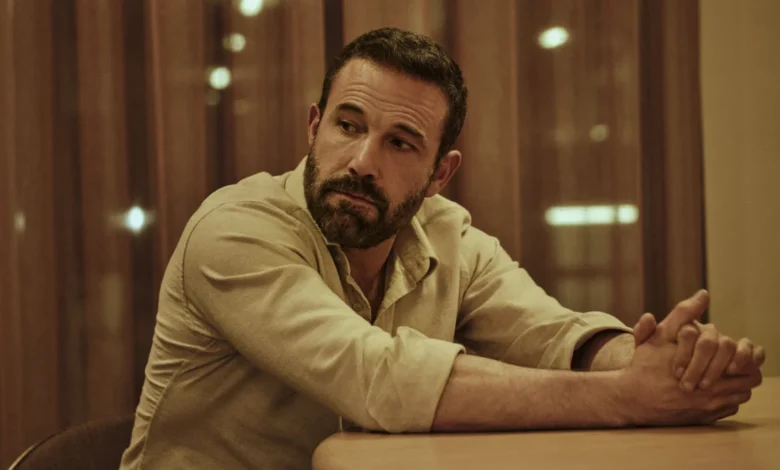
The journey of InterPositive into the Netflix fold began publicly in March, when the streaming giant initially announced its intent to acquire the AI filmmaking company. At the time of the initial announcement, the financial terms of the deal were not disclosed, leaving industry observers to speculate on the valuation of a company promising to blend cutting-edge technology with cinematic artistry. Ben Affleck, a prominent figure known for his multifaceted contributions to Hollywood, released a statement emphasizing his motivation behind InterPositive: to "protect the power of human creativity." He elaborated that InterPositive’s AI tools were designed to assist filmmakers in refining footage during post-production, particularly in addressing "real-world production challenges such as missing shots, background replacements or incorrect lighting." This framing positioned AI not as a replacement for human artistic endeavor, but as an advanced augmentative tool.
Following the initial announcement, a report from Bloomberg suggested the deal’s value could reach up to $600 million, a figure that now appears remarkably close to the officially disclosed cash payment. The recent regulatory filing by Netflix has now put an end to such speculation, confirming the precise cash outlay of $587 million. This disclosure provides a concrete valuation for a company operating at the intersection of Hollywood’s creative demands and Silicon Valley’s technological advancements, and it firmly places InterPositive among the more substantial tech acquisitions in the entertainment sector in recent years. Furthermore, Netflix’s concurrent announcement that the entire InterPositive team would transition to the streaming company, with Affleck assuming a senior advisory role, highlighted the strategic importance of not just the technology, but also the human capital and vision behind it.
The Expanding Role of AI in Filmmaking: Context and Background
The acquisition of InterPositive by Netflix is not an isolated event but rather a significant marker in the broader narrative of artificial intelligence’s increasingly pervasive role in the creative industries. For years, AI and machine learning have been quietly transforming various aspects of film and television production, from rudimentary data analysis for audience engagement to sophisticated algorithms in visual effects. Early applications often focused on optimization: automating tedious tasks, improving rendering times, or even assisting in script analysis by identifying patterns in successful narratives. However, the advent of generative AI has dramatically expanded these capabilities, moving beyond mere optimization to active content creation and enhancement.
The tools developed by InterPositive, as described by Affleck, exemplify this new wave. Addressing challenges like "missing shots" or "incorrect lighting" traditionally involves costly reshoots or labor-intensive, time-consuming manual post-production work. AI-driven solutions promise to streamline these processes, potentially reducing both the financial burden and the time required to bring a project to completion. This is particularly critical for high-volume content producers like Netflix, which churns out hundreds of original titles annually across diverse genres and languages. The efficiency gains offered by such technology can translate into substantial cost savings and faster time-to-market for new content, a crucial competitive advantage in the fiercely contested streaming landscape.
Moreover, the discourse surrounding AI in Hollywood has intensified, particularly in the wake of the 2023 Writers Guild of America (WGA) and SAG-AFTRA strikes. A central point of contention in those negotiations was the regulation and ethical use of AI, with unions seeking safeguards to protect human jobs, creative control, and intellectual property. Affleck’s stated aim to "protect the power of human creativity" with InterPositive’s tools resonates deeply within this context, suggesting an approach that views AI as an enabler and enhancer for human artists, rather than a direct replacement. This philosophy could be instrumental in navigating the complex ethical and labor relations landscape surrounding AI adoption in creative fields.
Netflix’s Strategic Rationale: A Deeper Dive into AI Integration
Netflix’s investment in InterPositive must be viewed through the lens of its broader strategic imperatives: content dominance, operational efficiency, and technological leadership. As the global leader in streaming, Netflix spends billions annually on content production, with estimates often ranging upwards of $15-20 billion per year. Even marginal efficiency gains in post-production, scaled across hundreds of titles, can translate into hundreds of millions, if not billions, in savings over time.
The company’s recent earnings report provided further insight into its aggressive AI integration strategy, revealing that approximately 300 of its titles have already utilized generative AI this year. This staggering figure demonstrates that Netflix is not merely dabbling in AI; it is systematically embedding it into its production workflows across a significant portion of its content library. These applications likely span various stages, from script development and pre-visualization to complex visual effects, sound design, and even localization processes. The acquisition of InterPositive, therefore, is not an exploratory venture but rather a strategic consolidation of advanced capabilities that align with an already active and widespread internal AI initiative.
By bringing InterPositive’s technology in-house, Netflix gains exclusive access to specialized tools that could give it a competitive edge. It also enables tighter integration with its existing proprietary systems and creative teams, fostering a more seamless workflow. This move also reflects a broader trend among major tech and media companies to develop or acquire in-house AI expertise, reducing reliance on external vendors and maintaining greater control over sensitive production data and intellectual property. For Netflix, which has consistently prioritized direct control over its content and technology infrastructure, this acquisition is a natural evolution of its operational philosophy.
Financial Implications and Market Analysis
The $587 million cash payment for InterPositive represents a substantial investment, even for a company of Netflix’s financial stature. This valuation reflects not only the perceived technological sophistication of InterPositive’s AI tools but also the strategic value of early-mover advantage in a rapidly evolving technological landscape. For comparison, while smaller than some of the tech industry’s mega-acquisitions, it is significant within the niche of AI for entertainment, indicating strong confidence in the startup’s potential impact.
Analysts generally view the acquisition positively, seeing it as a proactive step by Netflix to future-proof its content production and maintain its market leadership. The potential for cost savings in post-production, coupled with the ability to enhance visual quality and accelerate delivery timelines, could significantly boost Netflix’s long-term profitability and competitive standing. The cash payment structure also suggests a clear-cut, immediate transfer of ownership and technology, without the complexities often associated with stock-based deals.
The acquisition also sends a strong signal to the broader venture capital and startup ecosystem, highlighting the increasing appetite for AI solutions tailored to specific industry verticals. Companies developing specialized AI tools for film, music, gaming, and other creative sectors can expect heightened investor interest and potential acquisition targets from established industry players eager to integrate these innovations.
Ben Affleck’s Role and Broader Industry Implications
Ben Affleck’s involvement as a co-founder and now as a senior advisor to Netflix’s AI initiatives is a crucial aspect of this acquisition. His dual identity as an actor and director lends significant credibility to InterPositive’s mission and provides a direct conduit between the technological development and the practical realities of filmmaking. His stated goal of "protecting human creativity" positions him as an advocate for AI as an assistive, rather than a replacement, technology. This perspective could be instrumental in fostering adoption among creative professionals who may harbor skepticism or concerns about AI’s impact on their roles.
The integration of InterPositive’s technology and Affleck’s advisory role is likely to have ripple effects across the entire film and television industry. Other major studios and streaming platforms—such as Disney, Amazon, Warner Bros. Discovery, and Apple—are keenly observing Netflix’s moves. This acquisition could trigger an "AI arms race" as competitors scramble to develop or acquire similar capabilities to maintain parity in production efficiency and creative output. The pressure to adopt AI-powered tools will intensify, potentially leading to a broader transformation of traditional post-production houses and VFX studios.
Moreover, the success of InterPositive within Netflix could redefine the relationship between technology companies and Hollywood. It highlights a future where studios are not just consumers of technology but active developers and integrators of cutting-edge AI, blurring the lines between content creation and technological innovation. Ethical considerations, including intellectual property rights, data security, and the evolving nature of creative jobs, will remain central to these discussions as the industry navigates this new paradigm.
Future Outlook: The AI-Powered Cinematic Landscape
The acquisition of InterPositive marks a pivotal moment in Netflix’s strategic evolution and in the broader narrative of AI in entertainment. It signals a future where artificial intelligence is not merely a background tool but an integral component of the creative process, empowering filmmakers to achieve their visions with greater efficiency and precision. As InterPositive’s technology is fully integrated into Netflix’s global production workflows, it is expected to contribute to a new generation of content, characterized by enhanced visual quality, faster production cycles, and potentially more audacious creative risks made feasible by technological assistance.
The long-term implications are vast. AI-driven tools could extend beyond post-production to impact every stage of filmmaking, from scriptwriting and concept development to pre-visualization and even distribution. Netflix, by investing heavily in this space, is positioning itself at the forefront of this transformation, aiming to define the standards and practices for an AI-powered cinematic landscape. The journey of InterPositive, from an idea conceived by a Hollywood veteran to a cornerstone of Netflix’s AI strategy, serves as a compelling case study for the profound and irreversible changes sweeping through the entertainment industry.