New York Confronts Patchwork Mosquito Surveillance System Amid Rising Public Health Threats, Legislative Action Proposed to Centralize Efforts

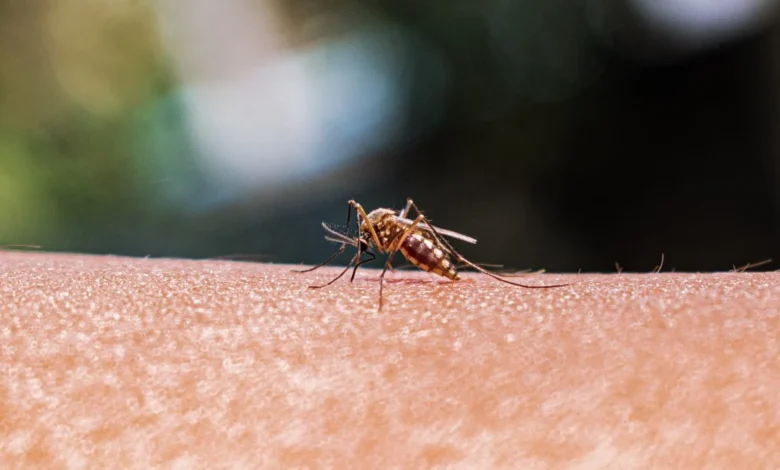
The critical infrastructure designed to protect New Yorkers from mosquito-borne illnesses is facing significant logistical, financial, and organizational challenges, operating largely as a fragmented system. Monitoring programs, essential for tracking mosquito populations and detecting pathogens, are inherently labor-intensive and expensive. They demand dedicated teams for trap deployment and retrieval, coupled with specialized entomologists and public health scientists capable of identifying, sorting, and testing collected samples. These operations are not merely academic; they are the frontline defense against diseases like West Nile Virus and Eastern Equine Encephalitis, which pose real and recurring threats to public health across the state.
A significant hurdle in these efforts lies in the practicalities of trap operation. Some traps, designed to lure gravid female mosquitoes seeking egg-laying sites, utilize "stinky water"—a concoction rich in decaying organic material that mimics natural breeding habitats. Others, targeting host-seeking females, rely on dry ice to release carbon dioxide, a powerful attractant that mosquitoes detect when hunting for mammals. However, the consistent supply of dry ice, a common laboratory and industrial commodity, becomes a formidable obstacle in many rural areas of New York. Research teams, such as those working on the ground, often find themselves in the position of having to produce their own dry ice, adding an unforeseen layer of complexity and cost to an already resource-intensive process. This seemingly minor logistical detail underscores the deep-seated challenges in maintaining a consistent and effective surveillance network across a geographically diverse state.
Beyond these tangible logistical and resource demands, the broader framework of mosquito monitoring in New York is plagued by systemic issues of communication, coordination, and data sharing. Dr. Laura Leydet, a leading expert in the field, highlights the inherent flaw in the current decentralized model. "One of the problems with states that are not comprehensively doing these surveillance programs is that surveillance is hit or miss," Leydet explained. She further elaborated on the disconnect: "A lot of these surveillance programs are run by the counties, and they’re not really talking to each other." This lack of inter-county dialogue creates critical blind spots, preventing a holistic understanding of mosquito activity and disease risk across the state.
Leydet’s laboratory has conducted extensive research that exposes the tangible consequences of this fragmented approach. Their findings indicate that this patchwork system allows certain invasive mosquito species to propagate and expand their range largely undetected. Invasive species, such as Aedes albopictus (the Asian tiger mosquito) and Aedes aegypti (the yellow fever mosquito), are of particular concern because they are highly efficient vectors for a wider array of dangerous pathogens, including Dengue, Chikungunya, and Zika viruses, diseases that, while not endemic to New York currently, represent a growing global threat that could be introduced and established with inadequate surveillance. The silent spread of these species under the radar significantly escalates the potential for future outbreaks and complicates control efforts, as their presence may only be confirmed after human cases emerge.
Funding stands as another perennial challenge, directly impacting the efficacy and sustainability of surveillance efforts. "If the county doesn’t have money or resources, these programs fade away," Leydet stated, painting a stark picture of the financial precarity of many local initiatives. The cyclical nature of funding, often tied to perceived immediate threats rather than sustained public health infrastructure, means that programs are frequently cut or scaled back during periods of low disease activity, only to be hastily reinstated or expanded when an outbreak occurs. "If we don’t have these surveillance programs, then all we’re doing is responding to a problem when it’s already a problem, and that’s never how prevention works," Leydet emphasized, articulating a fundamental principle of public health: proactive prevention is always more effective and ultimately less costly than reactive crisis management.
A Legislative Push for Centralized Surveillance
The current "sparse and disintegrated" system, as described by a recent legislative proposal, may soon face a significant overhaul. A bill introduced in the New York State Legislature this session (S10393) aims to fundamentally transform mosquito surveillance by laying the groundwork for a comprehensive, statewide program. This proposed legislation seeks to establish a more unified and coordinated approach, empowering public health officials to intervene proactively, well before an outbreak spirals out of control. The bill represents a recognition at the state level that the current decentralized model is insufficient to meet the evolving public health challenges posed by mosquitoes in the 21st century.
Proactive measures, which a centralized system would facilitate, are multifaceted and target various stages of the mosquito life cycle. These include large-scale initiatives for removing or treating pools of standing water, which serve as primary breeding habitats for many mosquito species. Targeted application of larvicides in identified breeding grounds can prevent mosquito larvae from developing into biting adults, significantly reducing overall populations. Equally crucial is public education, warning residents about the risks, encouraging the use of insect repellent, and advising them to wear protective clothing outdoors, especially during peak mosquito activity hours. While these preventative strategies are highly effective, a comprehensive program also prepares for situations where outbreaks may necessitate more widespread interventions, such as carefully managed adulticide spraying, which targets adult mosquitoes to rapidly reduce disease transmission risk.
Despite the clear benefits, the path to greater centralization is not without its obstacles. Leydet acknowledged that while there is "general interest in these programs," the conversation often shifts when the true costs are laid bare. "When you start seeing what they cost, it’s like, ‘Maybe we’re not that interested,’" she noted, highlighting the perennial tension between public health necessity and fiscal austerity. Coordinating such a vast and complex program across a state as large and diverse as New York presents formidable logistical and administrative challenges, requiring robust infrastructure, consistent funding, and sustained political will.
The Growing Threat: Why Surveillance Matters More Than Ever
The urgency for an improved surveillance system is amplified by several converging factors, primarily climate change and increased global travel. Rising global temperatures contribute to an expansion of mosquito ranges, allowing species historically confined to warmer climates to establish themselves further north, including in parts of New York. Warmer temperatures also accelerate the mosquito life cycle and the replication rate of pathogens within the mosquito, meaning mosquitoes can become infectious faster and remain so for longer durations. This lengthens the transmission season and increases the overall risk of disease.
New York has already experienced the devastating impact of mosquito-borne diseases. West Nile Virus (WNV), first detected in the Western Hemisphere in New York City in 1999, quickly spread across the United States. Since then, WNV has become endemic, with annual human cases and fatalities reported across the state and nation. While most WNV infections are asymptomatic, approximately 1 in 5 infected individuals develop fever and other symptoms, and about 1 in 150 develop severe, sometimes fatal, neuroinvasive disease. Eastern Equine Encephalitis (EEE) is another severe, though rarer, mosquito-borne disease found in New York, known for its high fatality rate (30-50%) in symptomatic human cases and significant neurological sequelae among survivors. The potential for the introduction and establishment of other arboviruses, such as Dengue, Chikungunya, and Zika, carried by invasive Aedes species, poses an escalating threat, necessitating vigilance and a robust early warning system.
Data from the Centers for Disease Control and Prevention (CDC) and state health departments consistently demonstrate the economic burden of mosquito-borne diseases. Outbreaks incur substantial costs related to emergency medical care, long-term rehabilitation for neuroinvasive cases, lost productivity, and public health response activities, including extensive spraying campaigns. For example, a single significant outbreak can cost millions of dollars in public health response alone, dwarfing the consistent, proactive investment in surveillance that could have prevented or significantly mitigated the event.
The Mechanics of Modern Mosquito Surveillance
Effective mosquito surveillance is a multi-pronged scientific endeavor. It typically involves:
- Trap Deployment and Collection: Various types of traps are used depending on the target species and research objective. Gravid traps, like those using "stinky water," target female mosquitoes ready to lay eggs. CDC light traps, often baited with CO2 (from dry ice or gas cylinders), attract host-seeking females. Ovitraps are simple containers designed to collect mosquito eggs, primarily for Aedes species. Traps are strategically placed in different habitats (urban, suburban, rural, wetlands) and collected regularly, often weekly.
- Species Identification: Once collected, mosquitoes are transported to entomology laboratories where trained specialists sort and identify them to species level. This is a crucial step, as only certain species are competent vectors for specific diseases. Misidentification can lead to misallocation of resources or missed threats.
- Pathogen Testing: Identified mosquito pools (groups of mosquitoes of the same species collected from the same trap) are then tested for the presence of various arboviruses. Techniques like polymerase chain reaction (PCR) are used to detect viral RNA or DNA, providing early indicators of viral activity in the mosquito population before human cases appear.
- Data Analysis and Mapping: All collected data—species presence, abundance, location, and pathogen detection—is meticulously recorded and analyzed. Geographic Information Systems (GIS) are invaluable tools for mapping mosquito populations and disease hotspots, allowing public health officials to visualize risk areas and allocate control resources effectively. This data-driven approach is fundamental to targeted and efficient interventions.
Official Responses and Broader Implications
Public health officials at both state and county levels have long advocated for enhanced surveillance capabilities. The scientific community, represented by researchers like Leydet, consistently emphasizes the need for an integrated approach. A coordinated statewide system would allow for the standardization of protocols, facilitate the sharing of expertise and resources, and create a comprehensive dataset that can inform evidence-based decision-making. Such a system would enable health departments to track invasive species effectively, predict potential outbreak areas, and implement preventative measures with greater precision and timeliness.
From a legislative perspective, the proposed bill (S10393) signifies a recognition of the growing public health threat and the inadequacy of the status quo. If enacted, it would provide a framework for consistent funding mechanisms, establish clear communication channels, and potentially centralize laboratory testing capabilities, thereby alleviating the burden on individual counties. The challenge, as Leydet pointed out, will be sustaining the political will and financial commitment necessary to implement and maintain such a comprehensive program over the long term.
The broader implications of improving mosquito surveillance in New York are profound. A robust, centralized system would not only enhance public health protection by reducing the incidence of mosquito-borne diseases but also yield economic benefits by preventing costly outbreaks and safeguarding industries like tourism and agriculture that can be negatively impacted by disease fears. Furthermore, it would foster a more resilient public health infrastructure, better equipped to adapt to the ongoing challenges of climate change and emerging infectious diseases.
Ultimately, while the financial and logistical hurdles are considerable, the consensus among experts is clear: the investment in a comprehensive, coordinated mosquito surveillance program is not merely an expenditure but an essential investment in the health, safety, and economic well-being of New York’s residents. As Leydet aptly concluded, "any help is better than nothing," underscoring the critical need for immediate action and sustained commitment to fortifying the state’s defenses against these persistent and evolving public health threats.
This article originally appeared on Inside Climate News, a nonprofit, non-partisan news organization that covers climate, energy, and the environment. Sign up for their newsletter here.