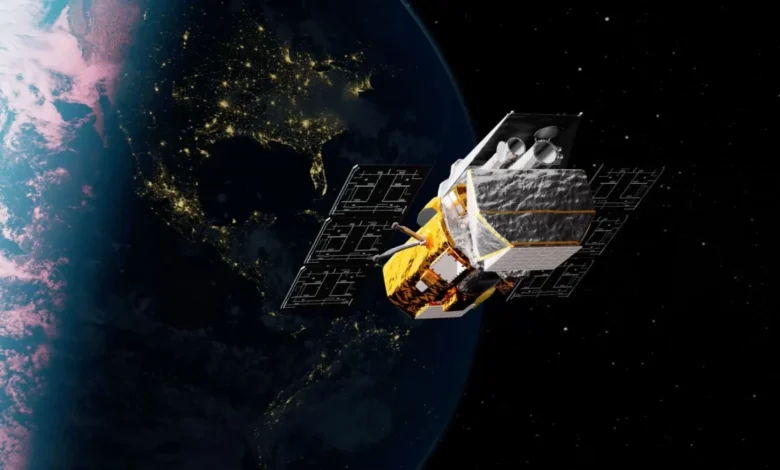
The era of one of space exploration’s most prolific tools has come to a dramatic conclusion as NASA’s Neil Gehrels Swift Observatory descended into the Earth’s atmosphere, ending a distinguished 22-year mission dedicated to capturing the most violent and energetic phenomena in the cosmos. At 7:39 a.m. EST on Wednesday, the spacecraft completed its final orbit, reentering the atmosphere over the North Sumatra region of Indonesia. According to official telemetry provided by NASA’s flight dynamics teams, the satellite intersected the dense layers of the atmosphere at coordinates approximately 3.4 degrees north latitude and 98.6 degrees east longitude.
The demise of the observatory was a controlled, albeit inevitable, conclusion to a mission that far exceeded its original operational requirements. NASA officials confirmed that, as per standard protocols for low-Earth orbit satellites, the spacecraft was expected to disintegrate upon entry due to the intense thermal friction generated by its high-velocity descent. Risk assessments conducted by the agency prior to reentry calculated the probability of surviving debris impacting a populated area at 1-in-2,100, a threshold well within acceptable safety margins for aerospace operations. As of the latest reporting, there have been no documented reports of injuries or property damage resulting from the event.
A Legacy of Gamma-Ray Detection
Launched in November 2004, the Swift Observatory was designed with a singular, revolutionary purpose: to solve the mystery of gamma-ray bursts (GRBs)—the most powerful explosions in the universe since the Big Bang. Before Swift, these bursts were fleeting, unpredictable flashes of high-energy radiation that often vanished before ground-based telescopes could pivot to observe them.
Swift changed the paradigm of time-domain astronomy. Equipped with three primary instruments—the Burst Alert Telescope (BAT), the X-ray Telescope (XRT), and the Ultraviolet/Optical Telescope (UVOT)—it functioned as an automated sentry. When the BAT detected a gamma-ray burst, it would autonomously swivel the entire spacecraft toward the source within seconds, allowing the XRT and UVOT to capture the immediate "afterglow" of the explosion. This rapid-response capability provided scientists with an unprecedented look at the death of massive stars and the collisions of neutron stars.
Chronology of a Scientific Milestone
The mission’s timeline is marked by consistent innovation and adaptation.
- November 20, 2004: Swift launches from Cape Canaveral Air Force Station aboard a Delta II rocket.
- January 2005: The observatory records its first gamma-ray burst, proving the efficacy of its automated response system.
- 2008: The mission reaches a major milestone by detecting GRB 080319B, the brightest object ever observed by human eyes from a distance, which was visible to the naked eye despite being 7.5 billion light-years away.
- 2013: NASA renames the spacecraft the Neil Gehrels Swift Observatory to honor the late principal investigator, Dr. Neil Gehrels, whose vision was central to the mission’s success.
- 2017: Swift plays a critical role in the multi-messenger observation of GW170817, a gravitational wave event resulting from a neutron star merger, providing vital X-ray data that complemented the detections from LIGO and VIRGO.
- 2024: After two decades of service, the spacecraft begins its final phase of de-orbiting as fuel reserves for station-keeping reach critical lows.
- November 2026: The observatory concludes its operational life, burning up in the atmosphere over Indonesia.
Supporting Data and Scientific Impact
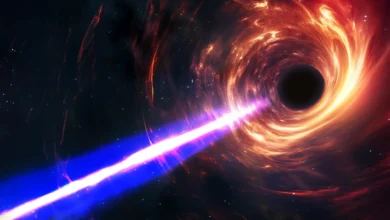
The scientific output of the Swift Observatory is immense. During its tenure, the mission recorded more than 1,500 gamma-ray bursts, fundamentally altering the scientific community’s understanding of stellar evolution. By analyzing the light spectra of these bursts, researchers were able to confirm that long-duration GRBs are the result of "collapsars"—the core collapse of massive, rapidly rotating stars into black holes.
Furthermore, Swift’s archival data remains a cornerstone for modern astrophysics. The observatory’s ability to conduct long-term monitoring of variable X-ray sources allowed astronomers to study everything from black hole accretion disks to the magnetic activity of nearby stars. The integration of its data into global astronomical networks facilitated a shift toward "multi-messenger" astronomy, where light, gravitational waves, and high-energy particles are studied in tandem to create a holistic view of the universe’s most extreme environments.
Official Responses and Reflections
The end of the mission prompted tributes from across the global scientific community. NASA leadership emphasized that Swift did not merely observe the universe; it defined a new methodology for space science.
"The Neil Gehrels Swift Observatory has been a workhorse of modern astrophysics," said an agency spokesperson in a statement following the reentry. "Its ability to respond to transient events in real-time established the blueprint for how we conduct space-based research today. While the hardware has returned to the atmosphere, the data it provided will fuel discoveries for decades to come."
Colleagues of the late Neil Gehrels noted that the mission’s longevity was a testament to the engineering teams at the Goddard Space Flight Center and the international partners, including those in the United Kingdom and Italy, who contributed to the instrumentation. The mission’s success in transitioning from a focused GRB detector to a general-purpose X-ray and ultraviolet observatory demonstrated the flexibility of the satellite’s design and the ingenuity of the mission controllers who managed it for over two decades.
Broader Impact and Future Implications
The decommissioning of Swift leaves a temporary gap in high-energy, rapid-response space observations, but its legacy is already embedded in the next generation of space telescopes. The techniques pioneered by Swift are currently being utilized by missions such as the Imaging X-ray Polarimetry Explorer (IXPE) and are informing the development of future probes designed to hunt for the elusive sources of gravitational waves.
Beyond the raw data, the mission proved that "autonomous" science—where a machine decides where to look and what to prioritize without waiting for ground-based commands—is the future of deep-space exploration. In an era where the universe is being mapped at faster rates than ever before, Swift’s 22-year tenure serves as a case study in efficiency and scientific ROI (Return on Investment).
As astronomers process the final packets of data transmitted before the craft hit the dense atmosphere, the focus now shifts toward the "Swift Legacy Archive." This repository of petabytes of information will continue to be a primary resource for graduate students and veteran researchers alike. The observatory may have burned up, but its findings have solidified our understanding of the cosmic "engine" that powers the most violent explosions in existence.
The event over Indonesia marks the end of a chapter in space history, but the ripple effects of Swift’s findings will continue to propagate through the field of astrophysics, much like the gamma rays it spent two decades chasing. As we look toward future missions like the Nancy Grace Roman Space Telescope, the influence of the Swift Observatory remains clear: the sky is never truly quiet for those who know how to listen. The mission’s conclusion is not a loss of knowledge, but rather the transition of a pioneer from an active explorer to a permanent fixture in the annals of human scientific achievement.