Jungheinrich Unveils Next-Generation EFG M Electric Forklift Line Tailored for the Asia-Pacific Market

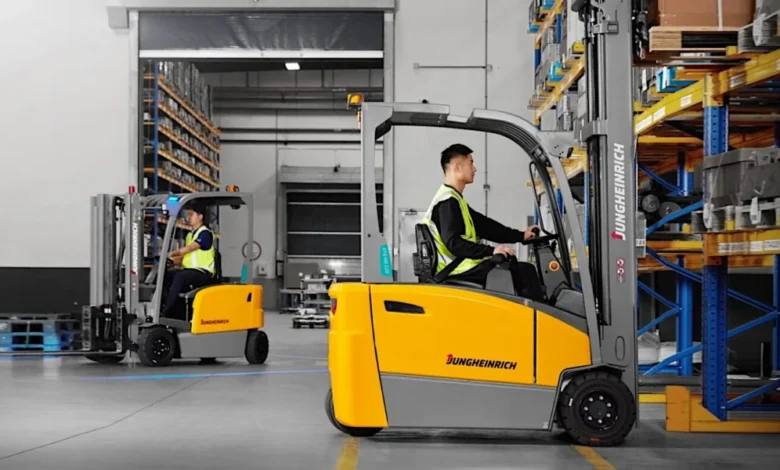
German material handling equipment manufacturer Jungheinrich has officially announced the launch of its next-generation EFG MB and MC electric counterbalance forklifts, tailored specifically for the dynamic and constrained logistics environments of the Asia-Pacific region. Spanning the 1.6- to 3-ton capacity classes, the newly engineered trucks represent a strategic push by the European manufacturer to capture market share in a region traditionally dominated by localized competitors and unique warehousing constraints. The introduction of these vehicles marks a significant milestone in Jungheinrich’s regional expansion strategy, blending European engineering standards with localized operational demands.
Strategic Background and Market Context
For decades, European and North American industrial equipment manufacturers have faced steep challenges in penetrating the rapidly expanding warehousing and manufacturing sectors across the Asia-Pacific (APAC) market. The region’s industrial landscape presents unique hurdles, characterized by densely packed urban factories, highly constrained floor plans, and intense operational duty cycles that demand exceptional agility and endurance from material handling fleets.
Historically, Western-designed material handling trucks were often over-engineered, oversized, or improperly calibrated for the specific turning radii and spatial limitations typical of Asian distribution centers. Recognizing these structural barriers, Jungheinrich initiated a comprehensive market research and product development cycle centered around its regional manufacturing hub—the Qingpu Plant in China. The objective was to design a platform from the ground up that could reconcile the need for high maneuverability in tight spaces with the rugged durability required for intensive, multi-shift industrial applications.

The result of this localized development initiative is the EFG M series. By addressing the specific ergonomic, spatial, and power requirements of APAC operators, Jungheinrich aims to bridge the gap between premium global performance and regional adaptability.
Engineering Tailored for Operational Flexibility
At the core of the EFG M series is a modular philosophy designed to give fleet managers and warehouse operators the ability to configure trucks precisely to their operational workflows. According to Lisa Jing Xue, Managing Director at Jungheinrich’s Qingpu Plant, the diversity of modern supply chain operations requires versatile equipment configurations rather than a one-size-fits-all approach.
“Different operations have different requirements,” said Jing Xue during the official product rollout. “With the EFG M series, customers can configure the truck around their application, workload, and operators—whether they need greater maneuverability for confined warehouse spaces, or a stable, powerful truck for demanding transport and stacking work.”
To achieve this adaptability, the EFG M lineup offers two distinct performance packages. The standard package prioritizes energy efficiency and optimized battery life for routine material handling tasks, such as light manufacturing assembly lines, retail distribution, and standard pallet movement. Conversely, the high-performance package—which comes standard on models rated between 2.5 and 3.0 tons—delivers enhanced acceleration, higher lift speeds, and greater torque to support heavy-duty, high-throughput logistics centers.

Energy storage options are equally versatile, giving buyers the freedom to choose between traditional lead-acid configurations or advanced lithium-ion battery systems. Available in 346 Ah and 690 Ah capacities, these power options accommodate varying shift patterns and facility charging infrastructures. Furthermore, the integration of advanced regenerative braking technology allows the EFG M forklifts to recover up to 30% of the kinetic and potential energy consumed during braking cycles and load-lowering maneuvers. This energy recovery mechanism substantially extends operational hours between charges, minimizing downtime in fast-paced facilities.
Operator Ergonomics, Safety, and Technological Integration
Modern material handling safety standards increasingly emphasize operator well-being and technological assistance to reduce workplace accidents and fatigue during extended shifts. Jungheinrich has incorporated several advanced ergonomic and safety features into the EFG M series.
The redesigned operator cabin features an expansive 4-inch digital display providing real-time diagnostic and operational data. Operators can utilize fingertip control levers for precise hydraulic manipulation, while upgraded LED lighting packages enhance visibility during night shifts or in dimly lit warehouse bays. To combat operator fatigue, the trucks include flexible seating options and cabin geometry optimized for long hours behind the wheel.
Visibility remains a critical safety factor in congested industrial settings. The EFG M series addresses this through a slim B-pillar design and an integrated glass roof, providing drivers with an unobstructed upward and peripheral field of view. For the four-wheel EFG MC models, automatic cornering speed reduction comes standard, mitigating the risk of lateral tip-overs during tight turns at speed.
In addition to physical safety enhancements, the new forklifts come equipped with native telematics integration. This digital suite grants fleet managers real-time access to crucial operational data, including truck utilization metrics, pre-operational safety checklists, and automated maintenance scheduling. Optional Advanced Driver Assistance Systems (ADAS) are also available, enabling facilities to implement higher tiers of safety protocol tailored to their specific risk assessments.
Supply Chain and Service Infrastructure
The commercial rollout of the EFG M series is backed by an extensive operational footprint. Order books for both the three-wheel and four-wheel variants are currently open across the Asia-Pacific region. To ensure long-term reliability and minimize total cost of ownership for fleet buyers, Jungheinrich is leveraging its robust regional service network, which currently comprises over 6,000 highly trained technicians and support personnel distributed across key industrial corridors in APAC.
This dense service infrastructure is designed to provide rapid response times, spare parts availability, and preventative maintenance support, addressing a key purchasing criterion for enterprise clients managing large, mission-critical fleets.
Broader Economic and Industrial Implications
The introduction of the EFG M series reflects a broader evolution in the global industrial equipment sector. As sustainability mandates accelerate and warehousing costs rise across Asia, facilities are under mounting pressure to electrify their internal logistics fleets while maximizing vertical storage density.

By localizing the development and manufacturing of the EFG M series through its Qingpu facility, Jungheinrich is positioning itself to compete more effectively against established domestic and regional Asian equipment manufacturers. The strategy hinges on providing a competitive total cost of ownership, supported by flexible energy configurations that allow businesses to transition smoothly from legacy internal combustion or basic electric trucks to high-efficiency lithium-ion platforms.
As supply chains in the Asia-Pacific region continue to modernize and automate, the demand for intelligent, highly adaptable material handling equipment is projected to grow. Jungheinrich’s latest product launch underscores the critical importance of regional customization in capturing high-growth industrial markets, signaling a transformative step for the company’s long-term commercial trajectory in the East.