
Ford Faces Stagnant Production Horizons Through 2030 Amid Model Phase-Outs and Global Restructuring

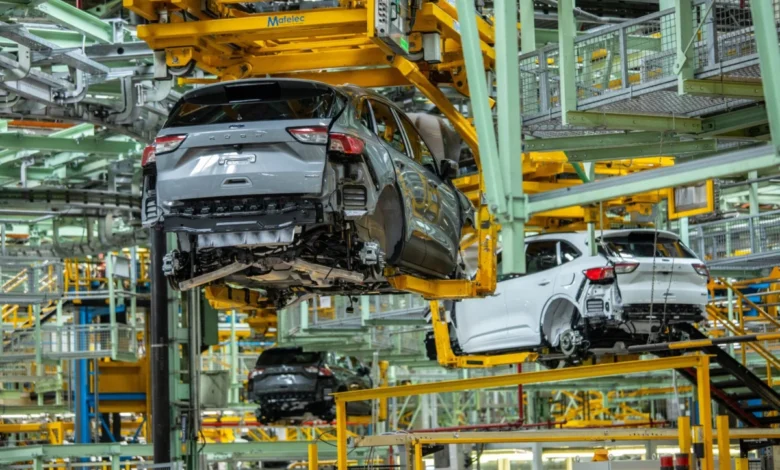
The global automotive landscape is undergoing a profound transformation, and legacy automakers are finding themselves forced to make difficult strategic pivots to survive the transition toward electrification and software-defined vehicles. Among these traditional giants, Ford Motor Company is navigating a complex and often turbulent restructuring phase that touches every facet of its global operations. According to comprehensive forecasts from Automotive World, Ford’s prospects for a meaningful production recovery before the end of the decade appear increasingly narrow. The challenges stem from a combination of deliberate model discontinuations, shrinking footprints in critical international markets, and the high-stakes financial burden of retooling assembly plants for a fully electric future.
As the automaker charts its course through the remainder of the 2020s, industry analysts are closely monitoring how the Blue Oval balances profitability with volume. While the company continues to dominate specific domestic segments—particularly full-size pickup trucks and rugged off-road utility vehicles—its international footprint is contracting. The coming years will serve as a crucial stress test for Ford’s long-term viability as a high-volume global manufacturer, testing whether streamlined vehicle lineups and targeted EV investments can offset the loss of heritage nameplates and underutilized overseas facilities.
Main Facts and Production Trajectory
The scale of Ford’s manufacturing readjustment is laid bare in recent production data and long-term forecasts. In fiscal year 2025, Ford manufactured approximately 4.06 million vehicles globally, with precisely half of that total—roughly 2.03 million units—originating from domestic assembly lines within the United States. However, this output figure is projected to face downward pressure in the immediate term.
Automotive World forecasts indicate that global output will decline before plateauing at an annual rate of approximately 3.76 million vehicles between 2026 and 2028. This contraction is driven primarily by the planned phase-out of several high-volume legacy models, including the Ford Escape, the Lincoln Corsair, and the globally recognized Ford Focus. Simultaneously, Ford’s international joint ventures, most notably Changan Ford in China, continue to experience declining market share and reduced manufacturing volumes in the face of fierce domestic competition from local EV manufacturers.
Domestically, the forecast highlights a temporary dip in US production to 1.88 million units by 2027. This slump reflects the unavoidable downtime required to retool domestic factories for next-generation electric vehicle architectures. However, US manufacturing is projected to rebound to 2.11 million vehicles by 2030, buoyed by the introduction of several high-profile product lines. Key catalysts for this late-decade recovery include the anticipated Fathom electric pickup truck, a newly redesigned all-electric variant of the Escape, a radical new Mustang four-door model, and an expanding portfolio of vehicles within the popular Bronco family.
The Evolution of the Bronco Brand
Perhaps the most notable bright spot in Ford’s long-term product strategy is the aggressive expansion and maturation of the Bronco nameplate. Originally revived as a rugged, niche off-roader to challenge legacy competitors, the Bronco portfolio is on a trajectory to evolve into a standalone sub-brand by the end of the decade.
By the 2029-2030 timeframe, the Bronco ecosystem is expected to encompass a diverse array of models. This will include the core two-door and four-door Bronco, the smaller Bronco Sport, the China-exclusive Bronco New Energy, a European-market variant, a dedicated Bronco pickup truck, and a luxury derivative wearing the Lincoln badge built upon a Bronco architecture.
Industry analysts point out that this brand-stretching strategy closely mirrors the trajectory of Jeep within the Stellantis brand portfolio. By leveraging the immense brand equity, lifestyle appeal, and high profit margins associated with the Bronco moniker, Ford hopes to capture lucrative market segments that transcend traditional passenger car categories. This portfolio expansion is intended to insulate the company from commodity pricing pressures by offering differentiated, high-margin utility vehicles tailored to distinct regional preferences and lifestyle demographics.
Chronology of Restructuring and Plant Realignment
Ford’s current production outlook is the culmination of a multi-year strategic pivot that began in earnest at the dawn of the decade. The timeline of this corporate evolution reveals a deliberate, albeit painful, transition away from low-margin internal combustion engine (ICE) passenger cars toward high-margin trucks, commercial vehicles, and battery-electric platforms.
In 2021 and 2022, Ford officially split its internal operations into distinct business units: Ford Blue, responsible for traditional ICE and hybrid vehicles; Ford Model e, focused on developing dedicated electric vehicles and software systems; and Ford Pro, dedicated to commercial customer vehicles and fleet services. This structural reorganization was designed to bring transparency and financial accountability to each operational segment.
By 2023 and 2024, the realities of slowing initial consumer adoption rates for premium-priced electric vehicles forced Ford to recalibrate its timeline. The company delayed billions of dollars in planned battery manufacturing investments, pivoted toward offering more hybrid powertrain options across its lineup, and began the process of sunsetting traditional car lines like the Focus in Europe and North America to free up assembly line capacity for profitable trucks and utility vehicles.
Looking forward to the 2026–2028 window, Ford faces the most acute phase of its manufacturing transition. The retirement of the Escape and Corsair will leave temporary gaps in dealership showrooms, while plants undergo extensive retooling. The ultimate recovery phase, slated for 2029 through 2030, hinges on the successful commercialization of second-generation EV platforms, the scaling of battery supply chains, and the full market penetration of the expanded Bronco and Mustang lineups.
The Cologne Conundrum: International Manufacturing Challenges
While domestic operations possess a clear path toward a volume rebound by the end of the decade, Ford’s international footprint presents severe operational challenges. Among them, the future of the Cologne Electric Vehicle Center in Germany stands out as the company’s most urgent European concern.
The Cologne facility, which represents a multi-billion-dollar investment by Ford to serve as its primary European EV manufacturing hub, is currently grappling with a stark imbalance between installed capacity and actual market demand. According to Automotive World’s data, the plant is projected to manufacture fewer than 30,000 vehicles annually against a nameplate production capacity of 250,000 units.
This dramatic underutilization rate—operating at roughly 12% of total capacity—has placed immense financial pressure on Ford’s European operations. The sluggish adoption of pure electric vehicles in key European markets, compounded by intense price competition from Chinese automakers exporting to Europe, has made the current operational model unsustainable. Industry observers note that this severe deficit makes structural intervention all but inevitable. Management options for the Cologne facility range from drastic production curtailments and temporary plant shutdowns to outright asset sales, partial spin-offs, or joint-venture partnerships with other automotive groups looking for European manufacturing footprint.
Supporting Data and Market Metrics
A comprehensive examination of Ford’s financial and production metrics underscores the delicate balancing act facing executive leadership.
- Global Output Baseline: Ford produced approximately 4.06 million vehicles globally in 2025, with US factories accounting for roughly 2.03 million of those units.
- Projected Trough: Overall global manufacturing output is forecasted to contract and subsequently flatline at approximately 3.76 million units annually between 2026 and 2028.
- US Production Dip and Recovery: Domestic US production is expected to dip to a cyclical low of 1.88 million units by 2027 before recovering to 2.11 million units by 2030, driven by new EV and utility vehicle launches.
- Cologne Capacity Disparity: The Cologne, Germany facility faces a utilization crisis, projected to produce fewer than 30,000 vehicles per year against a designed capacity of 250,000 units.
- Portfolio Rationalization: High-volume legacy models including the Ford Escape, Lincoln Corsair, and Ford Focus are slated for complete phase-out during the mid-to-late 2020s.
Official Responses and Stakeholder Perspectives
While corporate leadership at Ford Motor Company maintains a forward-looking, optimistic stance regarding their long-term EV and commercial strategies, investor relations and labor representatives have expressed growing caution.
In recent communications with shareholders, Ford executives have emphasized that short-term volume contractions are a necessary trade-off for long-term margin expansion and regulatory compliance. Leadership has repeatedly underscored the performance of Ford Pro—the commercial division—as a stabilizing financial engine that generates steady cash flow while the passenger vehicle division undergoes painful structural surgery. Furthermore, executives have defended the scaling back of aggressive capital expenditures on unprofitable battery plants, framing the adjustments as disciplined capital allocation in response to shifting consumer demand curves.
Conversely, labor unions representing autoworkers in both North America and Europe have voiced significant apprehension regarding plant retooling timelines and potential facility closures. In Europe, representatives from the IG Metall union have engaged in tense dialogues with Ford management regarding the underutilization of the Cologne plant, demanding long-term employment guarantees and clarity on future vehicle allocations. Similarly, the United Auto Workers (UAW) in the United States continues to monitor the transition of assembly lines from traditional internal combustion engines to electric vehicle architectures, focusing heavily on job security, wage protections, and domestic battery cell manufacturing standards.
Broader Impact and Industry Implications
The trajectory of Ford Motor Company through 2030 offers a revealing case study for the entire legacy automotive sector. As regulatory mandates push automakers toward electrification while consumer adoption rates fluctuate unpredictably, traditional manufacturers are caught between two distinct economic eras.
The decision to phase out traditional passenger cars in favor of high-margin trucks, specialized utility families like the Bronco, and commercial fleets highlights a broader industry trend: volume is increasingly taking a backseat to profitability. Automakers are no longer chasing arbitrary production crowns; instead, they are prioritizing return on invested capital, software subscription revenue potential, and operational flexibility.
However, Ford’s struggles in overseas markets—particularly the severe underutilization in Cologne and the contraction of Changan Ford—demonstrate the immense risks associated with global manufacturing in an increasingly protectionist and regionally fragmented economic environment. As local competitors in China dominate their home markets and European EV demand lags behind regulatory expectations, traditional global players are finding it increasingly difficult to maintain profitable manufacturing footprints across multiple continents.
Ultimately, the period leading up to 2030 will determine whether Ford’s calculated gamble pays off. If the company can successfully launch its next-generation electric vehicles like the Fathom pickup, revitalize its Lincoln and Ford utility portfolios through the expansion of the Bronco sub-brand, and successfully restructure its European manufacturing liabilities, it will emerge as a leaner, more resilient enterprise. Should these strategic initiatives falter, however, the prolonged stagnation in global production volumes may force even more radical downsizing, reshaping one of America’s most historic industrial institutions for decades to come.