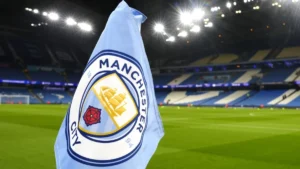
The landscape of English football finds itself at a historic crossroads as reports emerge that an independent tribunal has reached a determination regarding the 115 charges of alleged financial misconduct brought against Manchester City by the Premier League. This inquiry, which has loomed over the sport since the charges were first unveiled in February 2023, represents the most significant legal challenge in the history of the English top flight. As the footballing world awaits the formal disclosure of the commission’s findings, the focus shifts toward the complex, high-stakes appellate process and the potential for unprecedented sporting sanctions.
The Genesis of the Investigation and Chronology
The case against Manchester City is the culmination of a four-year investigation launched by the Premier League into the club’s financial activities between the 2009/10 and 2017/18 seasons. The charges allege that the club breached financial regulations by failing to provide accurate financial information, particularly concerning revenue, sponsorship income, and operating costs. Additionally, the Premier League has accused the club of failing to provide full details of managerial remuneration during specific periods and failing to comply with UEFA’s Financial Fair Play (FFP) regulations, as well as the Premier League’s own Profit and Sustainability Rules (PSR).
The timeline of this investigation is extensive. Following a report by the German publication Der Spiegel in 2018, which leaked internal documents suggesting financial irregularities, the Premier League formally opened its inquiry. By February 2023, the league issued a formal charge sheet containing 115 individual breaches. Throughout the process, Manchester City has maintained its innocence, consistently expressing surprise at the allegations and stating that they possess a "comprehensive body of irrefutable evidence" to support their position.
The Mechanics of the Appeals Process
Should the independent commission find that any of the 115 charges are proven, the legal battle is expected to enter a protracted appellate phase. Under the Premier League’s regulatory framework, both the club and the league retain the right to appeal the decision within 14 days of the judgment. Unlike the initial hearing, which is conducted by an independent commission, an appeal would be overseen by a newly appointed three-person Appeal Board.
This board is selected by the chair of the independent judicial panel, Sir Gary Hickinbottom. The requirements for this board are stringent: at least one member must have held significant judicial office to ensure the proceedings meet the highest standards of legal rigor. A critical aspect of this process is the finality of the decision; the Premier League rules do not permit an appeal to the Court of Arbitration for Sport (CAS). This distinguishes the current case from Manchester City’s previous legal encounter with UEFA in 2020, where the club successfully overturned a two-year ban from European competition at CAS. Consequently, the Appeal Board’s ruling will serve as the terminal point for this specific regulatory process.
The grounds for such an appeal are limited to specific legal criteria, such as proving that the original commission engaged in misconduct, acted with gross unfairness, or that there was evidence of fraud. The proceedings of the Appeal Board, like the original commission, are strictly confidential and held in private, ensuring that the sensitive financial details of one of the world’s most successful clubs remain shielded from public view until the final determination is reached.
Potential Sanctions and the Absence of a Grid
A significant point of contention and public debate remains the nature of the potential punishments. The Premier League’s rulebook does not provide a predetermined "tariff" or sanctions grid for financial breaches. This absence of a fixed penalty system was a deliberate choice by the member clubs, intended to prevent organizations from treating fines as a simple cost of doing business. The fear was that clubs would strategically choose to break rules if they knew exactly how much it would cost them in points or fines.
However, the lack of a standardized grid has led to calls for greater clarity. In February 2025, Premier League Chief Executive Richard Masters noted that the league was exploring the implementation of a more structured sanctions framework. Until such a system is codified, the commission retains wide discretion to determine appropriate penalties.
Historical precedents in English football offer a glimpse into the range of possibilities, though none are directly comparable in scale to the 115 charges. Recent history has seen clubs like Everton and Nottingham Forest face points deductions for PSR breaches. During the 2023/24 season, Everton were docked six points—later adjusted on appeal—and an additional two points for subsequent breaches, while Nottingham Forest received a four-point deduction. Further back, more severe penalties were applied in extreme cases of insolvency or administrative failure: Luton Town were deducted 30 points in 2008/09, and Derby County faced a 21-point deduction in 2021/22. These examples underscore that the commission has the authority to impose heavy sporting sanctions, ranging from financial penalties and transfer bans to significant points deductions or even expulsion from the league.
Broader Implications and Legal Exposure
The implications of this case extend far beyond the immediate potential for points deductions. Even if the Premier League’s tribunal concludes its business, Manchester City may face a secondary wave of legal challenges. It is widely speculated that other Premier League clubs—potentially those who lost out on titles, European qualification spots, or significant prize money during the period in question—could initiate their own litigation against the club.
If it is proven that Manchester City gained a competitive advantage through the systematic underreporting of costs or the inflation of sponsorship revenues, affected parties could argue that they were denied financial windfalls and sporting achievements. This could trigger a complex web of civil claims, potentially keeping the matter in the courts for several years to come.
The intensity of the club’s defensive strategy was signaled as early as 2014, when chairman Khaldoon al-Mubarak famously declared that the club would rather spend £30 million on the "best 50 lawyers in the world" to fight for a decade than accept a penalty they deemed unjust. This posture reflects a club culture that views these challenges not merely as regulatory hurdles, but as existential threats to its sporting reputation and commercial integrity.
Analysis of the Regulatory Environment
The Premier League’s ability to successfully adjudicate this case is being viewed as a litmus test for its regulatory authority. In an era where the financial disparity between top-tier clubs is under constant scrutiny, the capacity to enforce rules equally, regardless of a club’s size or wealth, is vital for the perceived legitimacy of the competition.
The confidentiality of the process, while necessary to protect commercially sensitive data, has created an information vacuum that has fueled speculation among fans and pundits. The challenge for the Premier League is to manage this narrative while ensuring that the due process is perceived as fair by all stakeholders. If the process is seen as overly opaque or biased, the league risks damaging its own credibility, regardless of the final verdict.
Conclusion
As the industry waits for the official word from the independent commission, the focus remains on the integrity of the process. The 115 charges represent a watershed moment for the Premier League. The outcome will likely redefine the boundaries of financial governance in elite football and establish a legal precedent that will influence the behavior of clubs for years to come. With no recourse to CAS and the potential for further civil litigation from rival clubs, the road ahead is fraught with legal complexity. For Manchester City, the Premier League, and the broader footballing ecosystem, the conclusion of this inquiry will be less of an ending and more of a shift into a new, uncharted era of regulatory oversight.