Crystal Hefner Opens Up About the Dark Side of the Playboy Mansion and Her Complex Years With Hugh Hefner

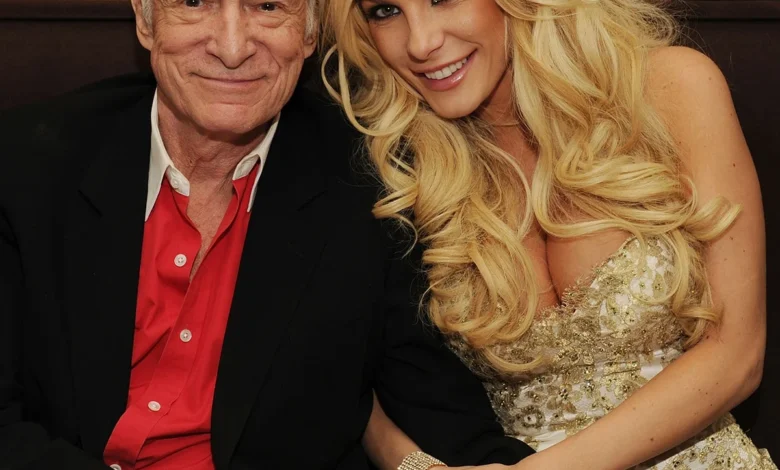
The legacy of the late Playboy founder Hugh Hefner continues to face intense public re-examination, fueled largely by the accounts of those who lived inside his famed Holmby Hills estate. Crystal Harris, who spent nearly a decade enmeshed in the world of Playboy as a girlfriend, fiancée, and ultimately the final wife of Hefner, has provided a sweeping and unvarnished look into the reality behind the mansion gates. In a series of recent revelations coinciding with the promotion of her memoir, Only Say Good Things: Surviving Playboy and Finding Myself, Harris has detailed a culture of systemic control, emotional isolation, and institutionalized misogyny, while also naming several prominent Hollywood figures who frequented the estate during its peak years.
Beyond sharing her own personal psychological toll, Harris has used her platform to shed light on the broader ecosystem of the Playboy Mansion, challenging romanticized depictions of the media empire. Her disclosures offer a sobering perspective on the power dynamics that defined one of pop culture’s most influential and controversial institutions, prompting renewed conversations about accountability, celebrity complicity, and the hidden costs of fame.
A-List Regulars and the Culture of Complicity
In interviews detailing the social climate of the estate, Harris described the Playboy Mansion as a revolving door for Hollywood elite, politicians, and cultural icons, some of whom she characterized as engaging in deeply problematic behavior. According to Harris, Hefner surrounded himself with like-minded men who propagated a pervasive atmosphere of sexism and misogyny.
Among the frequent visitors she singled out were high-profile figures whose public reputations have already faced severe scrutiny or public downfall. Harris noted that Bill Cosby, who hosted the annual Playboy Jazz Festival for decades, was a regular presence at the estate, describing encounters with the disgraced comedian as profoundly uncomfortable. Cosby was later convicted of sexual assault in 2018, a conviction that was overturned on technical grounds in 2021, though his public standing remains deeply compromised.
Similarly, Harris pointed to Donald Trump as another regular attendee of the estate during the decades preceding his presidency, categorizing him among the men who reinforced the insular, male-dominated culture of the mansion. She also levied specific criticisms against actor Jack Nicholson, characterizing his frequent visits in transactional terms. Describing the estate from her perspective as "Jack Nicholson’s drive-thru," Harris alleged that the Oscar-winning actor routinely visited the property to collect food and women before quickly departing, reflecting a broader pattern of objectification normalized within the mansion’s walls. Comedian Jon Lovitz was also named by Harris as contributing to the estate’s exclusionary and sexist environment.
Not all celebrity encounters were viewed through a negative lens, however. Harris recalled positive interactions with individuals such as comedian George Lopez, who took over hosting duties for the Playboy Jazz Festival in 2013, noting that Lopez was consistently polite and rarely visited the mansion itself. She also spoke fondly of Star Wars actor Mark Hamill and his wife, Marilou York, describing them as lovely and infrequent visitors. Additionally, she praised classic Hollywood actress Julie Newmar, best known for her role as Catwoman in the 1960s Batman television series, as a genuinely wonderful presence during her occasional visits.
Representatives for Cosby, Nicholson, Lovitz, Lopez, and Hamill were reached for comment by media outlets following the disclosures, while representatives for Newmar declined to comment. The contrasting accounts underscore the stark divide between the curated public facade of the mansion’s celebrity events and the private, highly controlled reality experienced by its permanent residents.
Chronology of a Captive Life: From Arrival to Escape
The timeline of Harris’s involvement with Hugh Hefner spans a formative decade of her life, marked by rapid entry into an intensely restrictive environment followed by a prolonged psychological struggle to regain her autonomy.
In October 2008, at the age of 21 and while working toward a degree in psychology, Harris met Hefner at his annual Halloween party. Within a short period, she moved into the Playboy Mansion, joining a rotating group of young women who functioned as Hefner’s official girlfriends. Almost immediately, Harris entered a tightly regimented daily routine dictated by unwritten rules and strict curfews. She has recounted that her evening curfew was set strictly at 6:00 p.m., backed by frantic phone calls from pantry staff if she was even a minute late, requiring her to physically report to Hefner to demonstrate compliance.
The living arrangements offered virtually no privacy, as Hefner maintained a master key that prevented residents from locking their doors. Life within the mansion was also characterized by constant comparison and competition among the girlfriends, a dynamic that Harris described as deeply exhausting to the physical, mental, and emotional self. Diet and physical appearance were heavily scrutinized; Harris has shared that even a minor, natural weight fluctuation prompted critical remarks and physical taps from Hefner, triggering immediate corrective behavior such as strict dieting and rigorous gym routines.
By late 2010, the relationship reached a turning point when Hefner proposed on Christmas Eve with a diamond ring and a Little Mermaid-themed music box, an event filmed for television broadcast. Harris admitted that the proposal caught her entirely by surprise, noting that marriage had not previously been discussed and that mutual romantic affection was lacking. As preparations for a televised wedding special commenced, tensions escalated over financial compensation, with Harris discovering she was to be paid a minimal sum for her participation. Realizing the extent to which her image and labor were being monetized, she attempted to flee the mansion in June 2010.
Her initial escape was cut short when Hefner ordered security to lock the back gates and detain her via the mansion’s loudspeaker system. Overwhelmed and feeling trapped, she briefly returned to the house before staging a successful secondary exit later that month under the pretext of running a routine errand. She sought refuge with musician Jordan McGraw, son of television personality Dr. Phil McGraw, and began attempting to build an independent life, exploring cryptocurrency, social media promotion, and DJing.
However, financial vulnerability and emotional distress eventually led Harris to reconsider her departure. Prompted by outreach from Hefner’s longtime secretary, Mary O’Connor, and struggling with the abrupt end of her relationship with McGraw, Harris negotiated terms to return to the mansion. While she demanded the removal of competing girlfriends, she re-entered the dynamic as Girlfriend No. 1.
On New Year’s Eve in 2012, Harris and Hefner officially married in a private ceremony at the mansion. Over the subsequent five years, Harris transitioned into a caretaking role, managing Hefner’s public appearances, shielding the public from awareness of his declining physical and cognitive health, and fiercely guarding his public legacy amid mounting external criticism of the Playboy brand. Hefner passed away in September 2017 at the age of 91, following complications from a severe urinary tract infection and resistant bacterial strain.
Institutional Control, Allowances, and Substance Culture
Central to Harris’s retrospective analysis of her time at the mansion is the systemic enforcement of financial and personal dependency. To maintain the appearance standards expected of residents—spanning clothing, beauty treatments, and personal care—Harris and her peers relied entirely on a weekly allowance of $1,000 distributed every Friday morning. Harris has characterized this financial structure as intentionally infantilizing and demoralizing, noting that because residents were prohibited from seeking outside employment, the allowance served as their sole source of financial survival.
Beyond financial constraints, Harris’s accounts detail an environment where personal autonomy was systematically eroded through strict behavioral protocols. Discussion of topics outside of Hefner’s interests, as well as any mention of mortality, was strictly discouraged. Medical needs within the estate were handled internally; Harris alleged that access to independent healthcare was restricted, and that Hefner maintained a personal staff to manage medical issues, including a substantial supply of prescription opiates. According to Harris, Hefner’s dependence on painkillers, alongside widespread access to sedatives like Quaaludes within the house, was an open secret among residents that went largely unquestioned due to the insular nature of the community.
Hefner also maintained meticulous records of his interactions and visitors. Harris described a "little black book" in which Hefner logged the names of women who visited his private bedroom, which included prominent celebrities, business leaders, and politicians. Alongside these written logs, Hefner amassed extensive photographic collections of the women in the house, which Harris noted served as a form of leverage and control.
Defense of Legacy and the Counter-Narrative
The release of investigative documentary projects, most notably A&E’s 2022 series Secrets of Playboy, alongside a wave of memoirs from former associates and partners, has sparked a fierce public debate over the true nature of Hugh Hefner’s legacy. While women like Harris, Holly Madison, and others have detailed experiences of emotional abuse, isolation, and exploitation, family members and defenders of the late publisher have strongly contested these characterizations.
Following the release of Secrets of Playboy, Cooper Hefner, the youngest son of Hugh Hefner, emerged as a vocal defender of his father’s reputation. In statements released via social media, Cooper Hefner argued that his father was fundamentally generous and deeply concerned with the well-being of others, dismissing the emerging wave of critical accounts as examples of regret weaponized into posthumous revenge. Representatives of the Hefner estate have consistently maintained that the relationships forged within the mansion were consensual and that the accusations leveled by former residents fail to capture the positive cultural impact of the Playboy brand and its founder.
Implications and Broader Cultural Impact
The ongoing reassessment of the Playboy Mansion and its patriarch reflects a profound shift in how contemporary society evaluates historical figures who operated within the entertainment and media industries during the latter half of the twentieth century. The accounts provided by Crystal Harris and other former residents highlight the mechanisms of power that allowed powerful men to construct insular, unaccountable environments under the guise of sexual liberation and progressive counterculture.
Analysts note that these disclosures contribute to a broader cultural reckoning regarding the treatment of young women in media, the normalization of power imbalances, and the long-term psychological consequences of institutionalized control. By detailing the day-to-day realities of life inside the Holmby Hills estate—ranging from arbitrary rules and financial subjugation to the complicity of visiting cultural elites—Harris’s memoir and subsequent public statements provide critical primary documentation for historians and cultural critics examining the intersection of celebrity, media conglomerates, and personal autonomy.
As public scrutiny of historical pop-culture institutions intensifies, the narratives of those who lived within them continue to challenge simplified celebratory histories, forcing a more complex and critical evaluation of the cost behind the glamour of the mid-century media machine.