Netflix Acquires Global Rights To Australian True Crime Docuseries 2.6 Seconds Death In The Outback Ahead Of TIFF Premiere

The global streaming giant Netflix has officially secured worldwide distribution rights for the high-profile Australian documentary series 2.6 Seconds: Death in the Outback. The announcement comes on the heels of the project’s selection as the sole documentary series featured in the prestigious Primetime program at the Toronto International Film Festival (TIFF). Produced by the acclaimed Indigenous-led production house Blackfella Films for domestic broadcasters SBS and NITV, the four-part investigative project dives deep into one of the most polarizing and culturally significant fatal incidents in modern Australian history.
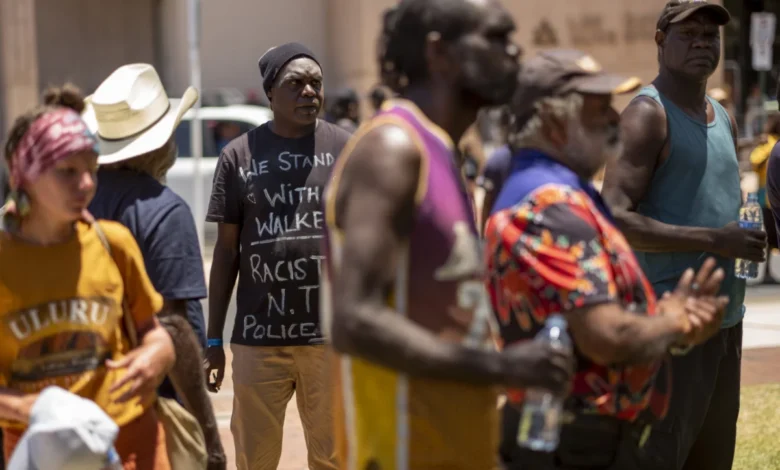
The series centers on the tragic shooting of 19-year-old Indigenous Australian teenager Kumanjayi Walker, who was killed by a police officer in the remote Northern Territory community of Yuendumu in November 2019. The title, 2.6 Seconds, refers to the fleeting window of time in which the fatal shots were fired—a period that has since become the focal point of immense legal, social, and political debate across the nation. By examining not only the sequence of events on that fateful night but also the deep-seated systemic issues that preceded and followed it, the documentary aims to present a comprehensive look at the intersection of race, power, justice, and policing in Australia.
With Netflix backing the project for a global release slate slated for early 2027, the documentary is poised to bring a distinctly local Australian tragedy onto the world stage, prompting international audiences to grapple with universal questions surrounding law enforcement accountability and Indigenous rights.
Background Context And The Anatomy Of A Tragedy
To understand the immense cultural weight carried by 2.6 Seconds: Death in the Outback, one must examine the events of November 9, 2019, in Yuendumu, a remote Aboriginal community located roughly 290 kilometers northwest of Alice Springs. On that evening, Constable Zachary Rolfe, a member of an elite tactical police response unit, shot Kumanjayi Walker three times during an attempted arrest inside a residential home. Walker, a Warlpiri man, died from his injuries shortly thereafter.
The incident instantly fractured the community and sent shockwaves through the Australian legal landscape. In the months that followed, Constable Rolfe was charged with murder, setting the stage for one of the most closely watched and legally complex criminal trials in the history of the Northern Territory. In March 2022, a Supreme Court jury acquitted Rolfe of murder and alternative charges, a verdict that triggered widespread grief, anger, and outrage among Indigenous communities and civil rights advocates across the country.
The fallout from the shooting and the subsequent trial exposed deep rifts within Australian society. Critics pointed to the systemic disadvantages faced by Indigenous Australians, historical tensions between remote communities and law enforcement agencies, and the challenges inherent in holding armed officers accountable in isolated jurisdictions. Conversely, supporters of the police argued that officers operating in high-risk, volatile environments must make split-second decisions to protect their own lives.
These competing narratives form the narrative backbone of the documentary series. Rather than merely recounting a court case, the production utilizes exhaustive investigative journalism, archival material, and firsthand accounts to explore how a brief, chaotic encounter in the outback became a lightning rod for a nation-wide reckoning.
Chronology Of Development And Production
The journey of bringing 2.6 Seconds: Death in the Outback from a developing concept to the international spotlight has been meticulous and deliberate. Blackfella Films, renowned for producing high-caliber Indigenous content that resonates broadly, spearheaded the project under the creative leadership of director and producer Darren Dale.
The production team collaborated closely with Indigenous media organizations, including PAW Media, to ensure that the narrative remained culturally sensitive and deeply rooted in the perspective of the Warlpiri community. Furthermore, substantial development and production backing was provided by Screen Australia’s First Nations Department, in association with SBS, alongside financial support from Screen NSW and international commercial backing from All3Media International.
The series was selected out of a massive global pool to participate in TIFF’s Primetime program, which highlights exceptional storytelling in episodic television and streaming series. Notably, 2.6 Seconds stands out as the sole documentary series among the ten selected titles for the festival’s prominent sidebar, underscoring its narrative strength and cinematic ambition.
Following its world premiere at TIFF, the series is scheduled to air domestically on SBS and NITV, allowing local audiences to engage with the material before Netflix unleashes the project to its hundreds of millions of subscribers worldwide in early 2027.
Statements From Key Stakeholders And Creative Leadership
The announcement of the global Netflix acquisition has elicited strong reactions from the creative team and network executives, highlighting the universal themes embedded within a uniquely Australian narrative.
Darren Dale, producer and director at Blackfella Films, emphasized the project’s broader thematic resonance beyond domestic borders. "2.6 Seconds is a shocking story about the collision of race and power that is uniquely Australian, but one I’ve always believed also has global resonance," Dale stated. "Netflix coming on board ahead of our TIFF premiere is confirmation of that belief, and I cannot wait to see how international audiences respond to this powerful series."
Amanda Duthie, Content Director for Netflix ANZ, echoed these sentiments, noting the emotional gravity and lasting impact of the documentary. "Some stories stay with you long after the screening, and 2.6 Seconds is one of those," Duthie remarked. "Netflix is honoured to bring this deeply moving Australian documentary to Netflix audiences around the world, giving a powerful and important story the opportunity to resonate far beyond our shores."
Industry analysts have similarly praised the partnership, noting that international streaming platforms have increasingly demonstrated an appetite for high-end, socially conscious documentary series that tackle localized institutional crises with global implications.
Broader Industry Implications And Social Impact
The acquisition of 2.6 Seconds: Death in the Outback by Netflix marks a significant milestone for Australian non-fiction storytelling, particularly productions led by First Nations creators. For years, stories concerning Indigenous deaths in custody and systemic policing failures have struggled to secure global platforms, often remaining confined to domestic news cycles and local public broadcasting networks.
By placing this narrative on a premier global streaming service, the creators ensure that the systemic failures highlighted in the documentary are subjected to international scrutiny. In recent years, global movements such as Black Lives Matter have elevated conversations surrounding police accountability, racial bias, and institutional reform from localized political debates into global human rights discussions.
Experts suggest that the global release of the series could spark international comparisons regarding how different Western democracies handle policing in Indigenous and marginalized communities. Furthermore, the involvement of major international entities like All3Media International demonstrates a growing commercial appetite for premium Australian factual content that does not shy away from confronting uncomfortable historical and contemporary truths.
As the series prepares for its red-carpet debut at the Toronto International Film Festival, anticipation is reaching a fever pitch. The intersection of masterful investigative filmmaking, urgent social commentary, and global distribution ensures that the vital questions raised by the events in Yuendumu will continue to be debated, analyzed, and felt far beyond the red dust of the Australian outback.