Renault Unveils the Forefront Concept: A Modular Autonomous Electric Vehicle Designed for Modern Defense and Industrial Missions

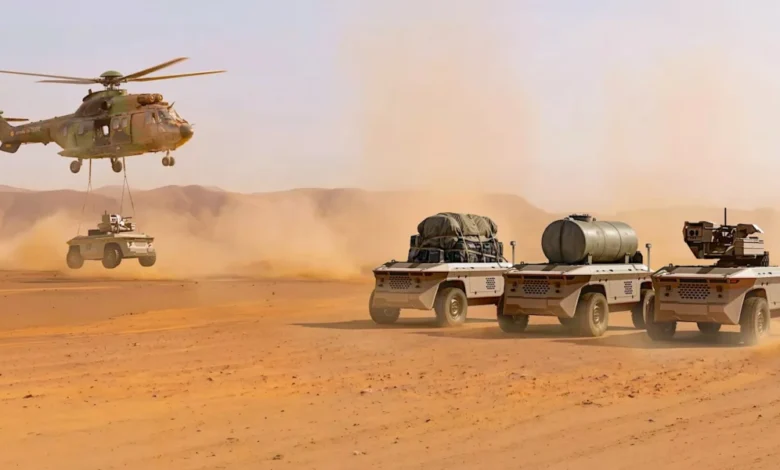
The landscape of military logistics and heavy-duty industrial operations is undergoing a rapid technological transformation, driven by the integration of electrification and artificial intelligence. Renault Group, one of Europe’s leading automotive manufacturers, has officially stepped into this high-stakes arena through a strategic partnership with Belgian defense engineering firm John Cockerill. Together, the two companies have introduced the "Forefront" concept—an advanced, modular, autonomous electric vehicle platform specifically engineered to tackle the French Armée de Terre’s most demanding operational requirements, while offering dual-use capabilities for critical civilian sectors.
This development marks a significant convergence of commercial automotive manufacturing prowess and specialized defense engineering. As defense ministries worldwide seek to reduce logistical footprints, lower carbon emissions in operational theaters, and remove human personnel from high-risk environments, autonomous electric ground platforms have shifted from experimental novelties to vital strategic assets.
The Genesis of the Forefront Concept
The Forefront project was conceived to address the complex challenges faced by modern military forces operating in hostile, unpredictable, and hard-to-reach environments. Traditional military logistics rely heavily on combustion-engine vehicles that require massive supply chains for fuel, emit high thermal and acoustic signatures, and place human drivers directly in the line of fire during supply runs or reconnaissance missions.

Recognizing the need for a paradigm shift, Renault Group leveraged its extensive technological ecosystem, drawing from its leadership in electric vehicle (EV) development, mass-production efficiency, and software integration. Meanwhile, John Cockerill brought decades of defense-sector expertise, weapon systems integration, and tactical vehicle design to the collaboration.
The result is a versatile, unmanned ground vehicle (UGV) architecture designed from the ground up to be rapidly industrialized at a controlled cost. By utilizing Renault’s commercial manufacturing methodologies, the partners aim to avoid the notoriously bloated budgets and protracted production timelines that often plague bespoke defense procurement programs.
Technological Architecture and Capabilities
At its core, the Forefront concept is defined by modularity and autonomy. While current physical prototypes remain in the developmental phase, the technical specifications outlined by Renault and John Cockerill highlight a robust platform capable of operating across diverse terrains without direct human intervention.
Key technological pillars of the Forefront platform include:

- Modular Chassis Design: The vehicle utilizes a highly adaptable frame that can be configured for various mission profiles, ranging from heavy material transport and engineering support to specialized logistical supply runs.
- Advanced Autonomous Navigation: Equipped with a suite of sensors, LIDAR, cameras, and proprietary artificial intelligence algorithms, the platform is designed to autonomously map, analyze, and traverse complex topography, including deep mud, rocky inclines, and debris-strewn urban environments.
- Electric Drive System: The all-electric powertrain offers distinct tactical advantages over traditional internal combustion engines. By significantly reducing both acoustic and thermal signatures, the vehicle is far harder to detect by enemy surveillance systems. Furthermore, instantaneous torque delivery ensures superior traction and off-road mobility in extreme conditions.
- Cost-Effective Industrialization: Unlike low-volume military contractors that produce hand-built specialized units, Renault’s involvement ensures that the vehicle can be scaled efficiently, leveraging shared supply chains and standardized EV components to drive down per-unit costs.
Leadership Perspectives and Strategic Objectives
The announcement of the Forefront concept underscores a broader institutional shift within European manufacturing, where commercial automotive giants are increasingly applying their civilian R&D to sovereign defense and dual-use technologies.
François Provost, CEO of Renault Group, emphasized the strategic importance of the collaboration during the unveiling. He noted that the Forefront concept highlights the tangible contributions that Renault’s industrial and technological expertise can make to the unmanned ground vehicle sector. According to Provost, the project bridges two highly complementary fields: Renault’s capacity for rapid, large-scale, and cost-effective production of reliable technological goods, and John Cockerill’s deep-rooted proficiency in defense engineering.
From a defense perspective, the integration of autonomous electric platforms aligns with the French military’s broader modernization goals. The Armée de Terre has increasingly prioritized modernization initiatives that enhance troop safety through robotics and automation. By deploying UGVs for high-risk missions—such as navigating contaminated zones, clearing routes, or delivering supplies under hostile observation—commanders can achieve operational objectives while minimizing personnel exposure to direct combat hazards.
Dual-Use Applications: Beyond the Battlefield
While the initial impetus for the Forefront platform stems from military requirements, Renault and John Cockerill have placed significant emphasis on the platform’s commercial viability in civilian sectors. The modularity of the ground vehicle makes it an ideal candidate for heavy-duty industrial applications where human operators face hazardous conditions.

Potential civilian use cases include:
- Construction and Mining: Operating heavy machinery and transporting materials in unstable or hazardous quarry environments without risking worker safety.
- Disaster Response and Emergency Services: Navigating collapsed infrastructure, wildfire zones, or chemically contaminated areas to deliver vital supplies, clear debris, or conduct search-and-rescue operations.
- Agriculture and Forestry: Supporting large-scale operations in remote, rugged terrain where traditional commercial vehicles struggle to maintain traction or operational efficiency.
By designing the vehicle from inception with both defense and civilian markets in mind, the partners aim to achieve economies of scale that would otherwise be unattainable for a purely military-focused platform.
Development Timeline and Future Outlook
The Forefront project is currently transitioning from digital design and conceptual engineering into physical validation. Renault has confirmed that the first wave of functional prototypes is scheduled to undergo rigorous field testing, trials, and military-style tactical exercises in the coming months.
These upcoming trials will be critical in assessing the vehicle’s real-world durability, energy efficiency, battery longevity in extreme temperatures, and the reliability of its autonomous navigation stack under simulated combat conditions. Feedback gathered from these exercises will dictate subsequent design iterations before the platform is considered for serial production.

Broader Implications for the Automotive and Defense Industries
The partnership between Renault and John Cockerill reflects a growing trend of cross-sector collaboration in Europe. As automotive markets face fierce global competition and stringent emissions regulations, legacy automakers are diversifying their portfolios to include government and defense contracts, which offer long-term stability and funding for advanced autonomous R&D.
Furthermore, the emphasis on electrification within military procurement signals a permanent shift away from fossil-fuel dependency in tactical doctrines. Militaries are increasingly aware that securing fossil fuel supply lines in active conflict zones is a major operational vulnerability. Electric platforms powered by decentralized, renewable energy sources—or supported by mobile charging and microgrid infrastructure—offer a compelling solution to the logistical nightmare of battlefield fuel transport.
As the Forefront concept moves closer to active field trials, it stands as a testament to the changing nature of mobility. Whether navigating the rugged training grounds of the French military or hauling heavy loads across civilian industrial sites, Renault’s latest venture demonstrates that the future of heavy-duty transport is electric, autonomous, and profoundly resilient.