General Motors Pivots to Hybrid SUVs in Michigan as EV Strategy Falters Amid Surging Market Demand

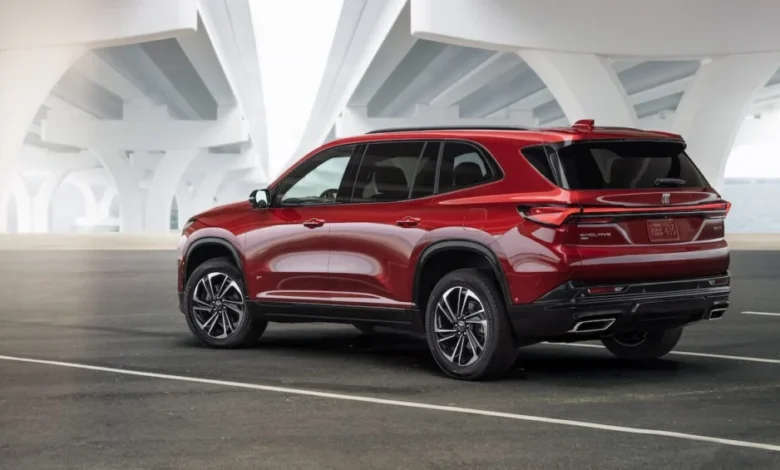
General Motors is making a significant and rapid strategic retreat from its aggressive, all-electric vehicle future, shifting its industrial focus toward gasoline-electric hybrids to recapture lost market share. According to industry insiders speaking with Reuters, the automotive giant is planning to develop and manufacture hybrid versions of its highly popular three-row sport utility vehicles—the Chevrolet Traverse, the Buick Enclave, and the GMC Acadia. Production for these new variants will take place at the company’s Lansing Delta Township manufacturing facility in Michigan.
This major pivot highlights a broader recalibration within the American automotive landscape, as traditional legacy manufacturers grapple with consumer demand that is shifting more rapidly toward internal combustion engine alternatives than previously anticipated. The transition at the Lansing plant is not merely an internal corporate realignment; it is directly supported by restructured federal funding. A $500 million government grant, originally earmarked by the Department of Energy to convert nearby facilities exclusively for battery-electric vehicle production, is being redirected to accommodate hybrid manufacturing at Delta Township.
The timing of this announcement underscores the intense intersection of industrial policy, corporate strategy, and electoral politics. Coming just ahead of crucial midterm elections with several competitive congressional and senatorial seats hanging in the balance in Michigan, the political optics of automotive manufacturing investments are under heavy scrutiny. While General Motors navigates its shifting product portfolio, the broader U.S. automotive sector is experiencing a turbulent realignment, driven by fluctuating consumer preferences, regulatory adjustments, and competitive pressures from global rivals who embraced hybrid technology years ago.
The Evolving Strategy at the Lansing Delta Township Facility
General Motors has officially confirmed that it is preparing its Lansing manufacturing footprint for hybrid production as part of a broader capital expenditure initiative exceeding $2 billion across the mid-Michigan region. This broader financial commitment includes a previously announced $1.25 billion investment targeted at the nearby Lansing Grand River plant. However, specific timelines, launch dates, and detailed model specifications for the upcoming hybrid SUVs have not yet been formally disclosed by corporate leadership.
The Lansing Delta Township site, which is celebrating its 20th anniversary of operations, remains a cornerstone of General Motors’ large-SUV manufacturing strategy. The plant achieved a production milestone in 2025 by rolling out a record 291,000 three-row utility vehicles. Mike Trevorrow, Senior Vice President of Global Manufacturing at General Motors, emphasized the human element behind these ongoing investments in a public statement.
"Lansing’s strength starts with its people. Their skill and experience are why we continue to invest here," Trevorrow stated, highlighting the workforce’s adaptability as the facility prepares to transition from purely internal combustion engine architectures to electrified powertrains.
Despite the operational readiness of the plant, the financial architecture behind the pivot has drawn considerable attention. The Department of Energy is actively restructuring a $500 million Domestic Manufacturing Conversion Grant. Originally awarded in 2024 under the Biden administration to ready the Grand River plant for battery-electric vehicle manufacturing—funds that were never fully disbursed—the capital will now be repurposed to support hybrid vehicle development at Delta Township.
The announcement coincided closely with a visit to the facility by Assistant Energy Secretary Audrey Robertson, underscoring the federal government’s active interest in regional industrial transitions. Automotive manufacturing has emerged as a central narrative in the midterm elections. The administration of President Donald Trump has actively highlighted domestic manufacturing developments as proof of successful economic policies. This political dynamic was recently exemplified when Audi Chief Executive Gernot Döllner appeared at a political rally in central Georgia to celebrate the announcement of a new manufacturing facility in the state, illustrating how closely intertwined automotive investments and political milestones have become.
Market Pressures and the Financial Realities of the Hybrid Surge
The immediate and medium-term drivers behind General Motors’ abrupt shift to hybrids are rooted in shifting market dynamics and financial pressures. Over the first nine months of the year, General Motors saw its share of the United States automotive market slip to 16.6%, down from 17.4% during the same period in the previous year. This erosion of market share occurred concurrently with a significant surge in consumer demand for hybrid vehicles, fueled largely by fluctuating fuel prices and consumer hesitation regarding the high initial purchase costs and infrastructure limitations of pure battery-electric vehicles.
Historically, General Motors executives maintained a notably skeptical stance toward hybrid technology compared to their domestic and international competitors. Long-standing corporate doctrine within the company argued that hybrid powertrains introduced excessive manufacturing costs, engineering complexity, and mechanical weight, while offering minimal regulatory compliance benefits under stricter emissions standards—standards that have since been loosened under the Trump administration.

Prior to this strategic shift, General Motors’ hybrid offerings in the U.S. market were strictly limited to specialized niche vehicles, such as electrified variants of the Chevrolet Corvette. This lack of a diverse hybrid portfolio frustrated dealership networks across the country.
"We’ve been telling them every chance we get that we need hybrids," noted one prominent U.S. dealer in discussions with industry analysts. "Customers are walking onto the lot asking for fuel-efficient alternatives that don’t require plugging in, and we haven’t had the inventory to match what Toyota, Honda, and Ford are offering."
The data supports the frustration expressed by dealers. While General Motors pursued an aggressive, battery-electric-first rollout, competitors reaped the rewards of consumer demand for part-time electric mobility. Ford Motor Company successfully sold approximately 228,000 hybrid vehicles last year, while Japanese automakers Toyota and Honda expanded their dominant market positions by leveraging decades of hybrid engineering experience. Globally, the market validation for hybrids became impossible to ignore: in the first half of 2026, hybrids officially outsold battery-electric vehicles on a global scale, capturing 18% of total market sales compared to 17% for pure EVs.
Corporate Defense and the Pivot from the BEV-First Strategy
Facing mounting pressure from investors, dealers, and declining market share, Chief Executive Mary Barra signaled a definitive change in corporate direction earlier in October. During a call with financial analysts, Barra confirmed that General Motors would introduce hybrid options across multiple vehicle segments, aiming to reassure stakeholders that the transition would not impose unsustainable financial burdens on the company.
"It’s not going to be additional capital expenditures and engineering," Barra stated, attempting to frame the hybrid rollout as a flexible adaptation rather than a costly reversal. This assertion arrives despite the company utilizing a $500 million federal conversion grant to update its manufacturing facilities for the new powertrains.
This pivot represents the latest and most tangible step in a broader, systematic retreat from General Motors’ previous "all-in" battery-electric vehicle strategy. The sequence of adjustments has been substantial and costly:
- January: General Motors absorbed a staggering $6 billion financial charge associated with slowing consumer adoption rates and adjusted production targets for electric vehicles.
- Spring: The automaker implemented a 75% reduction in planned output for the Chevrolet Bolt, directly responding to softened demand following the loss of certain federal consumer tax subsidies.
- Summer: General Motors terminated a high-profile supply agreement for U.S.-sourced rare-earth permanent magnets, signaling a scaling back of domestic supply chain commitments tied exclusively to next-generation electric motors.
Industry analysts view the embrace of hybrids as a belated admission that rivals like Toyota correctly anticipated the pace of consumer adoption and infrastructural readiness in the United States. For years, critics argued that General Motors was moving too fast toward an all-electric future without securing the necessary raw material supply chains, charging infrastructure, or consumer price parity.
Implications and the Road Ahead for General Motors
As General Motors prepares to introduce hybrid variants of the Chevrolet Traverse, Buick Enclave, and GMC Acadia, the company is entering a competitive landscape where it no longer holds the technological advantage. Competitors such as Toyota, Honda, and Ford have spent decades refining hybrid powertrains, driving down component costs, and scaling manufacturing efficiencies.
However, General Motors possesses a unique strategic advantage that could mitigate its late entry into the hybrid segment: its dominance in the large three-row utility vehicle market. The Traverse, Enclave, and Acadia already command robust consumer loyalty and strong sales volumes in their traditional internal combustion configurations. By introducing hybrid variants to these specific high-margin models, General Motors can offer families and long-distance drivers the fuel efficiency they demand without requiring them to transition to unproven nameplates or fully electric platforms.
The broader implications of this federal grant restructuring and corporate pivot point toward a more pragmatic, flexible automotive industry in the United States. As industrial policy continues to adapt to real-world consumer behavior and shifting political landscapes, traditional automakers are learning that regulatory mandates and corporate visions must align closely with market realities. For General Motors, the success of the Lansing Delta Township hybrid manufacturing initiative will serve as a critical test of whether the company can successfully recalibrate its industrial engine to win back consumers in a rapidly evolving marketplace.
Related posts: