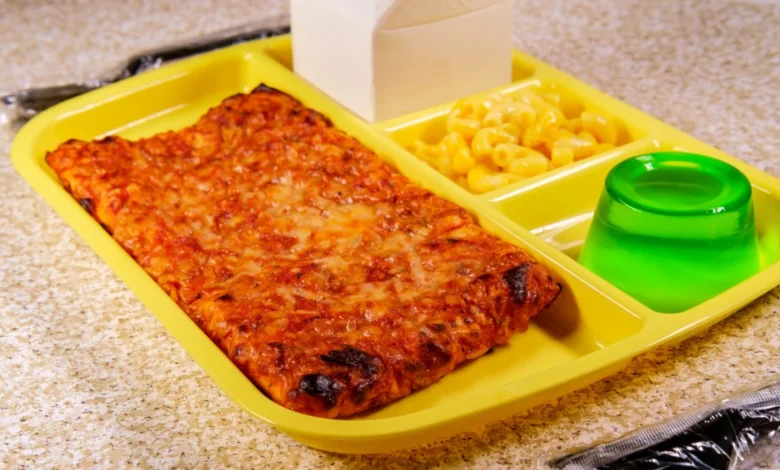
Few culinary phenomena evoke as powerful a sense of collective memory and generational identity as the rectangular school cafeteria pizza of the late 20th century. Long before the era of artisanal sourdough crusts, wood-fired Neapolitan ovens, and gourmet ghost-kitchen deliveries, millions of American students experienced their formative relationship with pizza through mass-produced, sheet-pan iterations served on divided plastic trays. To culinary purists, these budget-conscious, highly processed slices might fail to meet standard gastronomic criteria. Yet, for the Millennial and Generation X cohorts, the quintessential Friday afternoon pizza slice remains an enduring symbol of institutional comfort food. Today, driven by a broader cultural appetite for retro comfort and culinary nostalgia, home cooks are increasingly recreating these iconic institutional pies in their own kitchens, marrying inexpensive ingredients with decades-old government recipes.
The Historical Evolution of the American School Lunch Program
To understand the mechanics and flavor profile of the classic cafeteria pizza, one must examine the institutional framework that birthed it. The modern American school lunch system traces its official legislative roots to the National School Lunch Act of 1946, signed by President Harry S. Truman. Conceived initially as a measure to safeguard the health and well-being of the nation’s children and to bolster agricultural commodity markets by absorbing surplus food, the program underwent significant expansion throughout the ensuing decades.
By the late 1970s and 1980s, rising enrollment numbers, tighter school district budgets, and the increasing reliance on processed, shelf-stable, and frozen foods fundamentally transformed institutional cafeterias. School districts required menu items that could be scaled effortlessly to feed hundreds or thousands of students within a narrow window, holding up under heat lamps without degrading entirely while remaining strictly compliant with federal nutritional and budgetary guidelines of the era.
Enter the sheet-pan pizza. Unlike traditional round pies that require individual hand-stretching, specialized peels, and high-heat deck ovens, sheet-pan pizzas were engineered for industrial efficiency. They could be baked simultaneously in massive commercial convection ovens, easily portioned into uniform geometric rectangles, and served rapidly on standard cafeteria trays.
The USDA Blueprint: Quantity Recipes for School Food Service
The standardization of these institutional pizzas was heavily influenced by federal guidelines and resource publications. In the late 1980s and early 1990s, the United States Department of Agriculture (USDA) published comprehensive manuals such as "Quantity Recipes for School Food Service." These documents served as culinary bibles for cafeteria managers nationwide, offering precise, scalable formulas for mass-production cooking.
The USDA documentation outlined standardized procedures for two primary variants of the school lunch pizza: plain cheese and meat-topped. The structural genius of these recipes lay in their simplicity and reliance on accessible, economical commodities. Central to the classic texture was a unique pourable or spreadable dough—often utilizing dry milk solids, vegetable oil, water, flour, and standard commercial yeast—which could be rapidly mixed in large industrial vats and poured directly over cornmeal-dusted sheet pans. This eliminated the labor-intensive hand-kneading and shaping processes required in traditional pizzerias, while yielding a remarkably crisp, almost cracker-like bottom crust with a soft, bread-like interior.
Furthermore, the meat-topping variant relied on a distinctive preparation method. Rather than scattering raw or pre-cooked meat chunks over the cheese, institutional kitchens typically browned large quantities of ground beef or pork with onions, garlic, and bulk seasoning, then integrated the meat directly into a robust tomato paste and herb sauce. This created a thick, savory, meat-infused sauce layer that adhered firmly to the crust, ensuring that every square bite delivered a uniform distribution of flavor.
Nutritional Realities and the Institutional Flavor Profile
While the sensory memories associated with cafeteria pizza are overwhelmingly positive for many adults, the nutritional profile of these meals has been a subject of continuous public policy debate. During the peak era of the 1990s school lunch, institutional meals were heavily shaped by the agricultural surplus commodities provided by the federal government, which frequently included generous allocations of beef, pork, and processed dairy products.
Nutritional scientists and public health advocates note that these pizzas were characteristically dense in sodium, saturated fats, and refined carbohydrates—hallmarks of cost-effective mass-catering. The cheese utilized was often a hybrid of low-moisture part-skim mozzarella and processed American or cheddar blends designed to melt quickly and withstand extended holding times without separating or burning. This cheese blend yielded the characteristic golden hue and slightly elastic, chewy texture that differentiated institutional pizza from traditional pizzeria slices.
Despite—or perhaps because of—these distinct nutritional and textural properties, the flavor profile became deeply embedded in the collective consciousness of a generation. The combination of the sweet-and-savory meat sauce, the heavy layer of melted commodity cheese, and the distinct cornmeal crunch on the bottom formed a specific sensory blueprint that commercial food manufacturers have occasionally attempted to commercialize in the frozen food aisle.
Recreating the Nostalgia: Adapting Institutional Recipes for the Home Kitchen
In recent years, food bloggers, culinary historians, and nostalgic home cooks have reverse-engineered the classic cafeteria pizza, adapting industrial quantities down to standard residential kitchen measurements. Replicating the authentic experience at home involves specific adjustments to ingredients, pans, and techniques.
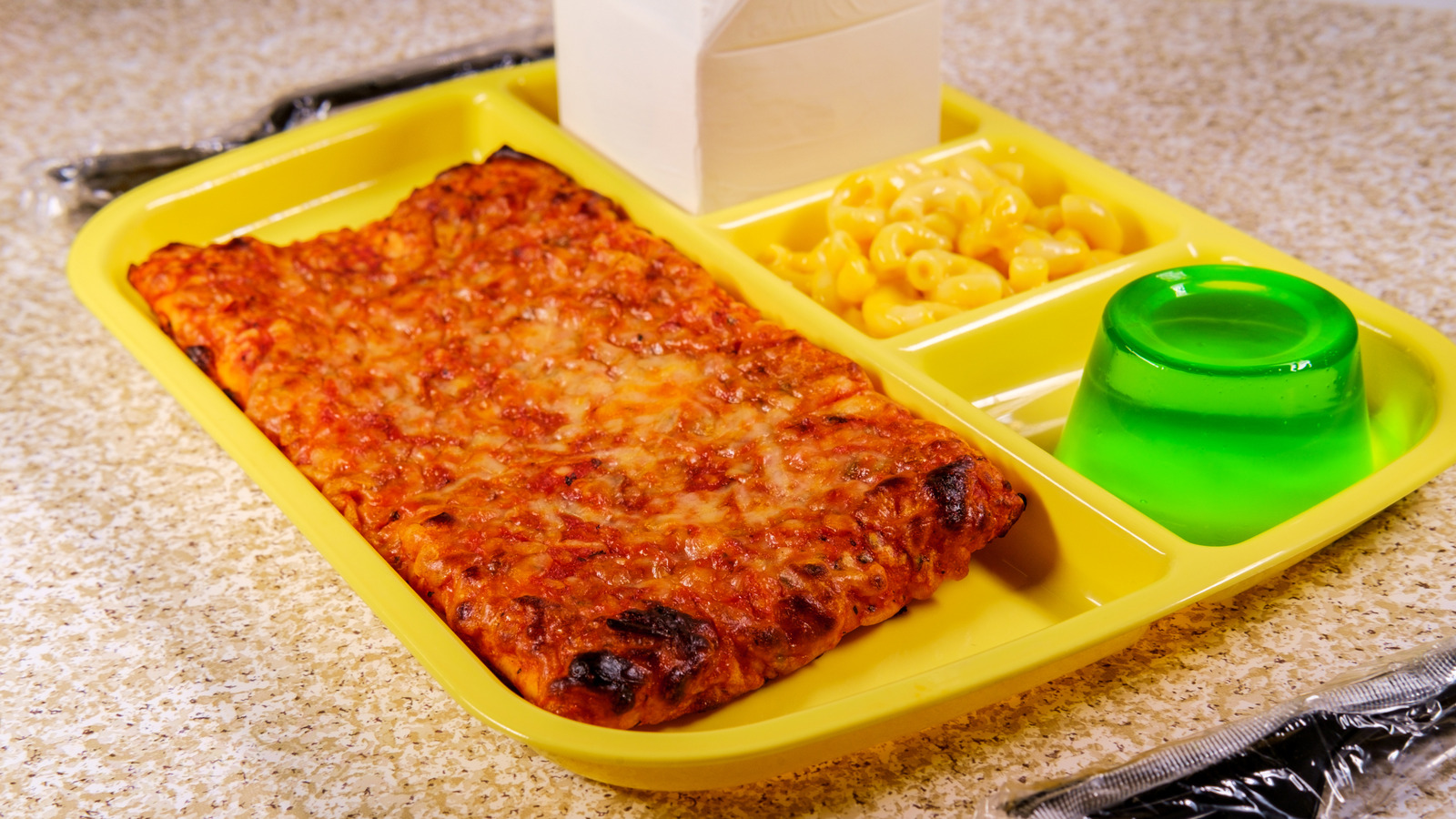
To achieve the signature rectangular format, home cooks typically rely on standard half-sheet baking pans or rimmed baking sheets. While purists attempting an authentic recreation may mix a quick pourable batter using flour, water, oil, and dry milk powder, modern adaptations often streamline the process by utilizing commercial pre-made fresh pizza dough or even high-hydration sheet-pan dough techniques reminiscent of Sicilian or Detroit-style pizzas, or the classic New York "grandma pie."
For the sauce, the USDA methodology of thoroughly incorporating browned ground beef or pork directly into a seasoned tomato paste base remains the gold standard for replicating the distinct flavor. Alternatively, modern shortcuts utilize commercial jarred marinara or pizza sauces combined with finely browned ground beef and a dash of garlic powder and dried oregano.
Regarding the dairy component, while modern artisan pizzas lean exclusively toward fresh mozzarella, the cafeteria variant requires a more utilitarian approach. Culinary experts suggest employing a blended cheese ratio—combining traditional low-moisture mozzarella with moderate amounts of cheddar and processed American cheese—to successfully mimic the rich, golden, deeply savory melt of the 1990s school lunch tray.
Variations and Cultural Adaptations Across School Districts
It is important to note that the school cafeteria pizza was not a monolithic entity; rather, it varied significantly by region, decade, and school district budgets. While the standard rectangular meat-and-cheese slice dominated the landscape, many students from the 1990s also fondly recall the introduction of alternative iterations, such as the "Mexican pizza."
These regional or era-specific variations frequently incorporated taco seasoning blends into the beef sauce, substituted standard mozzarella with a Mexican cheese blend, and offered toppings such as sliced jalapeños, black olives, or diced bell peppers. Other districts experimented with French bread pizzas—utilizing halved loaves of institutional white bread as a quick-fix crust—or breakfast pizzas featuring scrambled eggs and sausage gravy baked onto a standard sheet pan.
The Broader Cultural Impact of Culinary Nostalgia
The growing popularity of retro cafeteria pizza recipes points to a broader psychological and cultural trend: the embrace of comfort food as a mechanism for emotional regulation and temporal escapism. Food psychologists note that sensory memories formed during childhood and adolescence are particularly durable, linked closely to the limbic system, which processes emotion and memory. When adults recreate dishes from their school days, they are rarely seeking gastronomic perfection; instead, they are attempting to recapture a specific emotional state characterized by simplicity, safety, and peer camaraderie.
Furthermore, the democratization of culinary information via digital platforms has transformed niche institutional memories into viral cooking trends. As Millennials and older Gen Z consumers enter middle age, food media has increasingly catered to their formative culinary touchstones, transforming once-humble cafeteria items into subjects of serious recipe development and cultural appreciation.
Implications for Modern School Food Service
As home kitchens embrace the aesthetic of the retro school lunch, the actual landscape of American school food service has shifted dramatically. In the wake of federal legislative overhauls—most notably the Healthy, Hunger-Free Kids Act of 2010—school nutrition standards have undergone a radical transformation. Modern cafeterias are mandated to serve whole grains, fresh fruits, vegetables, and strict limits on sodium, saturated fats, and caloric content.
Consequently, the ultra-processed, high-fat rectangular pizza of the 1990s has largely been phased out of modern public education facilities, replaced by whole-grain crusts, reduced-fat mozzarella, and plant-based or turkey-based protein alternatives designed to meet stringent Department of Agriculture guidelines.
This regulatory shift has paradoxically elevated the status of the original cafeteria pizza. No longer an everyday institutional reality, the heavy, square, meat-topped slice has achieved mythical status—a relic of a bygone culinary era preserved only through memory, digital recipe sharing, and weekend kitchen experiments.
Conclusion: Preserving a Slice of Culinary History
Whether approached as a humorous culinary experiment, an exercise in cost-effective home baking, or a genuine journey into the emotional landscape of the 1990s, the rectangular cafeteria pizza remains a fascinating study in institutional food design. By understanding the intersection of federal commodity programs, mass-production efficiency, and childhood psychology, home cooks can successfully bridge the gap between past and present. In doing so, they prove that while nutritional standards and kitchen technologies evolve, the human appetite for nostalgia—and a satisfyingly cheesy, square slice of pizza—remains entirely timeless.