Skillet Pierogi with Mushrooms: A Modern Culinary Blueprint for Rapid, Cost-Effective Weeknight Gastronomy

The contemporary American household increasingly navigates a complex intersection of time scarcity, economic pressures, and a sustained cultural demand for comforting, home-cooked meals. Amid the autumnal transition—a period historically associated with complex, slow-cooked braises and labor-intensive culinary traditions—home cooks face mounting logistical challenges. These range from managing professional responsibilities and impending academic milestones, such as college applications and school transitions, to maintaining balanced domestic routines. In response to these modern pressures, a significant shift has emerged in culinary journalism and home economics toward high-efficiency, single-vessel meal preparation. The introduction of streamlined, pan-seared potato-and-dough dishes, exemplified by skillet-prepared pierogi paired with caramelized onions and earthy mushrooms, represents a paradigm shift in how comfort food is conceptualized, executed, and integrated into high-stress domestic schedules.
Main Facts and the Mechanics of Modern One-Pan Cooking
The culinary methodology behind the skillet pierogi revolution subverts traditional preparation techniques. Historically, standard preparation of Central and Eastern European dumplings—whether Polish pierogi or Ukrainian vareniki—demands a multi-stage process involving boiling followed by secondary pan-frying or baking. While effective, this traditional approach increases cleanup requirements, prolongs preparation time, and introduces technical hurdles for time-constrained consumers.

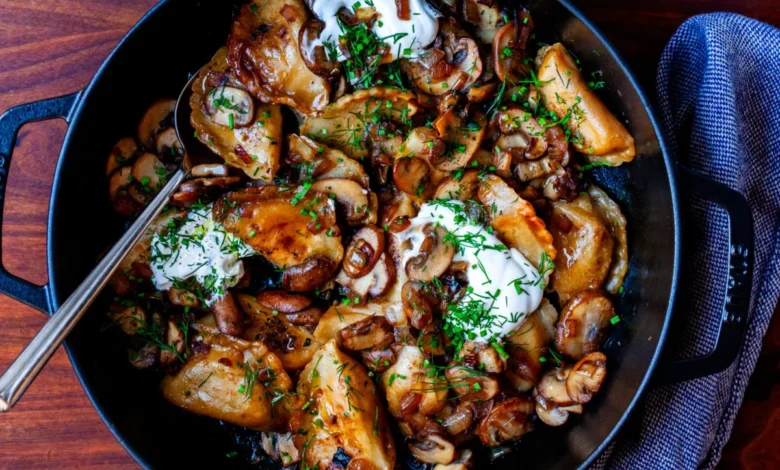
The modern adaptation eliminates the initial boiling phase entirely. By initiating the cooking process with the rapid caramelization of aromatics—specifically onions and garlic—followed by the searing of earthy fungi such as cremini or button mushrooms, the cook establishes a deeply savory flavor base within a single heavy-bottomed skillet. Subsequently, frozen dumplings are introduced directly into the residual fats, achieving a golden exterior crust through direct dry-heat contact. The interior cooking is achieved via a controlled steam-injection method, wherein a precise quantity of water is introduced to the hot pan and immediately sealed with a lid. This technique uses latent thermal energy to hydrate and cook the potato filling thoroughly in under ten minutes.
The resulting dish delivers a textural and sensory profile that rivals multi-vessel preparation: a crisp, golden dough exterior encasing a tender, fluffy potato center, balanced by the umami richness of sautéed mushrooms and onions. The dish is finalized with a calculated acidic counterpoint—typically a dash of white vinegar—alongside cooling dollops of sour cream and a generous garnish of fresh herbs such as dill and chives. Crucially, this entire gastronomic execution requires less than thirty minutes from conception to consumption, utilizes inexpensive, shelf-stable, or frozen ingredients, and restricts post-meal sanitation to a single skillet, a cutting board, and basic cutlery.
Chronology of the One-Pan Trend in Culinary Media
The rise of the single-skillet frozen carbohydrate method is not an isolated phenomenon, but rather the latest iteration in a decade-long evolution of weeknight cooking strategies popularized by prominent culinary writers and recipe developers.

In May 2016, the culinary community observed an early precursor to this methodology with the popularization of crispy tortellini preparations, which combined dry or frozen cheese-filled pasta with fresh peas and cured meats in a single pan using similar moisture-management techniques. This proved that stuffed doughs could be successfully rehydrated and crisped simultaneously without prior boiling.
By October 2019, the technique expanded to include other pre-formed, filled pasta products, notably skillet ravioli paired with leafy greens. These iterative developments established a reliable formula for recipe developers: pairing frozen, mass-market, or accessible convenience items with fresh, high-impact aromatics and acid finishes.
The integration of frozen pierogi into this lineage marks a natural progression, leveraging a traditional cultural staple that has long been valued for its caloric density, affordability, and freezer longevity. The recent formalization of the skillet pierogi method codifies years of practical home-kitchen testing, arriving at a moment when consumers are increasingly seeking out low-waste, low-effort solutions that do not compromise on flavor complexity or dietary satisfaction.
Supporting Data: Economics, Nutrition, and Time Efficiency

An analysis of contemporary domestic food expenditure reveals compelling economic arguments for the adoption of skillet-based convenience-plus-fresh meals. According to recent data from the United States Bureau of Labor Statistics (BLS), the Consumer Price Index for food at home has experienced sustained volatility, prompting consumers to seek budget-friendly proteins and carbohydrates that yield multiple servings with minimal waste.
Commercial frozen pierogi generally retail at a fraction of the cost per serving compared to fresh meat proteins or specialty prepared meals, positioning them as an economically resilient pantry staple. When combined with bulk root vegetables, onions, and seasonally variable mushrooms, the total cost per operational serving remains remarkably low, frequently falling below three dollars per portion.
From a nutritional perspective, the dish balances caloric density with functional micro-nutrients. While the carbohydrate shell and potato filling provide sustained energy, the inclusion of alliums (onions and garlic) introduces bioactive organosulfur compounds associated with cardiovascular and immune health. Furthermore, the finishing additions of fermented dairy (sour cream) and fresh herbs supply probiotics and essential vitamins (such as Vitamin C and K), while the application of a sharp vinegar dressing introduces acetic acid, which studies suggest can assist in modulating postprandial glycemic responses to high-carbohydrate meals.
Time-efficiency metrics further underscore the viability of the method. Traditional scratch-made pierogi or multi-step packaged meals can demand upwards of sixty to ninety minutes of active labor and cleanup time. The single-skillet method reduces active preparation time to approximately 10 to 12 minutes, with passive cooking times accounting for the remainder of the 30-minute threshold. This compression of the culinary timeline is a vital accommodation for dual-income households, students, and caregivers managing intense professional and domestic schedules.

Broader Impact and Culinary Implications
The widespread adoption and media amplification of single-pan techniques signal a broader cultural shift away from culinary dogmatism and toward practical pragmatism. For generations, traditionalists insisted on strict adherence to heritage methodologies—such as the mandatory boiling of pierogi—viewing shortcuts as compromises in quality. However, contemporary food science and culinary experimentation have demonstrated that modern appliances, non-stick or well-seasoned cast-iron cookware, and precise thermal control can yield superior or parallel results through alternative pathways.
This evolution also reflects a growing appreciation for cross-cultural ingredient integration. While pierogi are traditionally rooted in Polish cuisine, and their structural cousin, the vareniki, holds a central place in Ukrainian culinary heritage—often distinguished by a thinner, more delicate dough casing and smaller proportions—their adaptation into rapid, multi-ethnic weeknight repertoires highlights the globalization and flexibility of comfort foods. Home cooks increasingly treat frozen international dumplings not as inferior substitutes for scratch-made versions, but as versatile foundational canvases.
Furthermore, the environmental and household implications of single-pan cooking are notable. In an era of heightened awareness regarding resource conservation, minimizing water usage—by eliminating the large stockpot traditionally required for boiling pasta or dumplings—and reducing dishwashing loads contribute to lower domestic energy and water consumption.

Conclusion
The popularization of skillet-prepared pierogi with mushrooms and caramelized onions transcends a mere seasonal recipe; it serves as a case study in modern culinary efficiency. By successfully challenging traditional preparation dogmas, leveraging affordable and accessible ingredients, and respecting the time constraints of contemporary life, this methodology offers a sustainable blueprint for home cooking. As economic and lifestyle pressures continue to evolve, the integration of smart, single-vessel techniques ensures that comforting, flavorful, and structurally satisfying meals remain accessible to households regardless of their scheduling limitations.