Audi US Tariff Deal and Georgia Plant Turn Multibillion-Dollar Investment Into a High-Stakes Trade Maneuver

The automotive industry is undergoing a profound structural shift, characterized by regional trade realignment, localized manufacturing mandates, and shifting geopolitical landscapes. At the center of this transformation is Volkswagen Group’s luxury subsidiary, Audi, which has initiated a high-stakes strategy to safeguard its commercial viability in the United States. According to comprehensive reports from leading financial and automotive publications, Audi’s planned US$4 billion manufacturing facility in the state of Georgia is deeply intertwined with prospective tariff concessions from the United States government. Rather than functioning solely as a traditional capital expenditure project to expand production capacity, the proposed Georgia plant resembles a sophisticated bilateral trade agreement. Under the rumored terms, Audi is pressing for a significant reduction in import duties levied on its European-built vehicles—dropping the current 15% tariff down to 7.5%. Simultaneously, the U.S. Commerce Department is reportedly preparing a compromise framework that would establish a 10% tariff rate for major automakers committing to substantial domestic manufacturing investments. Crucially, this regulatory relief would take effect immediately, providing Audi with financial respite years before the first vehicle rolls off the assembly line in Georgia.
Main Facts of the Investment and Tariff Concessions
The proposed manufacturing facility in Georgia represents a monumental capital investment aimed at securing Audi’s long-term footing in the lucrative North American luxury market. Upon completion, the plant is projected to boast an annual production capacity of approximately 200,000 units. The operation is expected to generate roughly 4,500 direct manufacturing jobs, serving as an economic boon for the region. Operationally, the facility will focus primarily on assembling high-margin, large-scale sport utility vehicles, specifically the Q7, Q8, and flagship Q9 models.
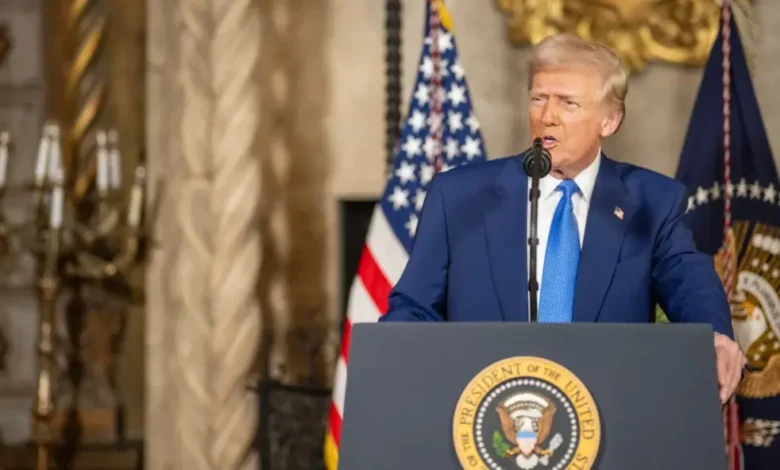
Despite the economic promise of job creation and industrial expansion, the announcement of the project was steeped in political controversy. The initiative was formally unveiled in late October during a high-profile political rally for Donald Trump, with Audi Chief Executive Gernot Doellner in attendance as a special guest. The timing of the announcement—occurring immediately prior to the closely contested U.S. midterm elections—drew sharp criticism from labor unions, industry analysts, and political opponents who questioned the entanglement of corporate industrial strategy with partisan politics.
While Chief Executive Gernot Doellner has repeatedly declined to explicitly confirm whether the capital investment package is legally conditioned upon formal tariff concessions, investigative reporting from prominent financial journals indicates that trade relief was the foundational pillar of the decision-making process. For Audi, the financial calculus driving the Georgia project is rooted in severe margin compression caused by existing border levies.
Chronology and Timeline of Events
The unfolding saga of Audi’s North American expansion and tariff negotiations follows a rapid and politically charged timeline:
- Late October: Audi Chief Executive Gernot Doellner makes a surprise appearance as a special guest at a political campaign rally hosted by Donald Trump, where the US$4 billion Georgia plant is officially announced. The timing sparks immediate backlash regarding its proximity to the U.S. midterm elections.
- November 3: The United States midterm elections take place, highlighting the political administration’s urgency to secure domestic manufacturing commitments and blue-collar job creation.
- November 24: Volkswagen Group and the powerful German trade union IG Metall are scheduled to begin high-stakes formal negotiations regarding the future of domestic German manufacturing sites, amidst company-wide plans to eliminate at least 100,000 jobs.
- Early 2029: The projected expiration of the current presidential administration, raising potential political risks regarding the long-term durability of any executive-negotiated tariff reductions.
- Early 2030s: The anticipated operational window for the Georgia manufacturing plant to reach full capacity, and the concurrent timeline marking the expiration of secure production mandates for several key European manufacturing facilities, such as Audi’s Neckarsulm plant.
Supporting Data and Financial Realities
To fully understand why Audi has pursued such an aggressive and politically delicate maneuver, one must examine the macroeconomic pressures facing the brand in the North American marketplace. Historically, Audi has occupied a unique position within the Volkswagen Group ecosystem. With the exception of its sister brand Porsche, Audi stands as the sole major German luxury manufacturer lacking localized production facilities within the United States. Consequently, the brand has been forced to import every single vehicle it sells in the U.S. market directly from manufacturing hubs across Europe and Mexico.
The financial burden of this reliance on foreign manufacturing has grown increasingly unsustainable. Throughout the previous fiscal year, Audi absorbed staggering expenditures of approximately €1.2 billion (equivalent to roughly US$1.4 billion) in direct costs stemming from tariffs applied to finished vehicles, automotive components, raw steel, and aluminum. While these figures were partially exacerbated by peak tariff rates reaching up to 25% under specific trade policy implementations, the financial strain has persisted. Even under the subsequently revised 15% tariff rate, traditional price increases implemented at the dealership level have proven insufficient to cover the escalating duty costs. As a result, Audi’s core U.S. business division slipped into unprofitability, making structural relief an existential necessity for the brand’s North American division.
The proposed mechanism under discussion in Washington mirrors successful reshoring incentives utilized in other capital-intensive sectors. By establishing a direct link between domestic capital expenditure and reduced import duties, the framework rewards automakers that commit to building localized supply chains. Currently, automotive assemblers operating within the U.S. already receive specific offsets against tariffs applied to imported components. Expanding this logic to lower the tariff on fully assembled European vehicles from 15% to 10% would effectively reduce Audi’s cumulative duty burden by one-third during the prolonged multi-year window required to construct, outfit, and scale the Georgia manufacturing campus.
Contrasting Strategies Within the Volkswagen Group
The strategic pivot executed by Audi stands in stark contrast to the approach adopted by its corporate sibling, Porsche. While Audi has chosen to embrace localized U.S. manufacturing to escape the crushing weight of import tariffs, Porsche leadership has categorically rejected the establishment of an American production footprint.
Jochen Breckner, Chief Financial Officer of Porsche, firmly ruled out the construction of a dedicated U.S. factory. Breckner articulated that Porsche’s lower overall production volumes cannot economically justify the immense capital expenditure required to build and operate a standalone manufacturing plant overseas. Furthermore, Porsche’s high-performance sports cars rely heavily on a deeply integrated, specialized European supplier network that cannot be easily replicated abroad.
Beyond purely logistical and financial calculations, brand identity plays a decisive role in Porsche’s calculus. The marque’s entire marketing language, heritage, and consumer appeal are inextricably linked to its status as an exclusively "Made in Germany" manufacturer. Conversely, Audi’s product portfolio is anchored by high-volume utility vehicles—specifically the Q7, Q8, and Q9 SUVs—which achieve sales volumes large enough to render a North American production footprint economically viable. However, this commercial viability is entirely dependent on securing interim tariff relief to bridge the financial gap between the present day and the opening of the Georgia facility.
Official Responses and Labor Dynamics
While the prospective trade deal offers a lifeline to Audi’s financial ledger, it simultaneously introduces severe complications on the domestic front in Germany. The multibillion-dollar investment proposal cannot proceed without formal authorization and approval from Volkswagen’s powerful supervisory board. Within this governing body, labor representatives hold exactly half of the seats, granting trade unions immense leverage over corporate strategy.
Christiane Benner, leader of the influential German industrial union IG Metall, has adopted a firm stance, demanding absolute guarantees and job security for domestic German manufacturing sites as a mandatory prerequisite for approving foreign investments. These demands carry immense urgency, as Volkswagen is currently navigating a sweeping restructuring plan that involves cutting at least 100,000 jobs globally. Domestically, Audi’s historic plant in Neckarsulm currently lacks secure production allocations beyond the early 2030s. This vulnerability places it alongside other at-risk facilities in Emden, Zwickau, and Hanover, making any announcement of massive capital flight to the United States an exceptionally difficult sell to domestic stakeholders and union representatives.
Broader Impact and Strategic Implications
The intersection of trade policy, corporate investment, and labor politics creates a complex web of consequences for the broader automotive sector. If the U.S. Commerce Department formally codifies either the 7.5% or 10% tariff rate, the immediate financial beneficiaries will not be the future workers in Georgia, but rather the existing European manufacturing plants. German facilities currently exporting the Q7, Q8, and other premium models across the Atlantic will benefit from substantially reduced duty rates. In essence, the commitment to build the Georgia plant acts as financial leverage, effectively purchasing lower tariff rates for European-built vehicles throughout the early 2030s.
This arrangement provides Audi Chief Executive Gernot Doellner with a much stronger, empirically grounded economic argument to present to the Volkswagen supervisory board than a mere political alignment at a campaign rally would ever afford. By securing guaranteed import relief, Doellner can demonstrate to skeptical labor leaders that the North American expansion directly protects European export volumes and stabilizes short-term revenues during a period of painful domestic restructuring.
Nevertheless, this high-stakes strategy carries profound political risks. The Georgia manufacturing facility is slated to become operational well after the current U.S. presidential administration concludes its term in early 2029. Consequently, any executive-negotiated tariff reduction—particularly a steep drop to 7.5%—remains vulnerable to regulatory reversal or political reprisal by a successor administration.
Conversely, Audi’s financial capital expenditure in Georgia will be permanent and irreversible. As political negotiations intensify ahead of the November 3 midterm elections, the current administration’s eagerness to project strength in American manufacturing provides a fleeting window of opportunity. Ultimately, whether this multibillion-dollar gamble succeeds in revitalizing Audi’s American profitability while simultaneously appeasing restless European labor unions depends entirely on whether Washington formalizes the promised tariff relief before the Volkswagen supervisory board casts its decisive vote.