Ancient Maya Civilization Likely Suffered Widespread Environmental Mercury Poisoning Due to Heavy Reliance on Cinnabar Pigments

The collapse of the classic Maya civilization has long been a subject of intense archaeological scrutiny, with theories ranging from prolonged drought and deforestation to socio-political instability and endemic warfare. However, recent geochemical evidence suggests an insidious and previously overlooked contributor to the decline of major urban centers: chronic mercury poisoning. A groundbreaking study reveals that the Maya’s pervasive use of cinnabar—a brilliant red mercury-sulfide mineral—led to the unintentional contamination of their reservoirs and urban waterways, potentially creating a long-term public health crisis that permeated the food chain.
The Chemical Catalyst: Cinnabar and the Maya Aesthetic
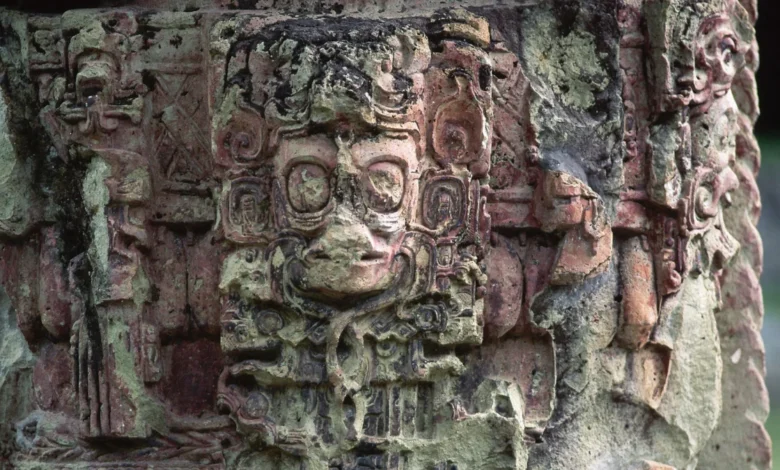
To the ancient Maya, the color red held profound symbolic and ritualistic significance. It was the hue of blood, life, and the rising sun, and was inextricably linked to their religious cosmologies. To achieve this vibrant aesthetic, the Maya utilized cinnabar, a naturally occurring mineral composed of mercury sulfide (HgS). While the substance was prized for its utility in painting ceramics, murals, and burial offerings, its chemical properties rendered it a potent environmental hazard.
When cinnabar is applied to surfaces exposed to the elements—such as the facades of temples, residential walls, or open-air plazas—it becomes susceptible to weathering. Rainwater runoff carries pulverized cinnabar particles into the city’s drainage systems and, ultimately, into the reservoirs (aguadas) that served as the primary water source for dense urban populations.
Once these mercury-laden sediments settle into the anaerobic, oxygen-deprived depths of lake beds, a dangerous transformation occurs. Naturally occurring anaerobic bacteria act upon the mercury, facilitating a process known as methylation. This biochemical reaction converts relatively stable mercury sulfide into methylmercury, a highly neurotoxic organic compound. Methylmercury is particularly dangerous because it is bioaccumulative; it absorbs into the tissues of aquatic life, increasing in concentration as it moves up the food chain from plankton to small fish, and eventually to the humans who consumed them.
Chronological Evidence and Urban Accumulation
The investigation into mercury contamination focused on several major Maya sites, including the prominent city of Tikal in modern-day Guatemala. Researchers analyzing soil and sediment samples from the Late Classic period (roughly 600 to 900 CE) discovered mercury concentrations that significantly exceeded natural geological background levels.
The timeline of this contamination appears to correlate with the peak of Maya urbanization. As populations swelled, the demand for cinnabar for architectural decoration, ceremonial masks, and funerary rites increased exponentially. By the mid-to-late 8th century, the accumulation of mercury in the local reservoirs had reached levels that would have been detrimental to human health.
Archaeologists note that in the final phases of Tikal’s habitation, the concentration of mercury in the city’s central reservoir, the Palacio Aguada, was exceptionally high. This suggests that the inhabitants were inadvertently drinking water tainted with toxic levels of methylmercury during the very period that the civilization began to fracture and abandon its urban centers. While mercury poisoning alone is unlikely to have been the sole cause of the Maya collapse, it almost certainly acted as a severe physiological stressor, weakening the population’s resilience against other environmental and societal pressures.
Supporting Data and Geochemical Analysis
The study, published in the journal Frontiers in Environmental Science, utilized geochemical signatures to differentiate between natural mercury sources and those introduced by human activity. By analyzing the mercury-to-organic matter ratios in the sediment cores, researchers established a clear link between the intensity of urban habitation and the presence of heavy metals.
Data from the Tikal excavations show mercury levels in the reservoir sediments reaching as high as 1.71 parts per million (ppm). For context, the threshold for mercury contamination in lake sediments that is considered toxic to aquatic life is significantly lower, and the potential for biomagnification suggests that the levels in the fish and waterfowl consumed by the Maya would have been substantially higher.
Furthermore, the study indicates that this was not an isolated incident confined to Tikal. Similar patterns were detected at other sites across the Maya lowlands, including Caracol in Belize and Palenque in Mexico. The ubiquitous nature of this contamination suggests that the use of cinnabar was a systemic cultural practice rather than a local anomaly, indicating that the health implications were widespread across the Maya heartland.
Official Perspectives and Expert Reactions
While the findings are relatively recent, they have sparked a dialogue among paleo-toxicologists and Mayanists. Dr. Duncan Cook, a lead researcher on the study, noted that the Maya were essentially victims of their own artistic and spiritual success. "The Maya didn’t have a concept of ‘toxicology’ as we understand it today," experts suggest. "To them, cinnabar was a divine substance. They could not have foreseen that the beauty of their red-painted temples would eventually turn their water sources into a toxic liability."
Other archaeological experts have reacted with caution, emphasizing that while the geochemical evidence is incontrovertible, the direct impact on human mortality remains a subject of ongoing research. Chronic methylmercury poisoning is known to cause neurological impairment, developmental disorders in children, and immune system suppression. If a large segment of the population were suffering from these symptoms, it would have undoubtedly hampered the ability of the Maya leadership to respond to the cascading failures of their agricultural systems and the onset of sustained droughts.
Broader Implications and Historical Lessons
The discovery of widespread mercury contamination among the Maya serves as a sobering reminder of the long-term ecological consequences of industrial-scale human activity. The Maya were highly sophisticated engineers, but they were also a society that interacted intensely with their local environment. Their reliance on cinnabar serves as a proxy for the unintended consequences that arise when a society’s technological or aesthetic practices outpace its understanding of environmental chemistry.
This study invites a re-evaluation of the "collapse" narrative. Instead of viewing the Maya decline as a sudden event, researchers are increasingly looking at it as a slow-motion degradation caused by multiple, compounding stressors. Mercury poisoning fits into this framework as a chronic factor that lowered the threshold for catastrophe. When the Maya faced the climate-driven food shortages of the 9th century, the existing public health burden of mercury-induced cognitive and physical decline likely exacerbated the breakdown of social order, labor efficiency, and collective decision-making.
Furthermore, this research has implications for modern archaeology and environmental science. It demonstrates the utility of geochemical fingerprinting in uncovering the "invisible" history of ancient civilizations. By looking for the chemical residues of past human actions, scientists can now reconstruct the environmental health status of populations that left no written records of their ailments.
Conclusion
The tragedy of the Maya was not merely one of climate change or warfare; it was also a story of ecological mismanagement that left a toxic legacy in the earth itself. The vivid red paint that adorned their monumental architecture may have been a symbol of power and divinity, but the mercury it carried acted as a silent, invisible poison. As researchers continue to analyze the sediment cores from the Maya lowlands, the narrative of this ancient civilization becomes increasingly nuanced, revealing a society that was profoundly shaped by its environment—and ultimately, perhaps, undone by the very substances it held most sacred. The study of Maya mercury contamination provides a unique, evidence-based window into the vulnerabilities of complex societies, offering a timeless lesson on the necessity of environmental awareness in the pursuit of cultural development.