Beyond Quantum Biology: How Classical Networks Mimic the Subatomic World Through Mathematics


For nearly a century, the intersection of biology and quantum mechanics has captivated researchers seeking to explain how living systems achieve feats that seemingly defy classical physics. From the near-perfect light-harvesting efficiency of photosynthesis to the speculative mechanics of human consciousness and avian navigation, scientists have frequently hypothesized that nature harnesses the strange, counterintuitive properties of the subatomic realm. However, persistent physical hurdles—most notably thermal noise and rapid environmental decoherence inside warm, wet living cells—have continually challenged these theories. A growing body of scientific inquiry now suggests that the true connection between biology and quantum mechanics does not lie in subatomic physics at all, but rather in shared mathematical structures. Recent theoretical breakthroughs demonstrate that complex networks of classical objects can naturally conspire to produce emergent behaviors that mathematically mimic quantum phenomena, offering a paradigm shift in how researchers understand the living world.
The Allure and Obstacles of Quantum Biology
The temptation to attribute life’s most complex biological mysteries to quantum mechanics dates back to the very inception of quantum theory. In a 1929 lecture, quantum pioneer Niels Bohr famously suggested that quantum mechanics might hold decisive importance in understanding the position of living organisms within the physical world. Shortly thereafter, contemporaries such as Pascual Jordan and geneticist J.B.S. Haldane expanded on these ideas through the lens of Quantenbiologie, arguing that living systems possess a unique capacity to amplify quantum indeterminacy from the microscopic domain to macroscopic scales. Jordan, however, severely damaged the credibility of the nascent field by attempting to politically align these theories with Nazi ideology during the 1930s.
Despite these controversial beginnings, the core scientific inquiry persisted into the modern era, fueled by fundamental differences between classical and quantum descriptions of reality. In classical physics, a particle exists in a single, well-defined state and location at any given time. Conversely, a quantum particle is described by a wave function, existing as a "smear" of probabilities across multiple potential configurations simultaneously—a condition known as superposition. When multiple quantum states maintain precise phase relationships, they exhibit coherence, and they can become entangled, effectively merging into a unified system with a shared wave function.
The fundamental challenge for quantum biology has always been the environment of the cell. Quantum states are notoriously fragile; exposure to environmental noise, such as the thermal jiggle of ambient heat, triggers rapid decoherence, forcing systems to collapse into predictable classical behavior. Inside the warm, watery interior of a living cell, decoherence was long assumed to occur far too quickly for quantum effects to play any functional role. While atomic-scale phenomena like quantum tunneling—where particles pass through energetic barriers rather than over them—do occur in certain biological enzymes to accelerate reaction rates, this fleeting, unavoidable tunneling lacks the long-lived coherence required to serve as an active biological resource.
A Brief Chronology of Light-Harvesting and Disillusionment
The most prominent testbed for quantum biology emerged in the study of photosynthesis. In photosynthetic organisms, specialized pigment-protein complexes absorb incoming photons, generating quasiparticles known as excitons that travel to reaction centers to be converted into chemical energy with nearly 100% efficiency. For decades, scientists hypothesized that excitons might maintain quantum coherence across multiple molecules, allowing them to simultaneously test multiple pathways toward the reaction center rather than navigating randomly.
In 2007, this hypothesis gained substantial traction when biophysicist Graham Fleming of the University of California, Berkeley, alongside Princeton chemist Gregory Scholes and other research teams, published experimental findings. Using ultra-fast laser pulses on light-harvesting complexes extracted from photosynthetic bacteria, researchers observed synchronized oscillations, or "beats," even at room temperature. At the time, these beats were interpreted as definitive evidence of long-lived quantum coherence operating within a biological environment.
The momentum, however, proved short-lived. Upon deeper examination and rigorous follow-up experimentation, scientists discovered that the observed beats did not reflect quantum coherence at all. Instead, they were the result of resonance between wiggling molecular bonds within the physical structure of the proteins. While this molecular resonance represented an interesting biophysical mechanism in its own right, it was entirely classical in nature and lacked long-range quantum persistence. This revelation caused widespread disappointment within the scientific community, prompting leading researchers to reassess the viability of scaling up quantum effects inside biological systems.
The Rise of Quantumlike States in Classical Networks
Faced with the limitations of physical quantum states in biology, Gregory Scholes and other theorists began exploring an alternative hypothesis: that life has spent billions of years evolving mechanisms to achieve the functional advantages of quantum systems using entirely classical means. Rather than executing genuine quantum mechanics, biological systems may be mathematically mimicking them.
This perspective is rooted in linear algebra and vector spaces. When the physics are stripped away from a quantum state, the remaining mathematical object is a vector—an ordered list of numbers that acts as coordinates within a mathematical construct known as a Hilbert space. Vectors in Hilbert space adhere to strict rules, including the principle that any two states can be added together to yield a valid new state, which mathematically mirrors superposition. Furthermore, phase relationships within these vectors dictate whether states constructively interfere (add up) or destructively interfere (cancel out).
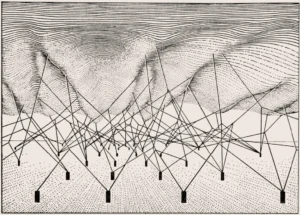
Mathematician Andrei Khrennikov pioneered the application of quantum probability mathematics to classical fields such as neuroscience and economics during the 1990s, demonstrating that probabilistic outcomes in macro-scale systems can interfere with one another analogously to quantum states. Building on this foundation, Scholes and contemporary researchers published findings showing that complex networks of classical oscillators—such as interconnected biological cells, electrical circuits, or mechanical pendulums—can generate emergent collective states. When interacting parts synchronize properly, their collective behavior can be described mathematically by vectors within a Hilbert space, effectively mimicking foundational quantum units like qubits and logic gates.
Implications for Neuroscience and Artificial Systems
The realization that classical networks can produce quantumlike mathematics has broad implications across multiple scientific disciplines, particularly in neuroscience. For decades, minority factions of researchers—notably inspired by physicist Roger Penrose’s 1989 proposals—have argued that human consciousness originates from quantum processing within neuronal microtubules. Mainstream neuroscientists have largely dismissed these claims due to the absence of physical evidence for subatomic coherence in the brain.
However, the framework of quantumlike modeling offers a credible middle ground. In recent studies, neurophysiologists such as Wolf Singer of the Ernst Strüngmann Institute have demonstrated that introducing specific oscillations into simple neural networks significantly enhances their efficiency and robustness. By utilizing phase relationships to encode temporal information, classical neural architectures can exploit mathematical properties traditionally reserved for quantum physics without requiring actual subatomic phenomena.
Beyond biology, the engineering of quantumlike states provides a conceptual blueprint for designing advanced classical computing architectures, electrical circuits, and machine learning algorithms. Computer scientists like Ethan Dickey and Sabre Kais at North Carolina State University note that these models possess strong potential for practical applications in complex system simulation and quantum machine learning. Nevertheless, practical constraints remain; scaling up these classical networks to perfectly mimic complex quantum logic gates requires immense physical resources, highlighting the strict computational boundaries of the classical world.
The Broader Scientific Impact
The shift toward viewing quantum biology through the lens of mathematics rather than physics resolves long-standing debates regarding the limits of life. While strict physicalists and quantum physicists caution against conflating the mathematical description of waves with subatomic reality, the utility of the framework remains undeniable. As researchers continue to map the exact boundaries where classical networks successfully simulate quantum math, the scientific community is gaining powerful analytical tools to reevaluate contentious biological claims—from avian magnetoreception to cognitive function.
Ultimately, even if living organisms prove devoid of active subatomic quantum machinery, the deep structural parallels between the simplest quantum states and the sprawling, complex networks of the living world reveal a profound underlying unity. Nature, it appears, does not need to master quantum physics to wield its mathematics, utilizing millions of years of evolution to achieve quantumlike functionality through classical means.