World Grand Prix: Gerwyn Price books all-Welsh quarter-final with Jonny Clayton as Nathan Aspinall breezes through


The atmosphere at the Mattioli Arena in Leicester reached a fever pitch as the World Grand Prix—a unique tournament known for its "double-in, double-out" format—progressed into the business end of the competition. The second round provided a stark reminder of the volatility inherent in this format, where players must begin and end every leg on a double. With major seeds and fan favorites under immense pressure, the path to the trophy has narrowed significantly, setting the stage for a dramatic conclusion to the week.
The Iceman Cometh: Price Cruises into the Last Eight
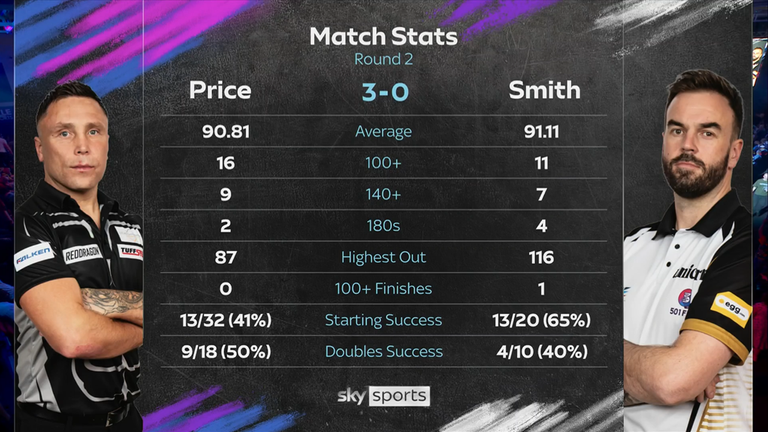
Gerwyn Price, the 2020 World Grand Prix champion, solidified his status as the tournament favorite following the dramatic first-round exit of teenage sensation Luke Littler. Facing the heavy-scoring Ross Smith, Price demonstrated the clinical precision that has defined his career. Despite being outscored in terms of sheer power-scoring—a testament to Smith’s ability to hit the treble 20 bed—Price’s tactical superiority on the outer ring allowed him to dictate the tempo of the match.
The match concluded in a 3-0 straight-sets victory for the former world number one, who dropped only four legs throughout the entire contest. While Price admitted post-match that the encounter was not a display of his peak performance, his ability to grind out wins while "not playing brilliant" is a hallmark of a champion. He acknowledged that the middle segments of the game were somewhat "rubbish," yet his timely checkouts, including an 86-finish in the second set and a steady hand on double 18 to close the match, proved decisive.

A Welsh Derby of Significant Proportions
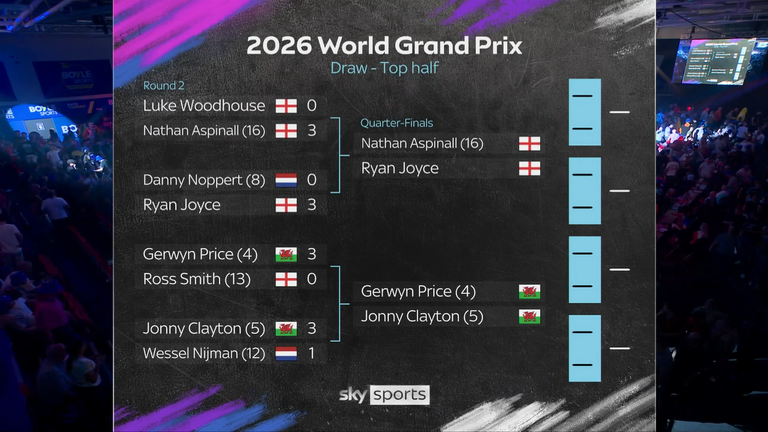
The victory sets up a tantalizing quarter-final collision between Price and his World Cup of Darts partner, Jonny Clayton. This match carries significant weight beyond the bracket; it is a battle between two of the most recognizable figures in Welsh darts. Price, characteristically bullish, noted that the pressure lies squarely on Clayton, who is currently chasing a vital spot in the upcoming Grand Slam of Darts.
"I know he is chasing a Grand Slam spot, so the pressure is on him," Price said. The narrative of the match is further complicated by their long-standing personal and professional relationship. Both men are intimately familiar with each other’s games, having shared a stage as teammates representing Wales on the international circuit. Fans can expect a high-stakes encounter where psychological fortitude will be just as important as technical accuracy.
Jonny Clayton’s Bullseye Brilliance
Jonny "The Ferret" Clayton’s journey to the quarter-finals was marked by a breathtaking display of finishing. His 3-1 victory over the 12th-seeded Wessel Nijman was highlighted by an extraordinary opening set, during which Clayton landed three consecutive ton-plus checkouts. His ability to hit the bullseye under immense pressure was a standout feature, particularly when he sealed the first set with a 125-checkout on the bull.
Throughout the match, Clayton’s scoring was robust, bolstered by eight maximums. However, it was his tactical awareness that truly separated him from his opponent. Even when Nijman attempted a comeback by taking the second set in a final-leg decider, Clayton responded with a 126-checkout to reclaim momentum. His post-match demeanor—characterized by a broad smile—suggests that the Welshman is finding his rhythm at the perfect time. Having reached the quarter-finals for the third consecutive year, Clayton is clearly comfortable within the confines of the Leicester venue.
Nathan Aspinall: The Asp is Back in Business
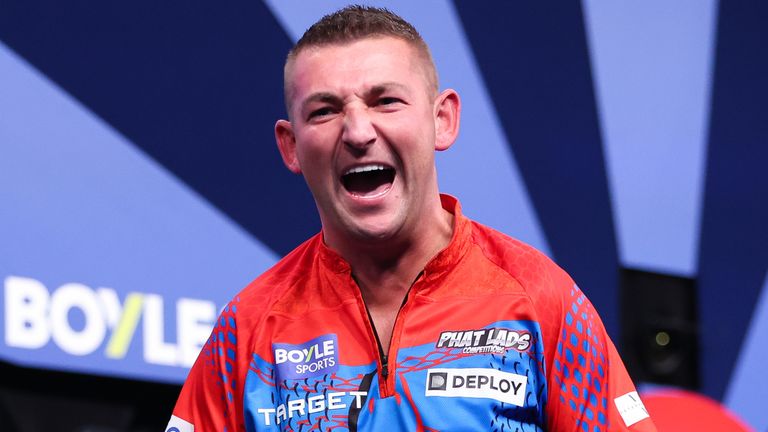
Nathan Aspinall’s dominant 3-0 victory over Luke Woodhouse signaled a return to form for the former World Matchplay champion. Woodhouse had arrived at the match with significant momentum, having eliminated Luke Littler in the opening round, but he found no such joy against a focused Aspinall.
Aspinall’s performance was statistically impressive, featuring an average of 96.27 and eight 180s. The clinical nature of his win was highlighted by a 135-finish to break throw, followed by a 104-checkout to extend his lead. Aspinall, who has been vocal about his desire to reclaim his spot at the top of the rankings, emphasized his ability to handle pressure as a key component of his current campaign. "As long as I can handle the pressure, which I think I have shown in these two games in the key moments, I am going to be tough to beat this week," Aspinall stated. His path to the final remains treacherous, but his current form suggests he is a legitimate contender for the title.
Ryan Joyce’s Quiet Dominance
Rounding out the list of winners, Ryan Joyce produced a professional and efficient performance to dispatch Danny Noppert in straight sets. While the scoreline was one-sided, the match was not without its own brand of drama, as Noppert appeared visibly frustrated by the playing conditions, specifically citing issues with the stage floorboards.
Joyce, however, remained unaffected by the external circumstances, focusing solely on his targets. His progression to the quarter-finals confirms his status as one of the most consistent players on the tour. Having reached the semi-finals of this tournament in 2024, Joyce possesses the experience and composure required to navigate the unique challenges of the World Grand Prix. He now prepares for a high-stakes showdown against Aspinall.
The Format: Why the World Grand Prix Remains Unique
The World Grand Prix is often regarded as the most difficult tournament in the PDC calendar for a reason. The "double-in" requirement forces players to change their traditional rhythm. Many players who are capable of hitting high averages in standard "straight-in" formats struggle to find their groove when they cannot even begin a leg until they hit a double.
This format inevitably leads to higher variance in outcomes. Established stars often find themselves trailing early because of a poor start on the doubles, allowing lower-ranked players to pull off upsets. The fact that the tournament is played in sets rather than legs further compresses the pressure; a single lapse in concentration can lead to the loss of a set, significantly altering the trajectory of the match.
Looking Ahead: Tactical Implications
As the tournament moves into the quarter-final stage, the focus shifts to recovery and preparation. For players like Price and Clayton, the emotional toll of playing a friend and teammate can be taxing. For Aspinall and Joyce, the match represents a battle for consistency and the opportunity to secure a top-four finish in the tournament.
The data from the second round suggests that scoring power is less important than "doubles-in" efficiency. Players who can maintain a high percentage on their opening doubles are consistently finding themselves in the later stages. With the competition narrowing, the margin for error has vanished. The players who can maintain their composure under the harsh glare of the Leicester spotlights will be the ones standing on the podium on Sunday.
Tournament Chronology and Future Fixtures
The World Grand Prix continues its intense schedule, with the quarter-finals serving as the bridge to the weekend’s semi-finals and final. As the field thins, the intensity of the competition will undoubtedly increase. Fans and pundits alike are looking closely at how the remaining players handle the transition from the relatively "comfortable" second round to the intense pressure of the quarter-final format.
With the likes of Price, Clayton, Aspinall, and Joyce all demonstrating strong form, the remainder of the week promises to deliver some of the highest-quality darts of the season. Coverage continues on Sky Sports Main Event and Sky Sports+, providing fans with comprehensive access to every dart thrown in the quest for the prestigious World Grand Prix trophy. As the event heads into its final stages, the narrative remains clear: this is a tournament where reputations count for little, and the ability to perform under the most restrictive conditions reigns supreme.
Related posts: