The Great Streaming Price Hike of 2026: A Comprehensive Guide to Current Subscription Costs, Tiers, and Bundles

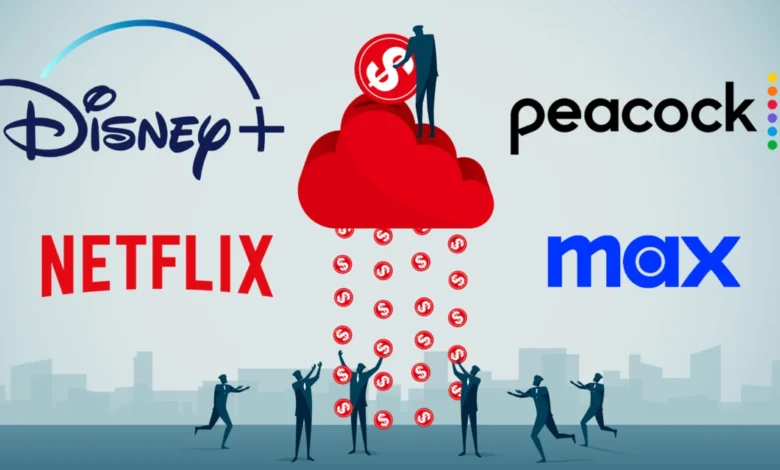
The landscape of home entertainment has shifted dramatically from the early days of budget-friendly streaming. What once promised a cheap, commercial-free alternative to traditional cable television has steadily morphed into a complex ecosystem mirroring the rising costs of the broader economy. Driven by macroeconomic inflation, mounting pressure from Wall Street to achieve profitability, and heavy investments in live sports and high-end original content, major streaming platforms have systematically raised their prices across the board.
The most recent wave of rate increases—highlighted by summer hikes from platforms like Peacock and Apple TV, alongside comprehensive price adjustments by Netflix, Disney+, Max, and Amazon Prime Video—has left consumers navigating a maze of fluctuating monthly fees, tiered ad models, password-sharing crackdowns, and intricate cross-platform bundles.
The Macroeconomic Context and the Death of Cheap Streaming
The era of the $7 ad-free subscription is a distant memory. According to comprehensive industry research from firm Antenna, average prices for both ad-supported and ad-free streaming tiers have climbed by more than 20% since 2023. This upward trajectory tracks closely with decades-high inflationary pressures that have driven up the costs of everyday necessities such as groceries and fuel.
For years, media companies absorbed billions of dollars in operational losses to capture subscriber market share, treating streaming as a high-stakes land grab. However, as Wall Street’s patience wore thin, profitability became the primary mandate. Executives pivoted toward aggressive monetization strategies. This shift manifested not only in higher monthly fees but also in the widespread rollout of ad-supported tiers designed to capture budget-conscious viewers while generating lucrative advertising revenue, alongside strict crackdowns on password sharing pioneered by Netflix and subsequently adopted by competitors like Max and Disney+.
Consequently, managing household entertainment budgets has become exceedingly difficult. With most providers now splitting their services into basic ad-supported plans, standard ad-free tiers, and expensive 4K or premium options, consumers must carefully evaluate whether individual subscriptions or consolidated bundles offer the best value.
Breakdown of Major Streaming Platforms and Current Pricing
Netflix
As the pioneer of modern streaming, Netflix continues to set the operational tone for the industry. Following a series of strategic price adjustments, Netflix raised pricing across all domestic subscription tiers at the end of March 2026. The Standard with Ads tier now sits at $8.99 a month, reflecting a $1 increase. The mainstream Standard tier jumped by $2 to $19.99 per month, while the top-tier Premium plan climbed by $2 to $26.99 monthly.
Wall Street has consistently cheered these pricing strategies, which have successfully pushed users toward the cheaper ad-supported tier—a segment executives have deliberately kept below half the cost of ad-free options. Alongside its traditional library of tentpole hits like Stranger Things, Squid Game, and Bridgerton, Netflix has bolstered its value proposition by acquiring major live sports and events programming, including WWE Raw and NFL games.
Apple TV
Apple TV has seen some of the steepest percentage increases since its market debut on November 1, 2019, when it launched at a modest $4.99 per month. Initially priced low to reflect a sparse library and a lack of traditional studio backing, the service has steadily matured into a prestige player boasting acclaimed original series such as Severance, Ted Lasso, and Silo.
Following a rebrand in October that dropped the plus sign from its moniker, Apple TV implemented a significant rate hike at the end of August 2026, pushing its monthly rate to $14.99 and its annual subscription to $119 per year (up from $99). This follows a previous hike to $12.99 in August 2025 and $9.99 in October 2023. Despite the rising prices, Apple continues to utilize promotional windows—such as free trial weekends and discounted introductory rates surrounding major seasonal releases—to attract new subscribers, even as industry reports suggest the tech giant incurs substantial annual losses on its streaming division.
Disney+ and Hulu
The Walt Disney Company has executed four consecutive years of price increases across its direct-to-consumer ecosystem. Disney+ with ads now costs $11.99 monthly following an October 2025 price hike, while the ad-free tier stands at $18.99 per month (or $189.99 annually). Additional member fees for households sharing accounts are set at $6.99 for standard tiers and $9.99 for premium tiers.
Standalone Hulu mirrors Disney+ pricing, with its ad-supported tier priced at $11.99 monthly (or $119.99 annually) and its ad-free counterpart at $18.99 per month. Disney also leverages flexible bundling, offering combinations of Disney+, Hulu, and ESPN+ starting at $21.99 per month for ad-supported packages and reaching $32.99 for premium ad-free combinations. Furthermore, in early 2025, Disney restructured its live television footprint by combining Hulu + Live TV with Fubo, acquiring a majority stake in the merged entity to settle ongoing litigation over the defunct Venu Sports joint venture.
Max (formerly HBO Max)
Warner Bros. Discovery has navigated multiple branding iterations, dropping the "HBO" prefix in 2023 before officially restoring it to the "Max" banner in the summer of 2025. Following this rebrand, the service increased its Basic with Ads subscription to $10.99 per month, while its Standard (no ads) and Premium (no ads) tiers rose to $18.49 and $22.99 per month, respectively. Annual options are priced at $109.99 for basic, $184.99 for standard, and $229.99 for premium.
To combat revenue loss, Max followed Netflix’s lead in April 2025 by launching a $7.99 monthly "extra member add-on" profile to crack down on out-of-household password sharing. Meanwhile, industry leadership continues to explore broader consolidation opportunities, with executives noting that potential future combinations—such as a merger between Paramount+ and Max—could create a more formidable unified rival to Netflix.
Paramount+
Paramount+ maintains two primary subscription tiers for domestic consumers. The ad-supported Paramount+ Essential plan is priced at $8.99 per month, while the Paramount+ Premium plan costs $13.99 per month. In a strategic consolidation of the company’s digital footprint, Paramount has also moved to fold niche offshoots like BET+ directly into the core Paramount+ platform. The service continues to explore broader strategic options, including potential mergers, joint ventures, or content licensing deals, as parent company transformations unfold.
Peacock
NBCUniversal’s Peacock has undergone significant structural evolution since its launch, notably phasing out its original free tier in favor of a subscription-only model. As of August 18, 2026, Peacock implemented a sweeping price increase across its portfolio. The Peacock Select monthly plan rose to $8.99, the Premium tier increased to $12.99, and the ad-free Premium Plus tier climbed to $19.99 per month. Annual subscriptions saw corresponding adjustments, with Select moving to $89.99, Premium to $129.99, and Premium Plus to $199.99.
Peacock has sought to differentiate its service by integrating cutting-edge features, such as vertical live sports broadcasts, casual gaming titles, and AI-driven interactive elements, alongside its core entertainment offerings from NBC and Bravo.
Prime Video and Amazon Channels
Amazon offers Prime Video as a standalone subscription for $8.99 per month, though full Amazon Prime memberships cost $14.99 monthly or $139 annually, bundling video access with expedited shipping, retail discounts, and grocery perks. Student memberships are available at a reduced rate of $7.49 monthly or $69 annually.
In March 2026, Amazon rebranded its commercial-free tier as Prime Video Ultra, increasing the optional surcharge to bypass ads from $2.99 to $4.99 per month. Beyond its native content, Amazon continues to expand its digital storefront, serving as a major aggregator through Prime Video Channels. This includes offering premium add-on subscriptions like Apple TV+ (priced at $9.99 monthly in the U.S., with localized international rates) and Paramount+, allowing users to centralize multiple streaming services under a single billing umbrella.
Starz and Cable Networks
STARZ remains a distinct player in the market, priced at $11.99 per month following previous gradual increases. To maintain subscriber acquisition in a competitive climate, STARZ frequently deploys aggressive introductory promotions, such as discounted monthly tiers and pre-paid annual plans priced at $29.99.
The Rise of Aggregators, Channel Stores, and Bundles
As consumer fatigue over managing multiple isolated subscriptions has grown, the industry has leaned heavily into bundling and cross-platform partnerships. Traditional aggregators like Roku and Apple TV have expanded their channel stores to include standalone subscriptions for third-party services—such as adding Apple TV and Peacock to Roku’s premium ecosystem.
Simultaneously, telecommunications and media giants have introduced creative multi-service packages. Comcast’s StreamSaver bundle, launched for Xfinity broadband customers, successfully combines Apple TV, Netflix’s ad-supported tier, and Peacock for a flat rate of $15 a month. Similarly, content competitors have forged direct alliances, such as the mid-October partnership between Apple TV and NBCUniversal that introduced a joint streaming bundle starting at $14.99 a month, offering subscribers a 30% savings compared to purchasing the ad-free Apple TV and ad-supported Peacock services separately.
Financial and Consumer Implications
The relentless wave of price hikes, tier restructuring, and anti-password-sharing measures signals a maturing streaming industry that is no longer subsidized by venture capital or corporate parent cash reserves. For consumers, the modern streaming marketplace increasingly mirrors the old cable bundles it set out to disrupt, requiring careful financial management to avoid runaway monthly expenses.
While platforms argue that higher prices are necessary to fund prestige storytelling, technological innovation, and live sports rights, subscribers are forced to become more tactical—cycling through services, leaning into ad-supported tiers, or utilizing strategic bundles to keep entertainment costs manageable. As profitability remains the north star for media conglomerates, the era of constant pricing adjustments is expected to continue shaping the future of digital home entertainment.