Tracing the Echoes of Loss: How Kate Beaton Found a Path Through Grief and Legacy

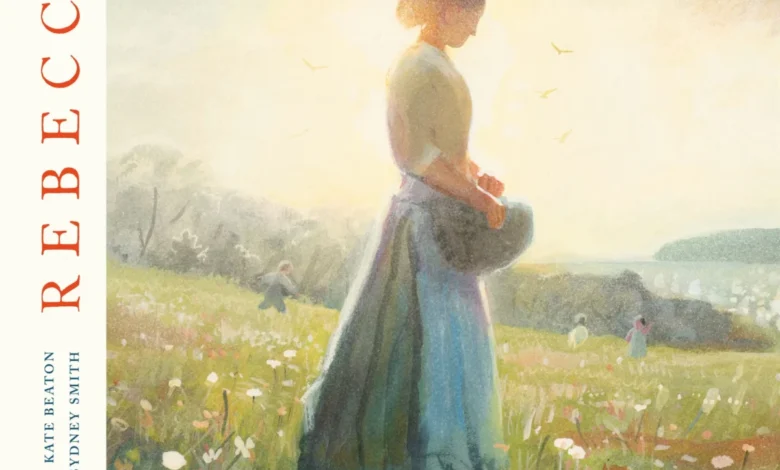
The act of naming is a profound exercise in historical continuity. For acclaimed graphic novelist Kate Beaton, the names Rebecca and Kathryn were more than mere identifiers; they were links in an ancestral chain reaching back to the 18th century. However, the weight of these names took on a transformative significance following the death of Beaton’s older sister, Becky, on May 14, 2018, after a protracted three-year struggle with aggressive cervical cancer. This loss served as the catalyst for a creative and personal journey that culminated in Beaton’s latest children’s book, Rebecca, a work that navigates the complex intersection of grief, motherhood, and historical legacy.
A Chronology of Grief and Transition
The trajectory of Beaton’s experience is defined by a clear bifurcation of her life: the period before her sister’s illness and the period following her passing. The intervening three years—from 2015 to 2018—functioned as a harrowing intermission, a time characterized by the slow, painful erosion of hope as she watched her sister succumb to a terminal diagnosis.
The transition into motherhood occurred in the immediate aftermath of this trauma. On Mother’s Day 2019, while pregnant with her first child, Beaton faced the physical manifestation of her anxiety as her labor began prematurely. Fearing the symbolic weight of an anniversary death, Beaton sought to separate her new beginning from her past loss. Her daughter was born on May 13, 2019, one day prior to the first anniversary of her sister’s death. This moment served as the foundational point for a new chapter, one where the joy of new life and the sorrow of bereavement were forced into an uneasy, yet permanent, coexistence.
Ancestral Roots and the Port Hood Legacy
To process the reality of her sister’s absence, Beaton turned to the history of her namesake, Rebecca Lombard Smith. Living in the 18th century on an island off the coast of Cape Breton, Nova Scotia, the historical Rebecca suffered a profound loss of her own. In March 1789, her husband, Captain David Smith, perished after falling through the ice near Port Hood Island while she was pregnant with their final child.
While traditional historical accounts of the period frequently centered on the tragedy of the male protagonist—the whaling captain—Beaton’s narrative focus shifts to the resilience of the survivor. Rebecca Lombard Smith was left to raise six sons and one daughter in isolation. This historical narrative provided a mirror for Beaton’s own experiences. By visiting the Old Protestant Graveyard in Port Hood, where the elder Rebecca is buried, Beaton found a physical manifestation of survival. The gravestone, uniquely marked by the names of the sons who erected it, serves as a testament to the enduring bond between mother and children—a detail that resonated deeply with Beaton’s own process of reconciling loss through her work.
The Intersection of Literature and Emotional Processing
The writing of the book Rebecca was a methodical, internal process. During the quiet hours of putting her own children to sleep, Beaton began constructing the narrative, line by line, in her mind. This practice served as a form of catharsis. As an artist known for Hark! A Vagrant and Step Aside, Pops, Beaton is no stranger to historical storytelling, but this project required a departure from her typical satirical style toward a more vulnerable, earnest form of expression.

The resulting picture book operates as an anomaly within the publishing industry. Traditionally, children’s literature avoids themes of adult-centric grief or the direct depiction of multiple deaths within a single narrative. However, the project received significant support from publishers who recognized the cultural necessity of such honest storytelling. Connie Hsu, the publishing director of Roaring Brook Press, noted that despite the "rules" of the industry—which generally discourage protagonists who are adults or narratives focused on terminal illness—the emotional gravity of Beaton’s work made it an essential publication.
Statistical Context and the Psychology of Bereavement
The experience of sibling loss is a distinct form of bereavement that remains under-researched compared to the loss of a spouse or parent. According to data from the American Psychological Association (APA), the loss of a sibling can disrupt the "shared history" of an individual, leading to a unique sense of existential displacement. The phenomenon Beaton describes—the division of her life into "before" and "after"—is a common psychological response to traumatic bereavement.
Furthermore, the integration of grief into daily life, as described by Beaton, aligns with modern psychological models of "continuing bonds." Rather than viewing grief as a state to be moved through or "recovered" from, contemporary therapists often encourage the integration of the deceased into one’s ongoing narrative. By writing the story of her ancestor, Beaton was not merely memorializing her sister; she was engaging in a narrative reconstruction that allowed her to live alongside her grief rather than under its weight.
Broader Implications for Literature and Public Discourse
The release of Rebecca signals a shift in the landscape of children’s and crossover literature. As society continues to grapple with the long-term mental health effects of widespread loss, the availability of literature that treats grief as a complex, non-linear experience is increasingly vital.
The success of Beaton’s approach highlights several key implications:
- Normalization of Mourning: By framing loss as a multigenerational experience, the narrative shifts the focus from individual pathology to communal resilience.
- The Utility of Historical Narrative: Beaton’s work demonstrates how connecting to ancestral trauma can provide a framework for modern individuals to process their own contemporary challenges.
- Industry Adaptation: The willingness of publishing houses to engage with "difficult" subject matter reflects a growing demand for authenticity in literature, even within genres traditionally reserved for lighter content.
Ultimately, the story of Kate Beaton and the historical Rebecca Lombard Smith serves as an examination of the endurance of family lines. Through the act of storytelling, Beaton has created a mechanism to carry her sister’s memory forward, ensuring that while the physical presence is gone, the internal legacy—the "hum" of existence, the strength of the mother, and the continuity of the name—remains. In the quiet moments of parenting, as she watches her children, Beaton’s work suggests that grief is not a wall, but a landscape—one that must be traveled to fully understand the terrain of love.