Xiaomi Eyes UK and International Markets as Profit Pressures Mount and EU Tariffs Loom

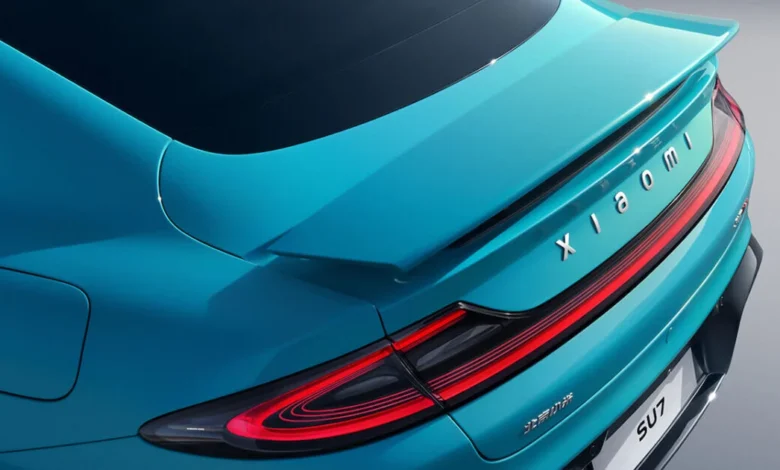
Consumer technology giant Xiaomi is accelerating its global automotive ambitions, setting its sights on right-hand-drive markets and positioning the United Kingdom as a crucial strategic gateway for its electric vehicle (EV) lineup. As domestic profit margins contract within an increasingly saturated and hyper-competitive Chinese automotive market, the company’s leadership views international expansion not merely as an avenue for growth, but as an operational necessity. However, a complex web of European Union trade tariffs, impending regulatory shifts, and fierce global competition threatens to complicate the smartphone maker’s transition into a major international automotive player.
The clearest indication of Xiaomi’s global rollout strategy emerged during the company’s recent third-quarter earnings call. President Lu Weibing revealed that the corporation has formally initiated dealer recruitment efforts across international right-hand-drive territories. While Lu did not explicitly single out the UK during his address, industry analysts widely recognize Britain as Europe’s largest and most lucrative right-hand-drive market, making it an indispensable target for any serious global vehicle manufacturer.
The urgency behind Xiaomi’s overseas push is underscored by its latest financial disclosures. During the third quarter, the company’s adjusted net profit plummeted by 57% year-on-year to CNY 4.9 billion (approximately US$736 million). Simultaneously, its fledgling New Energy Vehicle (NEV) and artificial intelligence division reported an operating loss of CNY 3.4 billion. Automotive revenue contracted by 20% to CNY 22.7 billion, driven by a 7.2% decline in vehicle deliveries.
Company executives attribute these domestic headwinds to a broader, systemic downturn within the Chinese passenger vehicle sector, where retail sales dropped by 24% over the same period. Lu acknowledged that these macroeconomic pressures are creating immense strain across the domestic industry, reinforcing the imperative to secure high-margin export markets where pricing power remains intact.
Chronology and Strategic Milestones
Xiaomi’s journey from consumer electronics manufacturer to automotive contender has progressed at a breathtaking pace, marked by rapid prototyping, massive capital deployment, and strategic market positioning:
- March 2024: Xiaomi officially launches its inaugural electric sedan, the SU7, in China, generating massive domestic interest and securing tens of thousands of advance orders within hours.
- September 2024: Xiaomi signs memorandums of understanding with eight major European dealer groups—including Emil Frey Germany—solidifying its initial retail footprint in continental Europe.
- Late 2024: Chinese media reports indicate that Xiaomi has mapped out a timeline to commence right-hand-drive vehicle sales by 2028, laying the groundwork for British market entry.
-
December 2024: The United Arab Emirates (UAE) is designated as Xiaomi’s very first international export market, chosen specifically because it
lacks punitive countervailing duties. The SU7 debuts in the UAE at a starting price of AED 169,900 (roughly US$46,200), representing a 40% premium over its domestic Chinese pricing.
- Third Quarter 2026: Xiaomi reports significant domestic financial tightening, highlighting the critical role that upcoming European and international sales channels will play in future revenue recovery.
- Third Quarter 2027: Scheduled commercial launch window in Germany, which will serve as the primary flagship market and showcase for the brand in continental Europe, alongside ongoing cold-weather and performance testing across Sweden, Spain, and Italy.
- 2028: Projected rollout of right-hand-drive vehicles tailored for the UK and other Commonwealth markets.
The European Tariff Hurdle: Navigating the EU Trade Barrier
While international expansion offers a potential financial lifeline, Xiaomi faces formidable regulatory hurdles upon entering continental Europe. The European Commission has implemented strict countervailing duties on battery-electric vehicles imported from China, designed to counter what Brussels views as market-distorting state subsidies.
Because Xiaomi was classified as a non-cooperating party during the EU’s official subsidy investigation, its upcoming European lineup—which is expected to include the SU7 sedan, along with the YU7 SUV and YU7 GT—faces a combined punitive tariff rate of 45.3% upon its planned German market launch in the third quarter of 2027. This places the consumer electronics giant at a severe competitive disadvantage compared to rival Chinese and international importers. For instance, BYD faces a lower combined duty of 27%, while Tesla’s European imports from its Shanghai gigafactory are taxed at just 17.8%. Only state-owned entities such as SAIC have been subjected to comparable top-tier tariffs.
In response to these steep penalties, industry observers have speculated that Xiaomi might pivot its initial European strategy toward extended-range electric vehicles (EREVs). The company recently introduced the Sky Nomad series, encompassing the N70 and N90 models. On paper, EREVs align well with European consumer preferences for hybrid powertrains, bridging the gap between combustion engines and full battery-electric vehicles.
However, the regulatory landscape for hybrids is also tightening. The European Union has begun implementing import caps on Chinese hybrid vehicles. Without local manufacturing infrastructure inside the EU bloc, Xiaomi would likely face strict volume ceilings on any hybrid exports, limiting their commercial impact.
The UK Opportunity and the Threat of Policy Alignment
Given the heavy financial burden imposed by EU tariffs, the United Kingdom represents a uniquely attractive commercial environment for Xiaomi. Unlike continental Europe, the UK has not yet instituted retaliatory countervailing duties on Chinese automotive imports, maintaining a more open regulatory regime.
Over the past two years, other Chinese automakers have successfully capitalized on Britain’s open trade policies. BYD experienced an 80% year-on-year surge in UK registrations during September, delivering 20,140 units led by the Seal U DM-i plug-in hybrid. Furthermore, overall UK battery-electric vehicle registrations climbed 32.7% to 48,858 units in October alone, demonstrating robust consumer appetite for new-energy alternatives.
Despite these favorable economic conditions, the UK window of opportunity may be short-lived. Government insiders and industry analysts suggest that London is actively weighing whether to introduce tariffs on Chinese vehicles. Such a move would allow the UK to remain closely aligned with the European Union’s proposed "Made in Europe" content rules and prevent the British market from becoming a dumping ground for excess overseas inventory diverted away from the continent.
If the UK ultimately decides to harmonize its trade policies with Brussels, Xiaomi’s long-term commercial viability in Britain will depend heavily on establishing local manufacturing capabilities or securing strategic assembly partnerships within Europe.
Global Pricing Strategy and Export Viability
Xiaomi’s debut in the United Arab Emirates provides a transparent preview of the company’s international pricing philosophy. By launching the SU7 at a starting price roughly 40% higher than its domestic Chinese retail value, Xiaomi has signaled that it intends to prioritize healthy export margins over aggressive undercutting of legacy Western and Korean brands.
This premium pricing model is essential if the company hopes to absorb the cost of international marketing, localized software adaptation, regulatory compliance, and dealer network development. However, maintaining a 40% price premium in highly competitive Western markets will require exceptional brand positioning, superior build quality, and cutting-edge in-car technology—areas where Xiaomi’s consumer electronics heritage gives it a distinct advantage.
The company’s European headquarters and research-and-development center in Munich, Germany, will serve as the nerve center for these localization efforts. Alongside the Munich facility, Xiaomi is actively validating its vehicles across seven specialized testing sites located in Sweden, Germany, Spain, and Italy, ensuring that its chassis dynamics, thermal management systems, and driver-assistance software meet the rigorous demands of European drivers.
Broader Industry Implications and Future Outlook
Xiaomi’s aggressive push into the global automotive arena reflects a broader structural evolution within the tech and automotive sectors. Technology companies are increasingly viewing software-defined electric vehicles as the ultimate connected hardware ecosystem. However, transitioning from consumer electronics—where product lifecycles span two to three years—to heavy automotive manufacturing introduces immense capital expenditure and regulatory exposure.
For Xiaomi, the immediate challenge is twofold: stabilizing its domestic automotive margins amidst a brutal local price war, and successfully establishing a compliant, profitable footprint in international markets before domestic losses outpace its core smartphone revenues.
While the United Arab Emirates offers an immediate, friction-free testing ground, and the United Kingdom presents a lucrative right-hand-drive opportunity under current trade rules, the looming shadow of European protectionism means Xiaomi must navigate a rapidly shifting geopolitical landscape. Whether the company can replicate its consumer electronics success on four wheels on the global stage will depend heavily on its agility in securing favorable trade terms, building robust dealer partnerships, and convincing skeptical Western consumers of its long-term reliability as an automotive brand.
Related posts: