S&P Global Ratings Weighs Nvidia Downgrade Amid Governance Concerns and Leadership Turbulence

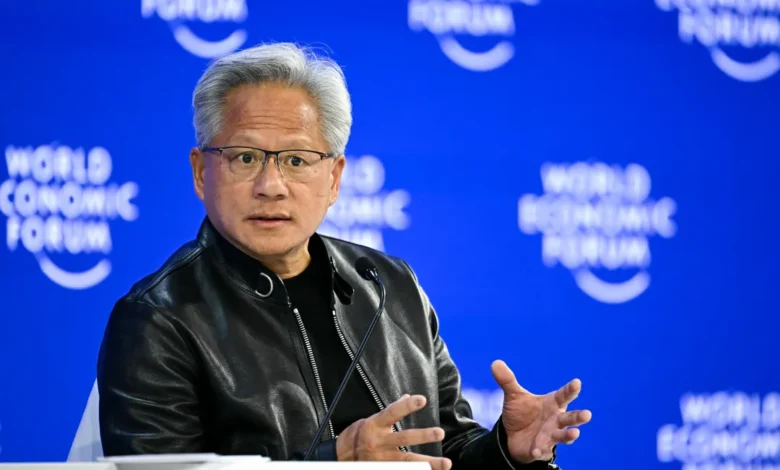
The landscape of artificial intelligence infrastructure and corporate governance faced a sudden tremor as S&P Global Ratings announced it is actively considering a credit rating downgrade for Nvidia, the world’s leading designer of AI graphics processing units. Despite posting unprecedented financial figures, fueled by an insatiable global demand for advanced computing hardware, the tech titan has found itself under the microscope of major credit agencies. The primary catalyst for this scrutiny is not financial insolvency or shrinking profit margins, but rather internal management volatility, highlighted by the recent, highly publicized ouster and subsequent reinstatement of visionary CEO Jensen Huang.
S&P Global Ratings revealed that it has placed Nvidia under a 90-day review period to evaluate the long-term stability of the company’s corporate structure. If the agency proceeds with the negative adjustment, Nvidia’s credit rating could be lowered from its current AA status to AA-, marking a notable blemish on the otherwise pristine financial record of a company sitting at the epicenter of the modern technological boom. While the adjustment would keep Nvidia comfortably within the investment-grade territory—meaning it remains a secure destination for institutional capital—the broader ramifications for the company’s ambitious financial maneuvers, and the wider AI sector it underpins, could be profound.
The Core Governance Concerns: Succession and Key-Man Risk
At the heart of S&P’s credit watch decision is the concept of executive oversight, succession planning, and what financial analysts traditionally refer to as "key-man risk." Jensen Huang has been synonymous with Nvidia since co-founding the company in 1993, steering it from a niche graphics card manufacturer for video games into a trillion-dollar powerhouse driving the generative AI revolution. However, the recent boardroom friction that led to Huang’s brief departure and rapid return exposed underlying vulnerabilities in how executive power and leadership transitions are managed at the top of the corporate hierarchy.
According to the official statement released by S&P Global Ratings, the recent leadership drama underscored a worrisome lack of institutionalized succession planning and weak executive oversight. In corporate credit analysis, a company whose future success, strategic vision, and investor confidence are heavily concentrated in a single individual carries an inherent operational risk. When unexpected leadership turnover or internal power struggles occur, they inject volatility into a company that institutional lenders prefer to view as a predictable, well-oiled machine.
Although the boardroom crisis was resolved swiftly with Huang resuming his post, the mere fact that such a disruption occurred at the height of Nvidia’s market dominance was enough to trigger a formal credit review. Credit agencies evaluate not only how much cash a company generates today, but also how resilient its leadership structure is against unexpected shocks tomorrow.
The Broader Financial Ecosystem: Neoclouds and the $500 Billion AI Bet
The timing of S&P’s warning coincides with Nvidia’s aggressive efforts to finance the massive physical infrastructure required to power next-generation artificial intelligence workloads. In August, Nvidia orchestrated a sweeping $500 billion financing initiative in partnership with six major financial institutions, including Wall Street heavyweights such as Goldman Sachs, Apollo, and Blackstone. The grand strategy was designed to ensure that data centers and specialized cloud providers—frequently referred to as "neoclouds"—have immediate access to the capital required to purchase massive quantities of Nvidia’s high-end AI chips.
Under the initial framework of these financing arrangements, Nvidia agreed to act as a financial backstop, guaranteeing approximately 25% of the loans extended to these infrastructure developers. Because many of these neoclouds and emerging AI infrastructure companies are relatively young and lack robust balance sheets or investment-grade credit ratings of their own, they rely entirely on Nvidia’s stellar financial reputation to secure debt at manageable interest rates.

However, even before the turbulence surrounding Jensen Huang’s brief exit, cracks were beginning to show in the lender-borrower dynamic. Reports surfaced indicating that financial institutions were growing increasingly uneasy about the pace of AI capital expenditures and were actively pressuring Nvidia to increase its loan guarantees well beyond the initial 25% threshold. Lenders sought greater security to mitigate the risk of a potential market correction in the nascent AI sector.
Implications of a Potential Downgrade
A downgrade from AA to AA- would introduce a compounding series of financial complications for both Nvidia and its extensive network of dependent partners. While an AA- rating remains high, any downward revision signals to the broader debt markets that a company’s risk profile has increased.
For Nvidia itself, a lower credit rating translates directly into marginally higher borrowing costs when tapping international debt markets. While Nvidia currently sits on substantial cash reserves, major corporate expansions and supply chain investments frequently rely on debt instruments to optimize capital structures. A higher cost of capital reduces financial flexibility.
More critically, the ripple effect would be felt most acutely by the infrastructure companies and neoclouds that rely on Nvidia’s creditworthiness. If Nvidia’s own credit rating slips, lenders may lose confidence in the strength of Nvidia’s backstops. Consequently, financial institutions would likely demand even larger financial guarantees, higher interest rates, or additional collateral from infrastructure developers before releasing funds. In a worst-case scenario, this could slow down the construction of vital AI data centers, cool off the broader venture and capital expenditure frenzy, and ultimately weigh on future hardware sales for Nvidia.
A Timeline of Recent Turbulence
The sequence of events leading up to S&P’s current review highlights the rapid convergence of corporate governance issues and systemic financial exposure:
- August: Nvidia announces a massive $500 billion infrastructure financing plan in collaboration with six premier financial institutions to support AI data center expansion, with Nvidia initially agreeing to backstop 25% of the debt.
- November 12: Bloomberg reports that lenders are already applying pressure on Nvidia to increase its financial backstops and guarantees due to escalating risks in the AI infrastructure market, occurring prior to any public knowledge of executive departures.
- Mid-November: Internal boardroom tensions culminate in the unexpected ouster and subsequent reinstatement of CEO Jensen Huang, sending ripples through Silicon Valley and the financial markets.
- November 25: S&P Global Ratings formally announces it is placing Nvidia on a 90-day credit review for a potential downgrade from AA to AA-, explicitly citing weak executive oversight, lack of succession planning, and key-man risk.
Looking Ahead: The Next 90 Days
As S&P Global Ratings conducts its comprehensive 90-day evaluation, all eyes will be on Nvidia’s board of directors to demonstrate enhanced corporate governance, transparent succession frameworks, and stabilized executive leadership. The outcome of this review will serve as a bellwether for the entire technology sector, illustrating how credit rating agencies plan to evaluate high-flying AI giants whose valuations are frequently tied to the charismatic figures leading them.
For Nvidia, the challenge moving forward is clear: it must decouple its unmatched technological and financial prowess from the vulnerabilities of key-man dependency. By institutionalizing stronger governance controls and reassuring Wall Street lenders regarding its long-term financial backstops, the company can hope to retain its elite credit standing while continuing to fuel the global artificial intelligence revolution.
Related posts: