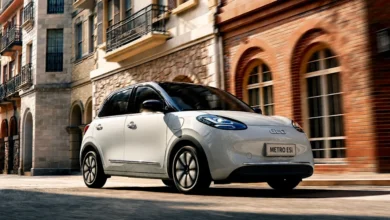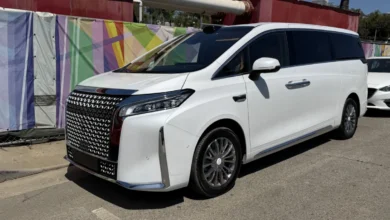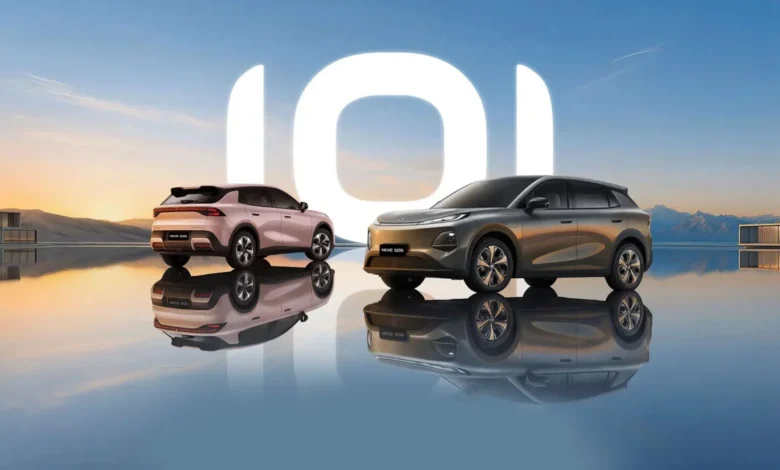
The global automotive landscape is currently undergoing a period of unprecedented transformation, characterized by a shift toward electrification, software-defined vehicles, and a radical realignment of manufacturing power. According to the July update of the global light vehicle production forecast from Automotive World, this volatility is set to reach a critical juncture by 2026. The forecast highlights a striking dichotomy within the industry: Chinese automotive brands are projected to occupy both ends of the success spectrum, manufacturing the market’s most dominant platforms as well as its most significant commercial disappointments. This polarization reflects the hyper-competitive nature of the Chinese domestic market and the aggressive, yet risky, expansion strategies being deployed on the international stage.
As the industry moves toward the middle of the decade, the traditional hierarchies of the 20th century are being dismantled. The July update underscores that the success of a vehicle platform in 2026 will no longer be determined solely by brand heritage or mechanical reliability, but by the agility of the supply chain, the integration of battery technology, and the ability to scale production rapidly in response to shifting consumer preferences. For Chinese manufacturers, this environment presents a "high-stakes, high-reward" scenario. While some players are leveraging massive economies of scale to produce global best-sellers, others are struggling with overcapacity, brand dilution, and the inability to navigate increasingly complex geopolitical trade barriers.
The Dual Reality of Chinese Automotive Manufacturing
The prediction that China will produce both the best and worst sellers of 2026 is rooted in the unique structure of its industrial ecosystem. On one hand, companies like BYD and Geely have refined their platform strategies to a level that rivals or exceeds the efficiency of legacy European and American OEMs. BYD’s vertical integration, which includes the in-house production of semiconductors and battery cells, allows it to maintain margins that are the envy of the industry. These "best-seller" candidates are typically built on modular platforms that can support a wide range of body styles and powertrains, allowing for rapid deployment across different global markets.
Conversely, the "worst-seller" category is expected to be populated by the numerous smaller entrants and state-backed enterprises that have failed to achieve the necessary scale. The Chinese market currently hosts over 100 active passenger car brands, many of which are heavily reliant on local government subsidies that are beginning to taper off. By 2026, the forecast suggests that many of these underperforming platforms will face obsolescence. These vehicles often suffer from a lack of distinct brand identity, inferior software integration, or a failure to meet the stringent safety and regulatory standards required for export to Western markets.
Chronology of the Chinese Automotive Expansion (2015–2026)
To understand the 2026 forecast, it is essential to trace the trajectory of the Chinese automotive sector over the last decade:
- 2015–2018: The Foundation of the New Energy Vehicle (NEV) Policy. The Chinese central government implemented aggressive subsidies and "dual-credit" schemes, incentivizing manufacturers to pivot away from internal combustion engines (ICE) and toward battery electric vehicles (BEVs) and plug-in hybrids (PHEVs).
- 2019–2021: Technological Consolidation. This period saw the rise of "dedicated EV platforms" rather than adapted ICE chassis. Brands like NIO and Xpeng introduced advanced driver-assistance systems (ADAS), while CATL became the world’s dominant battery supplier.
- 2022–2023: The Export Surge. For the first time, China became the world’s leading exporter of vehicles, surpassing Japan. This was driven by a surplus of production capacity and a domestic "price war" that forced brands to seek growth in Europe, Southeast Asia, and Latin America.
- 2024–2025: Geopolitical Friction and Localization. The current phase is marked by the imposition of significant tariffs by the European Union and the United States on Chinese-made EVs. In response, Chinese firms began announcing manufacturing hubs in regions like Hungary, Spain, Thailand, and Brazil to bypass trade barriers.
- 2026: The Year of Reckoning. The forecast target year represents a saturation point where the "winners" consolidate their global footprint and the "losers" are forced into mergers, acquisitions, or bankruptcy.
Supporting Data: Market Share and Production Capacity
The Automotive World forecast is supported by a range of data points that illustrate the shifting tides of light vehicle production. In 2023, China’s total vehicle production exceeded 30 million units, a record high. However, the capacity utilization rate for many smaller factories remains below 50%, a figure that industry analysts consider unsustainable.
By 2026, it is estimated that the top five Chinese manufacturers will account for nearly 70% of the country’s total output, leaving dozens of smaller brands to fight over the remaining 30%. In terms of global light vehicle production, Chinese platforms are expected to represent approximately 35% of the total market share by 2026, up from roughly 25% in 2020.
Furthermore, the cost advantage remains a primary driver of the "best-seller" potential. Reports indicate that Chinese OEMs currently enjoy a 25% to 30% cost advantage over European manufacturers when producing mid-range electric vehicles. This gap is primarily due to lower energy costs, integrated supply chains, and lower labor costs, although the latter is being offset by increased automation.
Official Responses and Industry Sentiment
While official statements from Chinese automotive trade groups often emphasize "high-quality development" and "global cooperation," the sentiment among Western automotive executives is one of cautious alarm. During recent industry summits, CEOs from major European manufacturers have called for a "level playing field," citing the impact of Chinese state subsidies on global pricing.
"We are not afraid of competition, but it must be fair," stated a senior executive from a leading German automaker during a recent roundtable. "The challenge for 2026 is that Chinese brands are moving at a speed that traditional product cycles cannot match. Their ability to iterate on software and hardware simultaneously is a significant competitive threat."
On the Chinese side, the narrative is focused on survival of the fittest. Representatives from the China Association of Automobile Manufacturers (CAAM) have acknowledged that the domestic market is overcrowded. "The next two years will be a period of intense ‘shuffling’ for the industry," a CAAM spokesperson noted. "Only those with strong core technology and global operational capabilities will remain."
Fact-Based Analysis of Implications
The implications of China producing both the best and worst sellers of 2026 extend far beyond the balance sheets of individual companies. This phenomenon will likely lead to several structural shifts in the global economy:
1. The Transformation of Global Supply Chains
As Chinese brands seek to move production closer to their end markets to avoid tariffs, we will see a "localization of the Chinese supply chain" in Europe and North America. This means that by 2026, a "Chinese" car sold in Germany may actually be manufactured in Hungary using battery cells produced in Poland. This blurs the lines of national origin and complicates trade policy.
2. Standardized Platforms vs. Niche Failures
The success of the "best sellers" will likely be driven by platform sharing. For instance, Geely’s Sustainable Experience Architecture (SEA) is used by brands ranging from Volvo and Polestar to Zeekr and Lotus. This modularity reduces R&D costs and improves reliability. Conversely, the "worst sellers" will likely be those that attempted to develop proprietary platforms without the volume to support them, leading to high per-unit costs and poor resale value.
3. The Secondary Market and Residual Value
A major risk for the "worst-selling" Chinese brands of 2026 will be their residual value. If a manufacturer goes out of business or exits a specific market, the value of its vehicles on the used market will plummet, and spare parts availability will become a crisis for consumers. This "after-sales anxiety" remains a significant hurdle for Chinese brands attempting to gain a foothold in conservative markets.
4. Technological Leapfrogging
The 2026 forecast also suggests that Chinese brands will lead in the integration of Level 3 autonomous driving and "smart cockpit" features. While legacy brands are often slowed down by rigorous internal validation processes and legacy software architectures, Chinese firms are more willing to deploy "beta" features and update them over-the-air (OTA). This tech-first approach is highly attractive to younger demographics, particularly in emerging markets.
Conclusion: A Bifurcated Future
The Automotive World July update serves as a reminder that the automotive industry is no longer a monolithic entity where established players are safe from disruption. The year 2026 will be a milestone that proves that being "Made in China" is not a singular indicator of quality or success. Instead, the market will be bifurcated.
The "best sellers" will be the result of disciplined engineering, massive scale, and strategic global localization. They will represent a new era of affordable, high-technology mobility that challenges the century-old dominance of Western and Japanese brands. The "worst sellers," meanwhile, will serve as a cautionary tale of the perils of over-expansion, lack of differentiation, and the volatility of an industry in the midst of a technological revolution. For stakeholders, from investors to consumers, the ability to distinguish between these two extremes will be the defining challenge of the next two years.