Arctic Sunlight Meets Heavy Industry: Alaska’s Red Dog Mine Pioneers Massive Solar and Battery Project to Cut Diesel Dependence

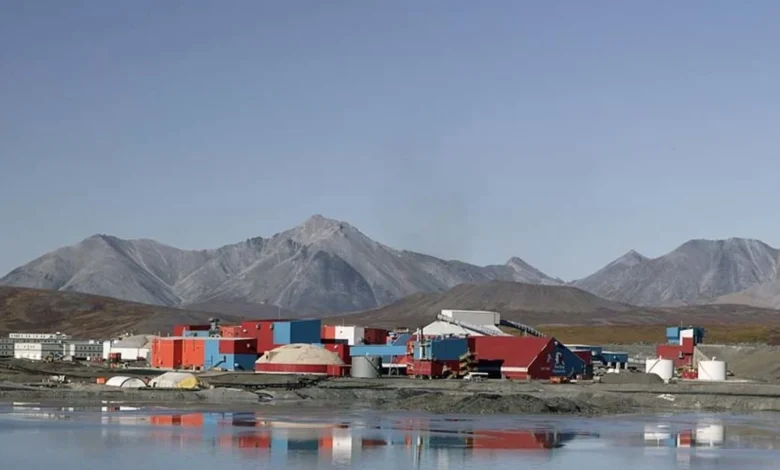
Deep in the remote expanse of northwestern Alaska, approximately 105 miles north of the Arctic Circle, one of the world’s largest zinc and lead operations is undergoing a quiet energy transformation. The Red Dog Mine, a powerhouse of global mineral extraction, has long relied entirely on massive banks of on-site diesel generators to sustain its round-the-clock operations. Burning an astounding 40,000 gallons of diesel fuel daily to keep crushing, milling, and extraction
machinery running, the facility represents both an economic engine for the region and a massive industrial consumer of fossil fuels. However, a newly approved, landmark renewable energy initiative aims to alter that dynamic. By integrating an 8.8-megawatt (MW) solar photovoltaic array paired with utility-scale battery storage, the facility is taking a decisive step toward mitigating its heavy carbon footprint and curbing its immense daily diesel consumption.
The project, spearheaded by developer Tugliq Red Dog1, represents a paradigm shift for heavy industry operating in extreme polar environments. Financing for the ambitious endeavor cleared a major hurdle when the Alaska Energy Authority’s (AEA) board unanimously voted to approve a nearly $5 million loan through its Power Project Fund. With an estimated total price tag of roughly $35 million, the solar-plus-storage installation will be built, owned, and operated by Tugliq, which will subsequently sell the generated electricity directly to mine operator Teck Alaska. According to state project documentation and local reporting by Desiree Hagen for Alaska Public Media, foundational site preparation and early civil works commenced in June, setting the stage for a targeted commercial online date of October 2028.

Scale and Scope of the Arctic Solar Installation
When completed, the Red Dog solar array will shatter regional records, instantly claiming the title of the largest operational solar farm in the state of Alaska. Constructing a utility-scale solar farm in the sub-Arctic requires navigating unique environmental and logistical challenges, from permafrost considerations to extreme seasonal variations in sunlight. To achieve the targeted 8.8 MW capacity, the facility will deploy more than 15,000 advanced solar panels spread across approximately 30 acres of land.
The site itself sits on land owned by NANA, an Iñupiat-owned Alaska Native corporation, highlighting a cooperative framework between industrial operators and Indigenous landowners aimed at fostering cleaner energy solutions in traditional territories. While the Arctic region is famous for its long, dark winters, it also experiences extended periods of continuous sunlight during the summer months. During these peak summer windows, the mine’s operations demand so much electricity that operator Teck must periodically curtail power usage in non-essential areas of the sprawling complex to prevent grid overloads and equipment strain.
To smooth out these demand peaks and optimize energy reliability, the installation will include an 8.8-megawatt, 15 megawatt-hour (MWh) battery energy storage system (BESS). This lithium-ion or advanced storage architecture will capture excess generation during peak production hours and inject it back into the microgrid when operational demands spike or when cloud cover temporarily diminishes photovoltaic output.
Chronology and Project Milestones
The path toward integrating renewable energy at Red Dog has evolved through careful planning, technological maturation, and strategic regional partnerships.

- Pre-Planning and Feasibility: Over recent years, engineers and energy consultants assessed the viability of integrating wind and solar resources into the mine’s isolated diesel microgrid, ultimately determining that a utility-scale solar and battery hybrid system offered the most reliable and scalable generation profile.
- June: Initial site work, geotechnical surveys, and early-stage civil preparations officially kicked off at the 30-acre Arctic plot.
- November: The Alaska Energy Authority board unanimously approved the critical $5 million low-interest loan via the Power Project Fund, cementing state-level backing for the private-public energy transition.
- October 2028 (Projected): Tugliq Red Dog1 anticipates completing construction, conducting grid interconnection testing, and bringing the full 8.8 MW solar array and 15 MWh storage system online.
- 2031 (Projected): The milestone year when Teck’s currently mapped commercial ore deposits are scheduled to be fully extracted, transitioning the site into its long-term closure and post-mining remediation phase.
Economic and Operational Implications for Teck Alaska
The integration of nearly 9 megawatts of clean generation capacity addresses immediate operational bottlenecks while planning for the distant future of the site. Under the current operating profile, state energy analysts project that the solar-and-storage installation will offset approximately 5% of the zinc mine’s total annual electricity consumption. While a 5% offset may appear modest against the gargantuan appetite of a multi-thousand-gallon-per-day diesel operation, it represents a substantial absolute reduction in fuel logistics, hauling costs, and greenhouse gas emissions in a fragile sub-Arctic ecosystem where every barrel of diesel must be meticulously budgeted and transported.
Furthermore, Teck is actively evaluating the potential development of two nearby mineral deposits to extend the operational life of the complex beyond 2031. Should those expansion efforts secure final corporate and regulatory approval, the solar facility’s contribution relative to total load would adjust downward to roughly 3% for the expanded industrial footprint. Nevertheless, the strategic value of having a hybridized renewable energy source buffers the microgrid against fuel price volatility and supply chain disruptions common to remote northern outposts.
The Post-Mining Horizon and Environmental Remediation
One of the most compelling aspects of the Red Dog solar and battery project lies in its long-term utility after commercial mineral extraction ceases. Mining operations at Red Dog are finite; Teck’s current mine plan estimates that existing ore reserves will support active excavation and processing through 2031.
Once active mining concludes, the overall power demand of the industrial site will experience a precipitous drop. However, the closure of the mine does not spell the end of energy requirements. Federal and state environmental regulations mandate rigorous, long-term site stewardship, environmental monitoring, and continuous water treatment to protect surrounding watersheds and wildlife habitats.

During this post-mining phase, the energy dynamics of the site invert entirely. Because baseline industrial machinery like crushers and mills will be permanently powered down, the baseline electricity demand will shrink to a fraction of its peak industrial load. Consequently, the state of Alaska projects that the 8.8 MW solar farm and its accompanying 15 MWh battery storage system will be capable of covering an impressive 90% of the site’s annual electricity needs during the remediation and long-term water treatment era. This dramatic shift transforms what is currently an auxiliary power booster into the primary, low-carbon backbone of post-closure environmental management.
Broader Industry Trends in Remote Microgrids and Energy Storage
The Red Dog initiative reflects a broader, accelerating trend across North American heavy industry and remote communities. Industrial operators situated far beyond the reach of traditional centralized transmission grids are increasingly turning to hybrid microgrids to insulate themselves from high diesel transportation costs and regulatory pressures to decarbonize.
The announcement of the Red Dog project arrives on the heels of major national milestones in energy storage deployment, such as the United States crossing the threshold of 200 gigawatt-hours (GWh) of cumulative operational battery storage capacity. As the cost of photovoltaic hardware and advanced battery chemistry continues to decline, remote industrial enclaves—from Arctic mining operations to isolated island communities—are proving that renewables can deliver dependable, cost-effective power even in the world’s most inhospitable climates.
By blending state financial backing, Indigenous land stewardship, and innovative private-sector engineering, the Red Dog Mine project sets a new benchmark for polar industrial sustainability. It demonstrates that heavy resource extraction and clean energy transition are not mutually exclusive, offering a resilient blueprint for how remote industrial sites can power their present operations while securing a clean, self-sustaining future long after the last ton of ore has been processed.
Related posts: